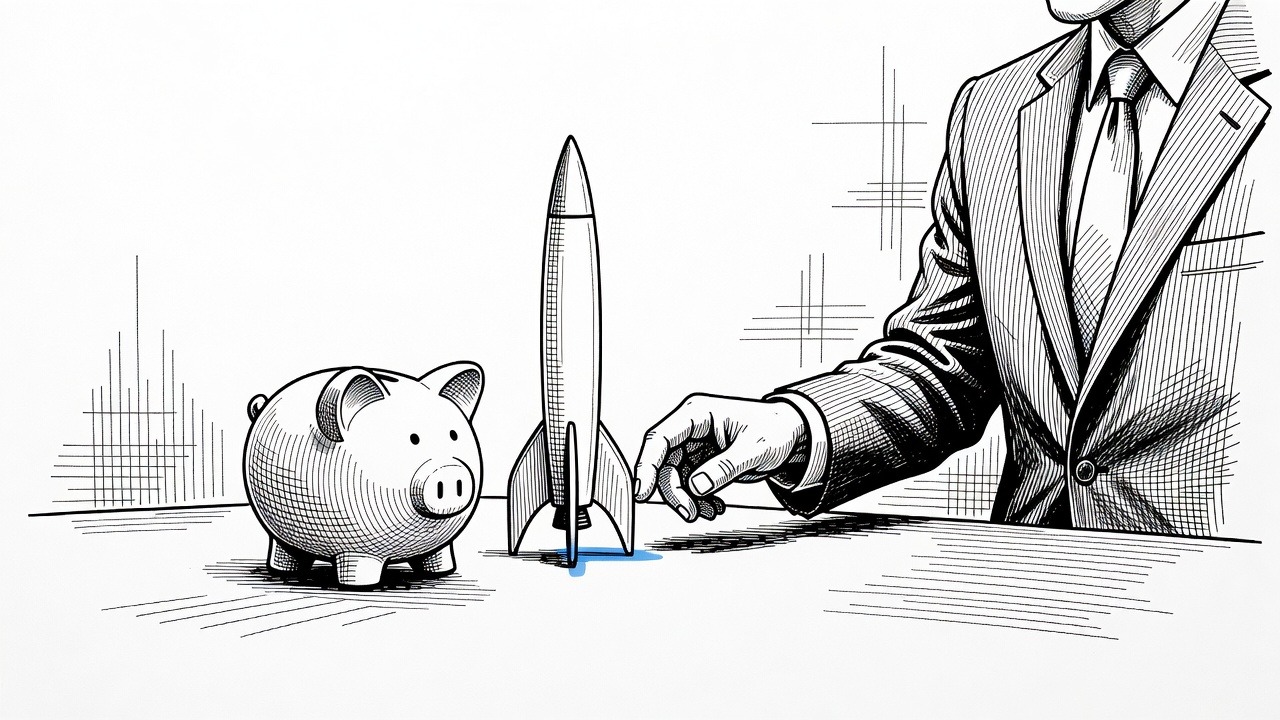
Let's start with what the Left should admit: giving a child a financial asset at birth is a good idea. Baby bonds are our idea. Cory Booker pushed them years before anyone in Trump's orbit noticed that wealth, not just income, decides who gets a start in life. So I won't sneer at a kid getting a share of a rocket company.
But look at who is handing it out, and why.
SpaceX will give one Class A share to each active Trump Account. Elon Musk will add one of his own, but only after his lockup expires in June, which means the pledge costs him nothing today. The announcement is the asset. The money comes later, if it comes.
The pledge also quietly turns a public program into a marketing channel. Tens of millions of American households may soon hold a stake in a newly public company whose business depends heavily on federal contracts, launch approvals and regulators. A small shareholder who is a child with a parent watching the ticker is a loyal constituency. This is not charity so much as brand-building with a civic costume, and it is flattering to the president whose name is on the accounts.
Then there is the design problem Musk's gesture papers over. Trump Accounts were built as a universal, market-linked, tax-advantaged vehicle, not a serious wealth-equalizer. A flat seed for every child sounds fair until you ask who can add to it. Families with spare income and generous employers will fill these accounts and compound them. Families living paycheck to paycheck will leave them at the starting line. One share each is the same gift to a hedge-fund manager's daughter and a home health aide's son. Equal treatment of unequal starting points is how inequality gets reproduced politely.
The progressive version is not mysterious. Booker's American Opportunity Accounts Act would fund much larger deposits for children in the poorest households and smaller ones for the richest. It treats the account as a tool for closing the racial and class wealth gap, not as a photo opportunity. Compare that with the White House counting 70 million accounts "opened." SpaceX's pledge covers only *active* ones. The gap between those words will tell us how many children are actually getting something, and the administration has every reason to blur it.
The larger lesson is about who we have allowed to set public priorities. When a billionaire's pledge becomes the news hook for a federal program, something has flipped. Taxpayers created the accounts, so the public should decide who gets what. Instead we are invited to applaud the generosity of a man whose wealth is largely the product of public contracts, subsidies and a tax code that rewards precisely the kind of stock-based fortune he holds. Musk's gift is a rounding error against that. Gratitude is the wrong response. Scrutiny is the right one.
Democrats face their own test. The easy move is to sit this out, grumble about the Trump brand and let Republicans own the idea of children as shareholders. That would be cowardice. Better to say plainly: yes to the concept, no to the flat design, no to philanthropy as a substitute for policy. Fund the accounts for poor kids at levels that change lives. Tax the concentrated stock wealth that makes these pledges possible. Then nobody needs to wait for a lockup to expire to find out whether a child's future depends on a billionaire's mood.
How it may affect me
If you have a child under 18, check whether a Trump Account was opened for them and whether it counts as "active," since the SpaceX share is promised only to active accounts. The share arrives, at the earliest, after Musk's June lockup ends, and its value will track the stock. Don't plan around it, and check the account's fees and contribution rules before adding your own money.