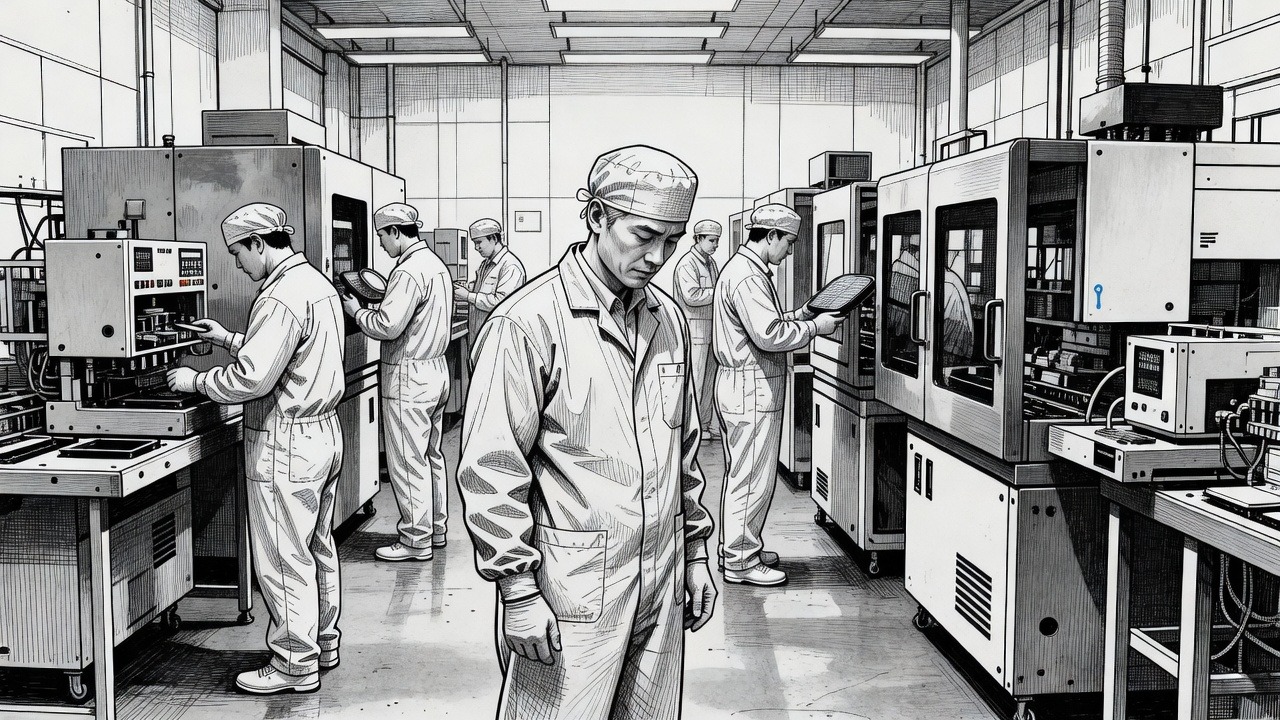
Read this story as a ledger, not a triumph. TSMC, which fabricates the chips AI labs depend on, spends $500 million on a stake in Anthropic, which buys the computing those chips power. Siliconware expands packaging for Nvidia. Lam Research breaks ground on a $3 billion research push. Each announcement is described as a response to demand. Look closer and you see companies lending credibility to one another's growth stories.
Start with the claim that anchors it all: TSMC says AI demand exceeds its supply of advanced chips. That comes from the seller. Scarcity is the most useful word a supplier can say, because it justifies prices, capacity, and the next investment. When that supplier then buys equity in a customer, the sales pitch and the investment thesis become one loop. Nvidia has made similar moves with AI labs. Skeptics have called this circular financing, and it deserves the name. Money goes out as investment, comes back as orders, and gets booked as proof that the boom is real. It works until someone stops believing.
When the belief breaks, the people at the table will not be the ones who pay. The costs are already being distributed outward. Taiwan, an island with a fragile power grid, a history of drought that forced water-allocation fights with chipmakers, and a nuclear phase-out it has only just finished reversing course on, is being asked to feed an industry whose appetite grows every quarter. Farmers, households, and ordinary electricity customers there compete with the fabs. In the United States, taxpayers have put billions of CHIPS Act dollars behind TSMC's Arizona build-out. Whatever you think of that policy, the public paid for the plant, and the public gets none of the equity upside when TSMC buys into a lab.
Then there is the geopolitical bill. Almost every advanced AI system in the world runs through a few square miles of Taiwanese fabrication, in a place Beijing claims as its own. Deepening that dependence, in the name of speed, is a decision about every American's economic security. Nobody asked them. A company's quarterly capital allocation became a national-security exposure without a single vote.
Here my own side deserves some blame. Democrats were right to demand that chip subsidies serve public purposes, and then too often settled for ribbon-cuttings and jobs numbers. The "win the AI race" frame has become a bipartisan sedative, and it lets firms demand public infrastructure, public power, and public patience while keeping the gains private. Anthropic markets itself as the careful lab, the one that worries about safety. Fine. But a safety brand is not a governance structure, and a $500 million check from the sole manufacturer of the hardware makes the lab's independence one more thing to take on trust.
The answer is not to hate chips or fear technology. It is to stop treating this buildout as weather. Require disclosure of cross-investments between suppliers and customers, so the market can tell real demand from financed demand. Make the firms driving electricity and water demand pay for the grid and the supply they strain, rather than socializing the cost. Attach enforceable conditions to any public money. And have regulators ask a basic antitrust question: what happens to competition when the toll collector owns a piece of the highway's biggest drivers?
If this boom is as transformative as its sellers claim, it can survive scrutiny. If it can't, better to find out before the rest of us have been made to carry it.
How it may affect me
If you own an index fund or 401(k), you likely have heavy exposure to the same AI-linked companies funding one another, so a reversal would hit retirement balances. If you live near data centers or chip-heavy regions, ask your utility commission whether large-load customers are paying their full share of grid upgrades, or whether they are being passed to residential rates.