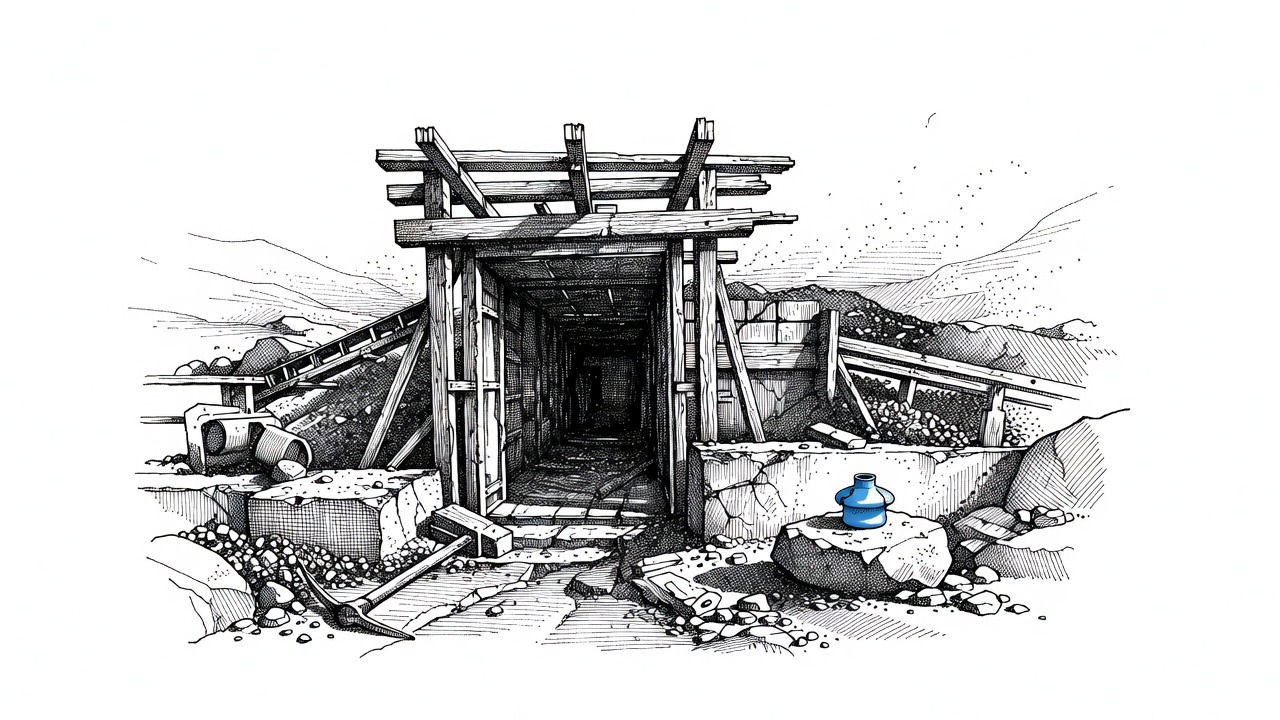
Every few years the Kremlin discovers a miracle for Kuzbass. This one is data centers in dead coal mines, announced by decree, with a deadline of the end of 2026 and a price tag nobody has yet explained.
Start with the sentence in the governor's pitch that gives the game away. Ilya Seredyuk says coal companies spend substantial sums maintaining and reclaiming former mines. That is the real subject. Reclamation is a liability, a bill that mine owners are legally expected to pay for the damage they leave behind. A plan that turns the hole into an asset, with the state steering tenants toward it, is a plan to move that bill off the owners' books. The cooling savings may be real. But analyst Eldar Murtazin estimates an underground facility could cost two to five times as much as a conventional one, once you count drainage, staffing and infrastructure. Nobody builds the more expensive version unless someone else is covering the difference. In Russia, that someone is usually the budget, meaning everyone who pays taxes.
This is how it goes in a country where resource barons have long privatized profit and nationalized cleanup. Kuzbass miners know the pattern better than anyone. In 1989 they struck, and their strikes helped bring down a system that claimed to rule in their name. What they got in return was privatization, wage arrears, and a region run as a coal-and-rail supply line for owners far from the pit. Kuzbass also knows what cost-cutting looks like at depth. At Listvyazhnaya in 2021, 51 people died, miners and rescuers among them, in a mine where safety systems were reportedly bypassed to keep coal moving. Now the same underground world is supposed to host expensive servers, and the question of who certifies its safety, who inspects it and who answers when something goes wrong has not been raised.
Then there are the jobs. A working coal mine can employ hundreds of people, and a region full of them sustains whole towns. A data center, even a large one, employs a few dozen people once it is built: technicians, security, maintenance. The coal regions are being squeezed by sanctions, lost export markets, rail bottlenecks and weak prices, and the towns around closing mines need wages, not a server hall with a skeleton crew. A real transition plan would start with the workers. It would set out retraining, pensions for those near retirement, guarantees for the towns that depend on a single employer, and a binding obligation on owners to fund cleanup before they leave. Nothing in this announcement suggests any of that. It is infrastructure policy written for ministries and companies, with the people who live there as scenery.
A Russian Left worth the name should not oppose planning. Soviet industrial memory is not all myth, and the case for the state steering investment into abandoned industrial regions is a good one. The Communist Party and the independent unions should be demanding that planning, not mocking it. But planning means public purpose, public accounts and public control. What Moscow is offering is the opposite: command from above, secrecy about costs, and benefits flowing to whoever gets the contracts. Calling that a development program flatters it.
The demands are not complicated. Publish the full cost estimate and name who pays. Keep reclamation obligations on the companies that created them, so that a data center cannot serve as a loophole. Put independent safety inspection and worker representatives at the table before a single rack goes underground. Tie any subsidy to local hiring and to the long-term future of the mining towns.
If the plan cannot survive those conditions, we should stop pretending it was ever about Kuzbass. It would be one more case of the public absorbing the risk while a handful of owners keep the gain.