Ukraine has every right to hit Russia wherever Russia keeps its war machine. That is not the hard part of this story. The hard part is that two Libyans are dead, and neither the Libyan people nor the government the world recognizes as theirs had any say in how it happened.
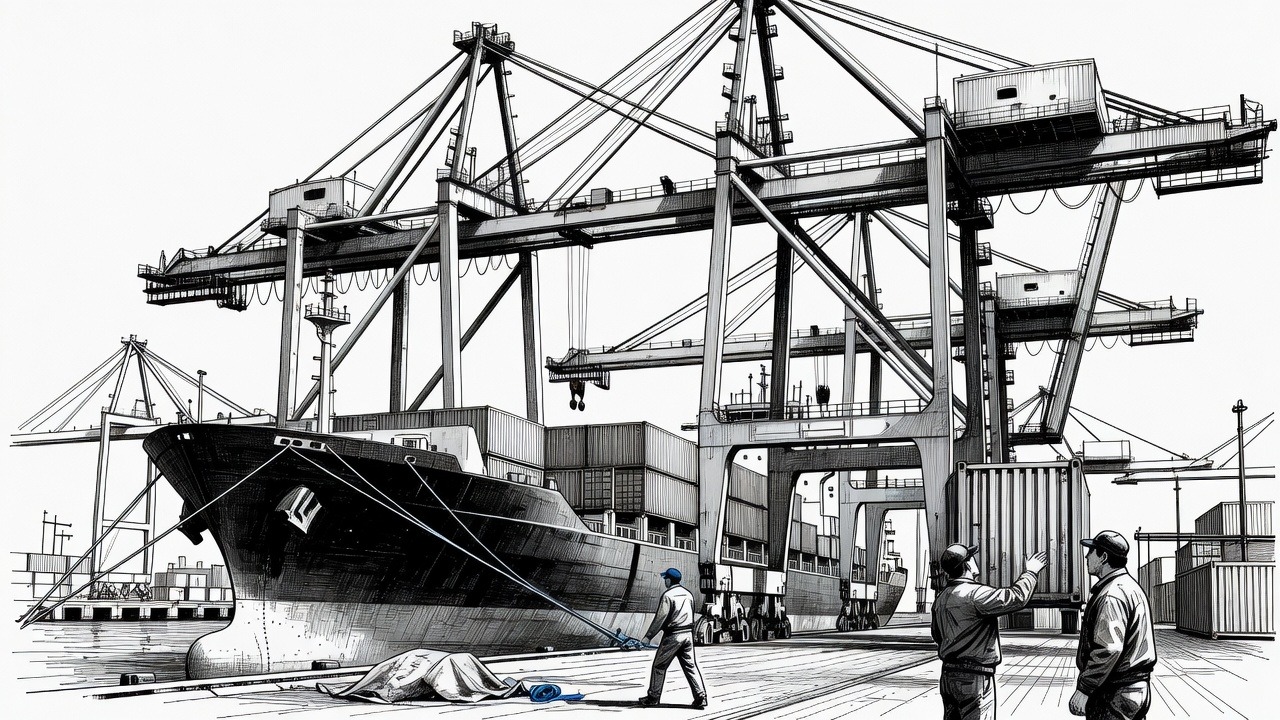
Look at who chose what. Vladimir Putin chose to invade Ukraine, and he keeps widening the war. A Russian warship was docked in Benghazi, in the part of Libya controlled by Khalifa Haftar, a warlord who tried to take Tripoli by force in 2019 and has never been shy about trading on outside patronage. The result is a Russian warship at a Benghazi pier, which turned a Libyan port into a target. That was an arrangement between men with weapons. The Libyan public was never consulted.
The Tripoli-based Government of National Unity condemned the strike and said it does not want to be dragged into this war. Fine. But it cannot enforce its position over half its own country, which is the whole tragedy. Libya has been a fractured state since the 2011 NATO intervention, when Western governments helped topple Gaddafi, declared victory and left. Since then, Libya has become a bazaar for outside powers: the UAE and Egypt arm one side, Turkey the other, Russian contractors work the east, and Europe pays whichever militia can keep migrants off its shores. Everyone now acts shocked that Libya is a place where other people's wars land.
Kyiv's legal case deserves a serious answer. Sybiha invoked self-defense under the UN Charter, and the argument is not frivolous. Under the law of armed conflict, a belligerent's warship is a legitimate target. A neutral state is supposed to stop a combatant from using its territory, and when it won't or can't, the other side has a plausible claim to act. Ukraine is fighting for survival against a larger power that tried to erase it. Anyone on the left who treats Ukrainian drones as the aggressor here has lost the plot.
But that argument cuts both ways. It puts the blame on Russia for using Libya as a base, and on Haftar for hosting it. It also shows how thin the idea of sovereignty has become when a state can't control its own harbors. Ukraine says it respects Libyan sovereignty. Then it should say plainly what that means when it strikes a pier in a country that is not at war with it, kills local personnel, and gets a vow of retaliation from the faction that controls the port. Self-defense is a reason, but it doesn't settle every question. Every escalation that is justified as necessary still needs to be counted.
That is the point Western capitals will want to skip. The United States and Europe have armed Ukraine and, rightly, framed its cause as a defense of a rules-based order. They cannot also treat Libya as someone else's mess. A government that wants to be taken seriously on international law has to show up when the law's gaps get people killed, and has to push for a real political settlement in Libya, not another migration deal with a strongman. Europe has spent years courting Haftar for the sake of energy and border control. It now has a Russian warship docked in his port as the return on that investment.
The moral accounting here is not complicated. Putin started the war and keeps widening it. Haftar's forces let the aggressor's warship dock in a Libyan port. The West's neglect built the vacuum they both exploit. And two Libyans are dead for a conflict they never joined. Ukraine's fight is just. The Libyans who died in it should still be counted as a cost of this war, not dismissed as collateral.