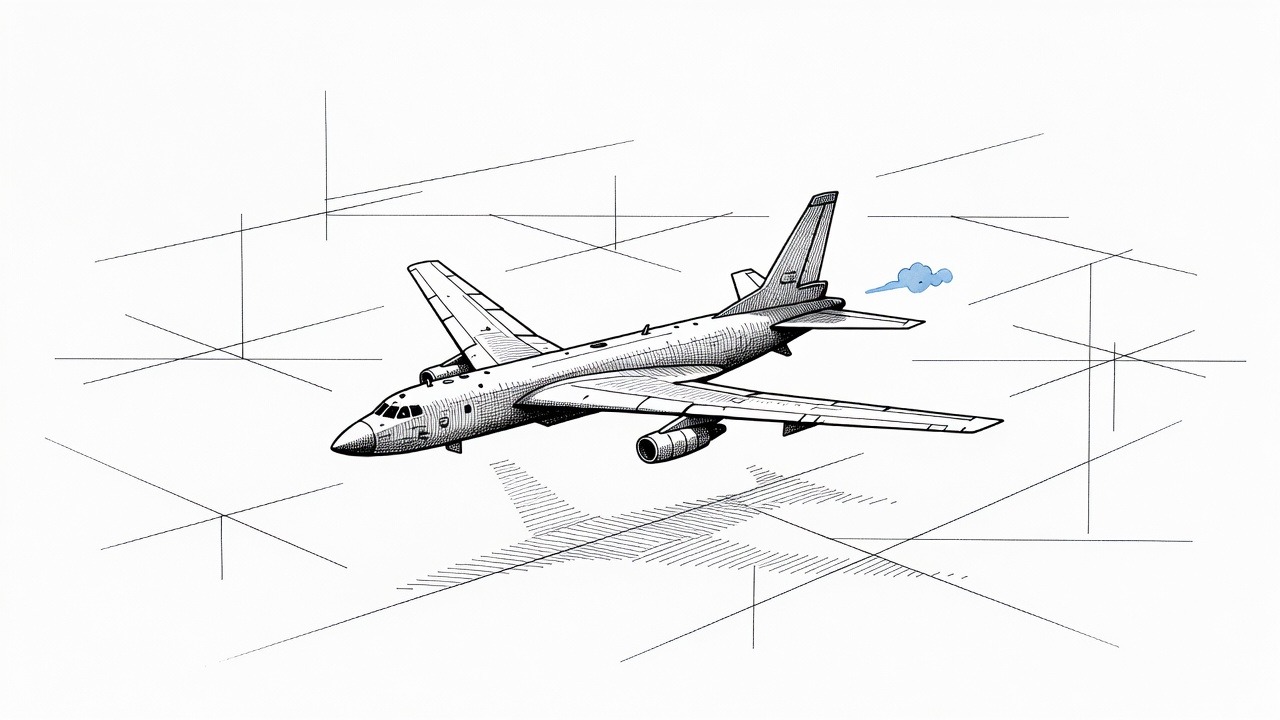
The Philippine military's own spokesman has said the Chinese H-6 bomber was not rehearsing a strike. That sentence deserves more attention than the bomber does.
The aircraft came within about 83 kilometers of the Luzon coast. For a plane with a range of thousands of kilometers, that is a short hop. It was a message, and the message was: we can. Beijing sends it often, and Manila knows it. Spokesman Roy Vincent Trinidad was right to answer it with a shrug and a tracking report rather than a siren. The Left should insist that this calm becomes policy, because the next few years will bring plenty of people who want the bomber to mean more than it does.
The bomber is not where Philippine lives are being damaged. That happens at Scarborough Shoal, where Chinese coast guard ships have fired water cannons at Filipino vessels, hemmed in fishermen and, in August, ended up colliding with one of their own navy ships while chasing a Philippine patrol boat. Beijing has since declared the shoal a "nature reserve," which means claiming ecological stewardship over waters whose fish feed Filipino families. The people absorbing the cost of China's coercion are not generals. They are small-boat fishermen who lose catch, fuel money and sometimes their boats, and who have no lobbyist in Manila or Washington.
Any serious left-wing position starts there. China's claim was rejected by the 2016 arbitral tribunal under a treaty Beijing itself signed, and Beijing's response was to call the ruling waste paper. Bullying a poorer neighbor does not become anti-imperialist because the bully is not American. The Philippine Left, from labor groups to the Makabayan bloc, has said so for years, and the American Left should stop pretending the only imperial power in the room wears a Stars and Stripes patch.
But it is just as true that every Chinese provocation is now used to justify something larger. Trinidad's remark that the military can now monitor activity beyond the exclusive economic zone is presented as a pure win. Perhaps it is. But surveillance reach is also an alliance question. More expanded-access sites, more joint exercises, more US missile systems in the northern islands: each is sold as deterrence, and each makes Luzon a more likely target in a war that Filipinos did not choose and cannot win. Ask the people of Cagayan or Batanes whether anyone consulted them on becoming a front line.
There is also a plain budget question. The Philippines is being urged to build a credible defense while the country is still reeling from a flood-control corruption scandal, in which public money meant to protect communities from typhoons allegedly ended up in contractors' and politicians' pockets. A government that cannot keep its own levees honest should not ask for blind trust with a bigger military budget. Whoever sells the grand strategic vision should also account for who builds the hardware, who is paid to maintain it and who audits them.
The better path is duller, which is why it gets less airtime. Keep documenting every incident at Scarborough and put it in front of the UN and the world. Make the ASEAN code of conduct a real bargaining priority instead of an annual photo op. Protect fishermen with coast guard presence and with compensation and fuel support, so a Chinese water cannon does not mean a family's ruin. Accept allied help, but on terms that Filipinos vote on, not terms that get signed in a defense ministry and explained afterward.
A bomber flying near a coast is a warning. It is not a reason to stop thinking. The Philippines can defend its waters without handing the future of its islands to the next planner who needs a forward base.