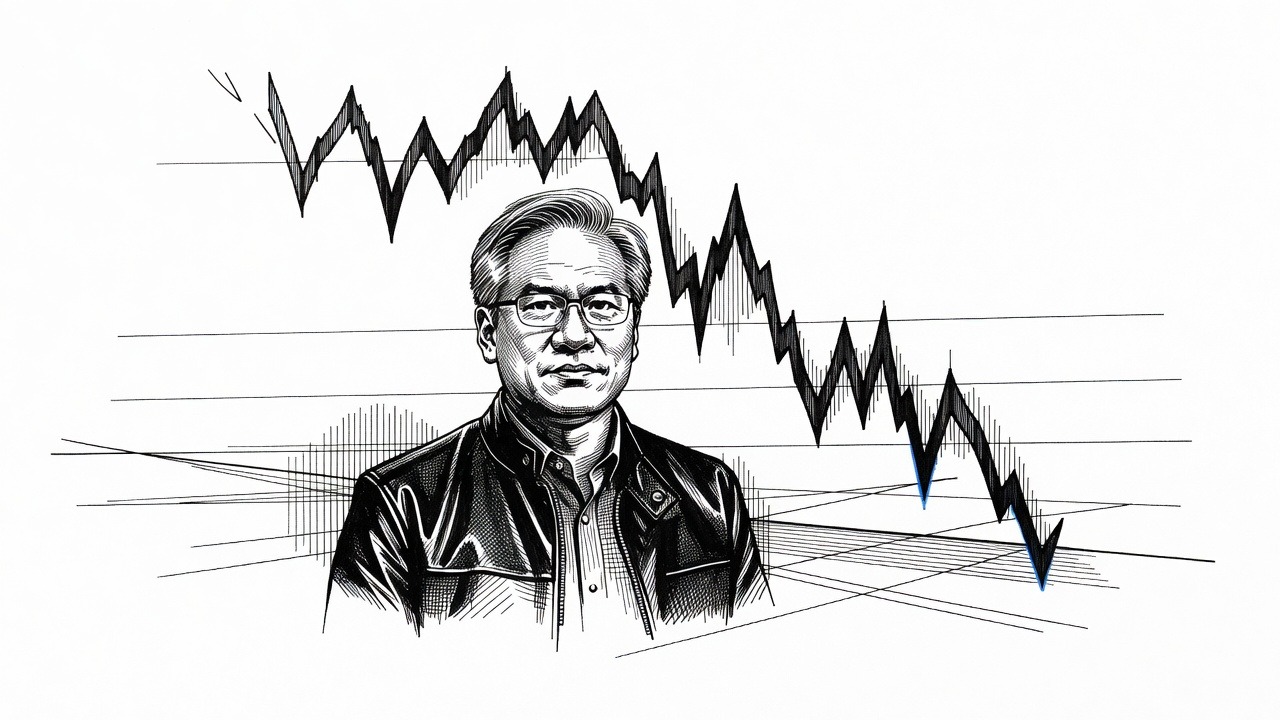
A 4% intraday drop in the Nasdaq is not a rounding error. It is a warning about who is holding the bag when the biggest bet in modern capitalism wobbles.
The report ties the swings to Nvidia and Micron, and to a rally earlier in the week credited to Jensen Huang's return as Nvidia's chief executive. That detail deserves caution, since Huang has run the company since he co-founded it in 1993. But the framing is revealing even if it is garbled. We now live in an economy where trillions of dollars of paper wealth rise and fall on the perceived mood and mystique of one executive and a handful of chip and cloud companies. That is not a healthy market. It is a fragile concentration of faith.
The defenders of the AI boom say this is just volatility, that markets breathe, that long-term holders will be fine. Some will. The question is which ones. A wealthy household with a diversified portfolio can sit through a bad week. A schoolteacher whose pension fund, or a nurse whose 401(k) target-date fund, is quietly stuffed with the same five or six mega-cap stocks has not made a considered bet on artificial intelligence. She has been enrolled in one by an index methodology.
This is the part the market cheerleaders skip. The gains from this boom have flowed overwhelmingly to founders, early investors and executives. The risks are being spread across everyone with a retirement account, everyone whose local utility is building out power capacity for data centers, and everyone whose state offered tax breaks to lure those facilities. Profits get privatized. Exposure gets socialized. We have seen this movie, and we know how the third act goes: when the bubble deflates, the same voices demanding deregulation will discover the virtues of public rescue.
And the economy has been leaning on this wager. A large share of recent American growth has come from AI-related investment: chips, servers, buildings. That is a thin foundation for a country where wages for most workers have struggled to keep up with costs. If a single sector's capital spending is propping up the headline numbers, then a stock slump is not just a Wall Street story. It is a threat to the jobs and budgets of people who never owned a share of Nvidia.
So what should Democrats and the broader Left say? Not that technology is evil, and not that markets should be abolished. The argument is simpler and harder to dodge. If AI is going to be the engine of the American economy, the public deserves a real stake in it and real protection from its failures. That means antitrust scrutiny of the firms controlling the chips and the cloud. It means disclosure of how much of public retirement money is tied to a few companies. It means making data center developers pay their own way on energy and water rather than passing the bill to ratepayers. And it means a labor policy that doesn't treat displaced workers as an externality.
The Left should also be honest about its own failure. Too many liberal politicians have embraced the AI boom as a ribbon-cutting opportunity, courting data centers and chip plants while asking almost nothing in return. Industrial policy without public return is just a subsidy with better branding.
The market will recover some days and slide on others. The real test is whether, when the music slows, ordinary people are once again told to absorb the loss while the winners keep the prize.
How it may affect me
If you hold a 401(k), IRA or pension tied to broad U.S. stock index funds, a large portion of your money is likely concentrated in a few tech giants, so check your fund's top holdings. Data center growth can also push up local electricity costs, so watch your utility's rate filings.