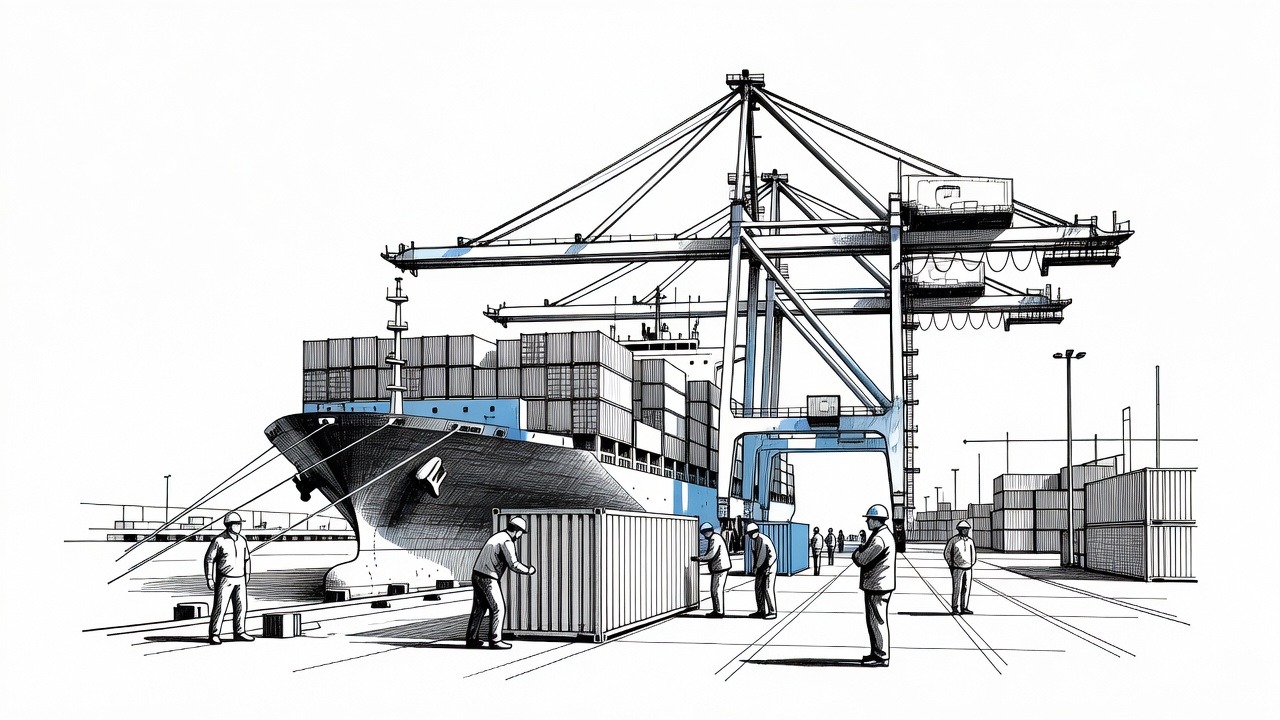
Two Libyan soldiers are dead, and the first instinct in Washington and Brussels will be to treat this as a Russia story, or a Ukraine story. It is a Libya story, and Libya is the one party in this episode that never chose the war.
Start with the obvious. Russia launched a war of aggression, and Ukraine has every right to hit Russian military assets. A corvette is a warship, not a charity. If Zelenskyy's footage holds up, and his claim that the Merkury was sunk is so far his claim, Kyiv will argue that Moscow is using Libya as a logistics and naval foothold, and that a country that wages war on Ukraine's cities cannot expect a sanctuary in the Mediterranean. That argument deserves a hearing.
But the Left's job is to ask who pays when a great-power war spills into somebody else's harbor. Here the answer is Libyan conscripts at a port in a country that has been cracked in half since 2011. Eastern Libya is run by Khalifa Haftar and his family. He has spent years selling access to anyone who pays: Russian mercenaries, Emirati money, Egyptian backing, and quiet European and American engagement over oil and migration. Hosting Russian warships was his bargain, not the choice of the Libyans who live in Benghazi. When the bill came, ordinary soldiers took it.
The eastern administration's reaction is almost comic. It condemns the strike, complains to the United Nations, and then announces a joint investigation with Russia. Asking one of the parties to the war to help investigate an attack on its own ship is not an inquiry. It is a press release. Tripoli's government, the one the UN actually recognizes, is right to demand answers from Kyiv. It is also right to be furious that its country has been turned into a rented battlefield.
The West's hands are not clean either. For a decade, American and European governments treated Libya as a problem to be outsourced: keep the oil flowing, keep migrants off boats, and shake hands with whichever strongman controls the relevant coastline. Haftar, a former CIA-linked asset who launched a bloody assault on Tripoli in 2019, was courted anyway. Then Western capitals expressed alarm when Moscow took the same invitation. You cannot treat a fractured state as a marketplace and then act shocked when your adversary shops there.
There is also a precedent problem that anyone on the Left who cares about law should say aloud. We rightly insist that Russia's invasion violates the UN Charter, and that the rules matter most when the powerful would prefer to ignore them. If Ukraine is to keep the moral and legal high ground, and it should, then its strikes beyond its borders need transparency: what was targeted, what intelligence guided it, what care was taken to avoid Libyan casualties. Ukraine's allies should ask those questions privately now, before the next port, the next flag, the next set of dead bystanders.
The Left is split between those who treat every Ukrainian action as beyond criticism and those who treat any escalation as proof that arming Kyiv was a mistake. Both are lazy. Russia bears primary responsibility for a war that now reaches the Libyan coast. Ukraine bears responsibility for how it fights it. Libya's warlords bear responsibility for inviting a belligerent navy into their harbor. And the Western powers that built the Libya of rival governments and open ports should stop pretending it just happened.
The lesson is not that Ukraine must stand down. It is that wars do not stay where they started, and the people least able to refuse them are the ones who end up burying the dead. Somebody should say these two soldiers' names, and demand a real investigation, not one co-written by the Kremlin.