The most revealing detail in this story is the smallest one: 48 missiles, waiting on a signature.
Nobody has announced a policy of abandoning Ukraine's air defenses. No one has stood before Congress and argued that Russian ballistic missiles should hit Ukrainian apartment blocks more often. Instead, an agreement sits on a desk, and a defense secretary's pen stays capped. That is how a country walks away from an ally without ever owning the decision.
Consider what Patriot interceptors do. They are not tanks rolling toward Moscow. They do not threaten Russian territory. They shoot Russian missiles out of the sky before those missiles land on power plants, hospitals and children's bedrooms. Delaying them is not neutrality. It is choosing which Ukrainians get a better chance of dying this winter.
Then look at the logic Moscow offers. The Kremlin says Western arms shipments hurt the prospects for a deal and that a halt to supplies is a condition for a ceasefire. Translate that out of diplomatic language: stop helping the country being invaded, and the invader will consider stopping. Every hold-up, every "review," every unsigned form moves American policy closer to that demand without Putin giving up a single thing. This administration keeps promising a peace deal. Its method seems to be applying pressure to the party that is being bombed.
The serious opposing argument deserves an answer. Patriot interceptors are scarce, and the U.S. military has its own needs, in the Middle East and in the Pacific. Pentagon planners who worry about stockpiles are not imaginary, and the Left should not pretend that munitions grow on trees. But if scarcity is the reason, say so publicly and defend it. Tell Congress how many interceptors exist, how many are being produced, and what trade-off is being made. Scarcity is also a choice. It comes from decades of underinvestment, thin contracts and an industrial base run for profit rather than readiness. The fix is to expand production and sign the deals. Holding back one allied order while claiming the cupboard is bare is not strategy. It is rationing by silence.
There is also a question the "America First" crowd should have to answer. To the extent European governments are buying American weapons for Ukraine, which has been the stated model since NATO set up its purchasing mechanism, the hold-up costs U.S. taxpayers nothing. It denies American manufacturers business and Ukraine protection, and the only beneficiary is the man in the Kremlin. If a foreign customer is ready to pay, and the Pentagon still stalls, the stalling is political, whatever the language of logistics.
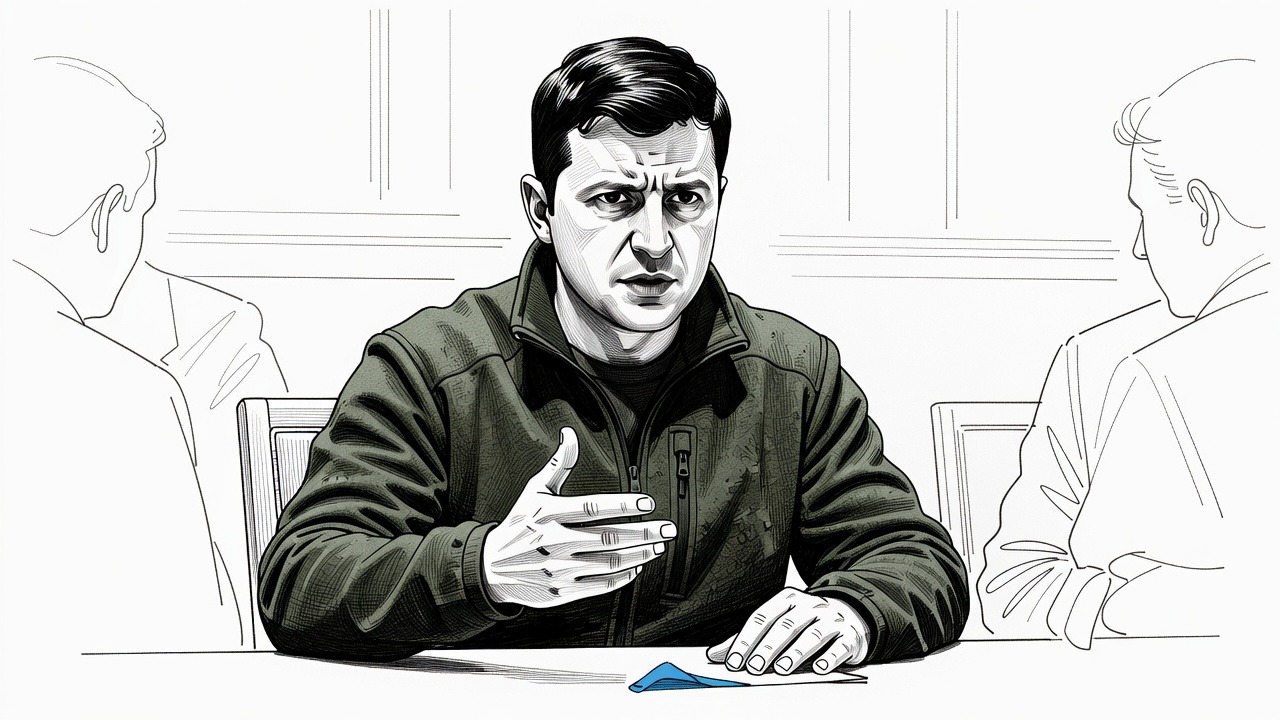
Democrats should not escape blame either. Zelensky is now begging Congress to step up pressure on Russia if Trump's deal fails by year's end. Why does a foreign president have to make that request? Congress holds the purse and the power to impose sanctions. Too many Democrats have been content to issue statements of concern, as if outrage were a legislative strategy. Defending Ukraine is not a favor to Zelensky. It is a judgment about whether borders can be redrawn by force and whether a nuclear-armed aggressor learns that terror works. A caucus that believes this should force votes, attach conditions and make Republicans choose in public.
The Left has its own legitimate wariness about endless war and about feeding the arms business. But there is a difference between opposing a forever war and refusing to help a country defend itself while negotiations drag on. Real peace in Ukraine will come when Putin concludes that time is not on his side. Every unsigned approval tells him the opposite.
Sign the order. And if the administration will not, it should have the courage to tell the American people why.