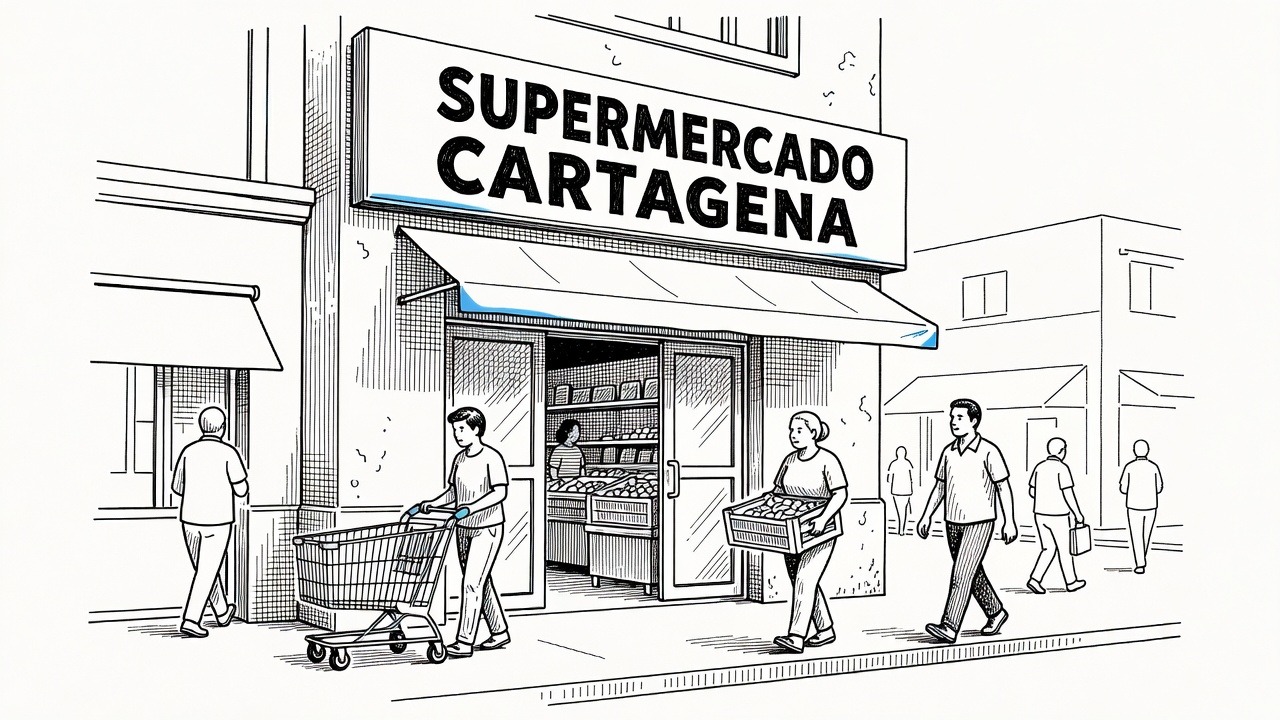
The first duty in a hostage standoff is arithmetic: about 30 people walked into a Cartagena supermarket on an ordinary Tuesday, and every one of them has to walk out. Everything else is secondary, including the political brand of the man announcing the details.
That man is President Abelardo de la Espriella, elected as the candidate of toughness. His whole pitch is that Colombia's disorder will be met with force, and he now has a live crisis in which force and speed are exactly the instincts that get civilians killed. The men reportedly burst into the store after a botched attempt on an armored cash truck. They are cornered, armed and improvising, and snipers are in position. Those are the conditions in which a commander's patience matters more than his rhetoric.
Colombians don't need a theory lesson here. They have the memory. In 1985 the state retook the Palace of Justice by force, and the toll included justices, civilians and people who were never seen again. Nobody who lived through that, or who has read about it, should want a president who treats a hostage-taking as an audition. The Left carries its own baggage on this, since the M-19 started that tragedy. But the lesson holds across the spectrum: when the state treats hostages as collateral, it loses what it claims to defend.
So the questions worth asking now are practical. Is there a trained negotiator working the line, or only a tactical team waiting for a window? Is the president letting professionals run the operation, or narrating it for the cameras? The release of five elderly women suggests the men are talking, and talk is the state's best asset. Whatever happens, officials should be held to the standard that no hostage was sacrificed for a cleaner headline.
Once this ends, the harder conversation begins, and my side must have it honestly. The Left has too often treated insecurity as a talking point of the Right, as if fear of crime were false consciousness. It is not. In Cartagena, the people who live with armed robbery, extortion and gang recruitment are overwhelmingly poor, in a city that sells itself to the world through its colonial walls and beach hotels while the barrios beyond them go without jobs, schools and policing that actually protects them. Violence falls hardest on those who can't buy private guards. A left that has nothing to say to them about safety deserves to lose to the man with the snipers.
But the answer to that failure is not theater. Armed robbery of cash transports is organized, planned crime, and it is fought with investigation, intelligence, prosecutors who can build cases, and police who aren't bought. It is also fought with the dull, unglamorous work of giving young men a reason not to join a crew. A strongman can promise to crush crime, but he can't make the arithmetic of a poor city's labor market disappear by raising his voice.
The test for this government, and for anyone judging it, comes in the next few hours and in what follows. If the hostages come out alive through restraint and professionalism, the president deserves credit, and I will give it. If the crisis turns into a show of force that costs innocent lives, no slogan about order will cover it. Colombia has buried enough people in the name of security. The standard should be the one the state so often fails: protect the people inside first, and win the argument about toughness second.