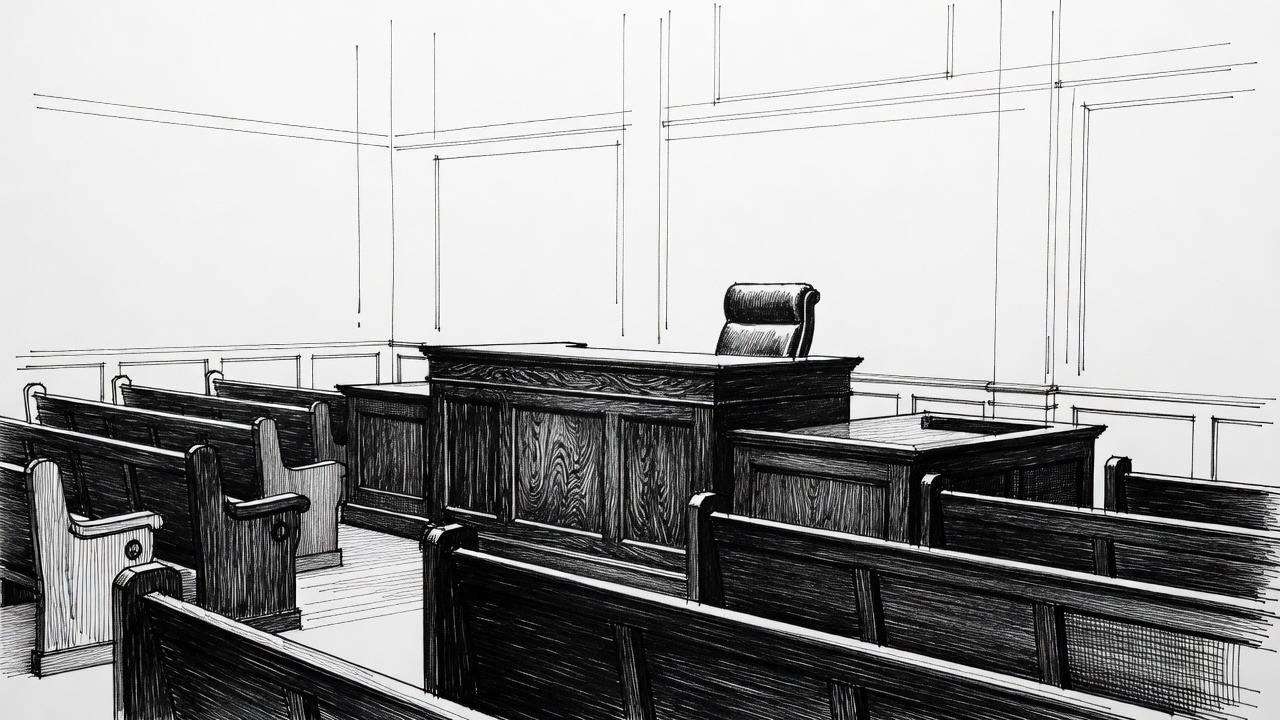
Eight verdicts. That is how many sabotage convictions Russian courts recorded before the tanks crossed into Ukraine. Since then there have been 300, covering 423 people, and the pace is still climbing: 20 convicted in 2023, 109 in 2024, 144 in 2025, and 137 already this year, with 90 more cases waiting. A state fighting an unpopular war abroad is building a second front at home, and the second front is made of courtrooms.
The Kremlin's account is simple. Wartime brings saboteurs, and the law is catching them. Some of the cases are surely real. Ukraine's services do recruit people inside Russia, and a Left that cannot say so is not serious. But a number like this should make us ask who is filling the dock. The study counts verdicts, not motives, so it can't tell us. Years of reporting by Russian independent outlets and rights groups point to a pattern: the people prosecuted are rarely trained operatives. Many are teenagers, pensioners and people in debt, and some were manipulated by phone scammers or paid a few thousand rubles to set fire to a relay cabinet or a military enlistment office. Putin's state has found that its most dependable supply of enemies is the powerless.
Sabotage law is useful for authoritarians because the word covers everything. An act of anti-war protest, a desperate scam victim's arson and a real intelligence operation all arrive in the same file. Once they are merged, the regime never has to explain why a war it called a limited special operation requires a growing criminal apparatus to defend it. Fear needs a steady supply of examples, and every verdict is a public notice to ordinary Russians: the war is not optional, and neither is your silence.
This is where the Left has work to do, starting with ourselves. For years a part of the Western left treated Russia as an awkward but basically defensive power, a counterweight to NATO and American arrogance. That posture was always a moral shortcut, and these numbers expose it. Russia's own labor movement is hollowed out, its anti-war left is jailed or in exile, and its courts now work as an instrument of mobilization. Anyone who talks about solidarity should start with the Russians being sentenced, many of them poor, young, and without any political cover. Opposing American empire does not oblige anyone to excuse a Russian one.
The lesson also travels west, uncomfortably. Governments in democracies increasingly reach for the vocabulary of sabotage, terrorism and national security to deal with disruptive protest, and every such expansion is sold as a response to a genuine threat. Real threats exist, and Russian hybrid sabotage in Europe is documented. That is exactly why civil libertarians must insist on narrow definitions, evidence and proportionality. A state that can call everything sabotage will eventually call dissent sabotage, which is what Moscow is demonstrating in real time.
The cleanest test of any security law is who ends up in prison under it. In Russia, the early answer is not the generals' enemies. It is the people with the least protection and the fewest lawyers. Defending them does not require believing every one of them is innocent, only that a justice system built to produce 300 verdicts in four years has stopped being a justice system and become a deterrence machine.