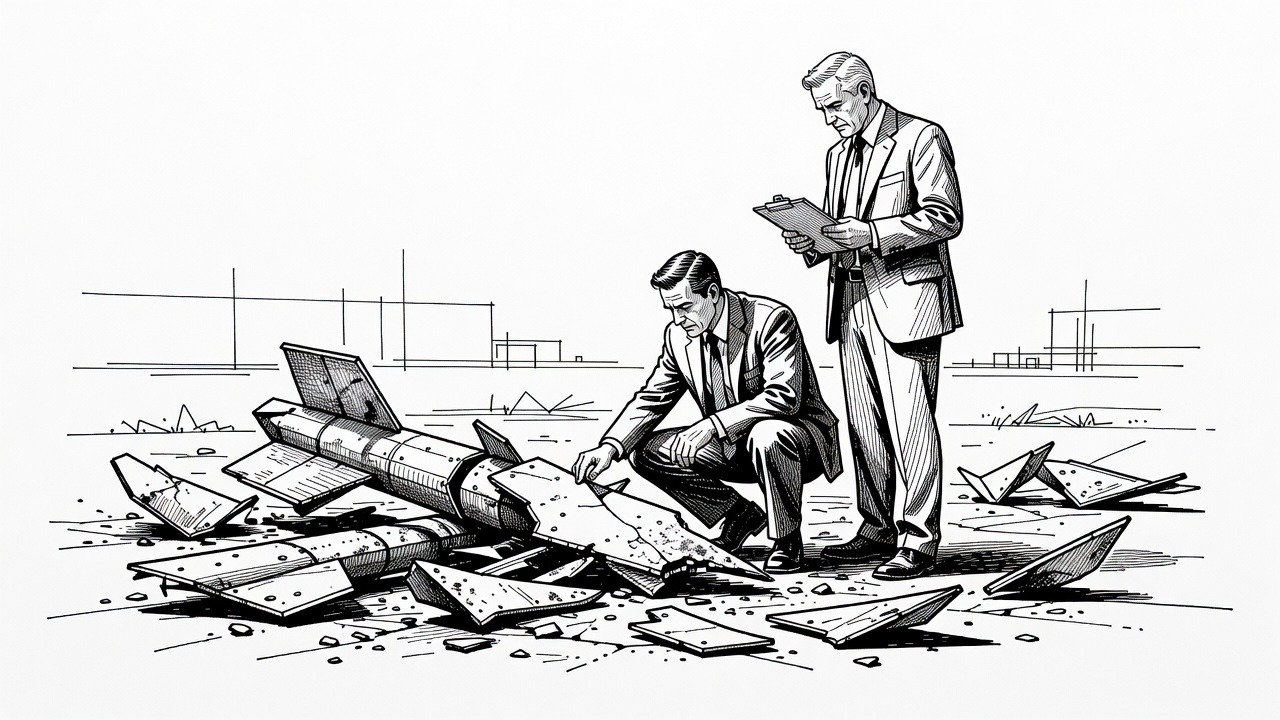
The first thing to say about missile fragments in a Polish field is that nobody should be allowed to shrug. Kh-101 cruise missiles are not a drifting balloon or a navigation glitch on a weather drone. They are long-range weapons built to destroy buildings, and pieces of them fell in three places inside a NATO country. Poland's prosecutors in Lublin say they will send the debris for specialized analysis. Fine. Run the analysis. But we already know whose war this is, and we know it keeps leaking across the border.
Whether this was a stray, a probe or a deliberate message, the practical conclusion is the same. These missiles were almost certainly flying toward Ukrainian cities, and Russia fires them in numbers that no air defense system anywhere can perfectly contain. When Moscow rains missiles on Ukraine night after night, some will end up in Poland, Moldova or Romania. The Eastern Sentry mission, which NATO launched after Russian drones strayed into Polish airspace last year, was supposed to settle this. Deputy Defence Minister Paweł Zalewski is now talking about making it more effective, which is a polite way of saying it isn't yet.
The Left has a particular job here, and it isn't to wring its hands. Part of our movement still treats any talk of air defense as a gateway drug to militarism, and wants an immediate "negotiated peace" without asking who gets to dictate the terms. Peace is the oldest value we have. But peace that depends on the invader's goodwill is just a delay. Ukrainians who shelter in subway stations from these same missiles are not an abstraction in a geopolitical chess game. They are workers, nurses, teachers and kids, and the thing most likely to protect them is more interceptors, not more speeches.
That makes the failures on our side of the Atlantic hard to excuse. Republicans in Congress spent months turning Ukraine aid into a hostage negotiation. The president has treated NATO as a protection racket and Vladimir Putin as a difficult but fundamentally reasonable businessman. Every hesitation is read in Moscow as a price list. Democrats should say plainly that collective security is a public good, and that a country which only pays for it when the invoice is flattering will eventually pay far more.
But the Left should also refuse the lazy version of this debate, in which any spending labeled "defense" is sacred. Air defense has a brutal cost problem. A cheap drone or an aging cruise missile can force the defender to fire an interceptor worth many times as much. Europe's answer cannot just be to hand fat contracts to a few contractors and hope for the best. If governments are going to pour tens of billions into shields, they should buy them in a way that builds public capacity: multi-year purchase commitments, open production data, caps on windfall margins, and a real push for cheaper interceptors made in Europe. Security should not become another venue where taxpayers underwrite shareholder returns and call it patriotism.
The same goes for the politics at home. European governments spent years lecturing southern and eastern neighbors about austerity, then discovered that the countries nearest to Russia were the ones that had been right about the threat. Poland did not get to treat this as a theoretical debate. Neither should the rest of us treat Polish villagers as a buffer zone for our comfort.
The lesson of these fragments is not that NATO should panic. It is that deterrence is cheaper before the next missile lands on a house than after. Strengthen the shield over Poland and over Ukraine, build it in the open and on public terms, and stop pretending that hesitation is a form of peace.