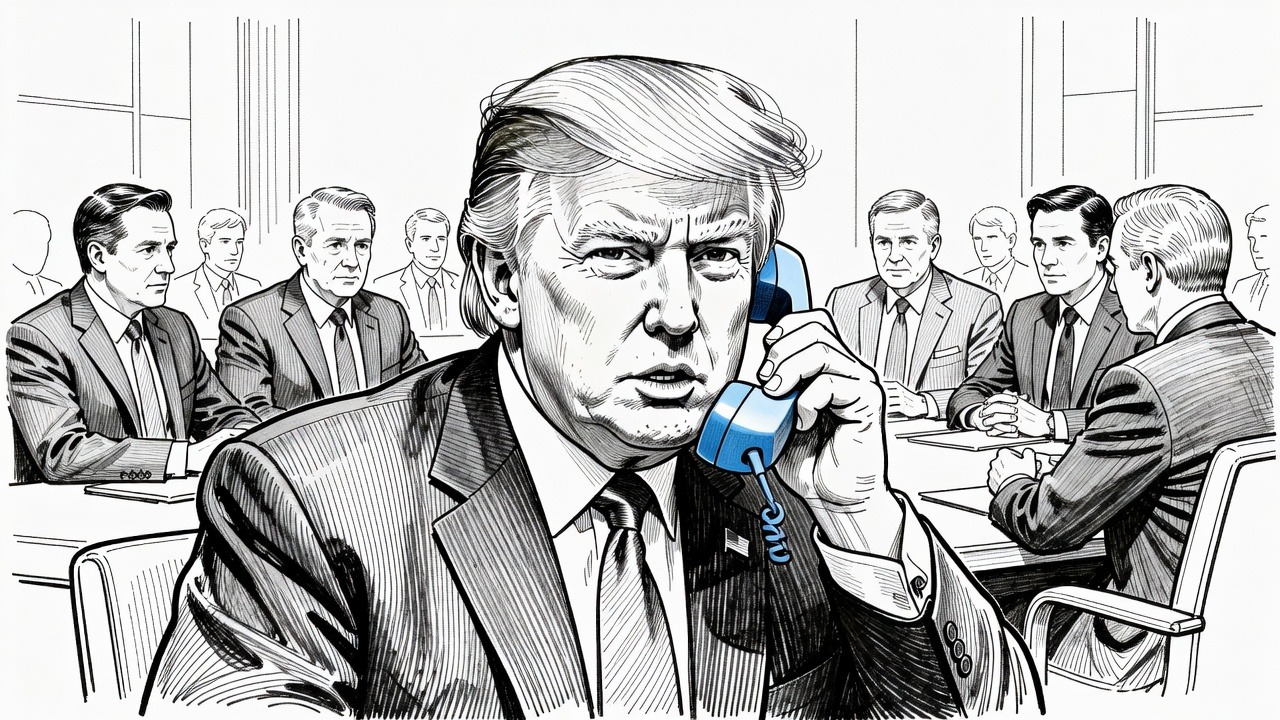
Consider the scene. The American president returns from a meeting with Vladimir Putin and Xi Jinping, picks up the phone, and tells a room of European leaders in Berlin that they could be spending their money on domestic priorities if the war would just end. It is delivered as folksy common sense. It is a sales pitch for surrender.
The sentence only works if you leave out who decides when the war ends. Europe does not. Putin does. Zelenskyy said as much, noting he is far more doubtful than Washington that the Russian leader is ready to concede anything. Telling Europeans to wrap it up swiftly sounds like pressure on the party that invaded, but it lands on the party that was invaded and the neighbors paying to keep it standing. When the only side under pressure is the one with no ability to end the war by stopping, "swift" means "on Moscow's terms."
The "domestic priorities" line is also a trap, and my side should say so. There is a real argument about European housing, health care and strained budgets, and the Left cares about it more than Trump ever has. But Trump is not offering a trade of Ukraine for hospitals. He is offering a cheaper way to pay for Russia's gains. Europe will not escape the bill by letting Ukraine fall. It will pay it later, in larger defense budgets, refugee flows and a Russian army that learned aggression works. The bill for appeasement has never been smaller than the bill for deterrence.
The hypocrisy is hard to miss. Europeans were told for years to spend more on their own security. Now that they are doing so, and are buying American weapons for Ukraine, they are lectured about spending too much. The message shifts with the audience, but the through-line is that Trump treats a war of conquest as a ledger item, and he treats the people being conquered as a line he would like trimmed. Meanwhile he takes meetings with the leaders who benefit from the confusion.
There is a lesson here for the Democratic coalition too. Part of the Left has argued, with good intentions, that the answer to Ukraine is simply to negotiate now. I understand the moral weight of that. Nobody should want young men dying in trenches for a front line that barely moves. But "negotiate" is not a policy until you say what Russia gives up. Zelenskyy is asking for something concrete: an agenda and a timetable for the next round of talks. Serious diplomacy has terms and deadlines. What Trump offers is closer to a mood, one that happens to track what the Kremlin wants.
The quiet hero of this story is Friedrich Merz, of all people. A permanent financing mechanism for Ukraine inside the EU's next long-term budget, passed by majority vote, would end the humiliating annual ritual of one leader holding up the continent's support. Everyone knows which leader. Viktor Orbán has turned the unanimity rule into a toll booth for Moscow's interests. Replacing the veto with majority rule is a democratic idea: if most of Europe's elected governments back Ukraine, one government should not be able to block them. Progressives who worry about democratic accountability in Brussels should still back this, because the alternative is accountability to the most obstructive member.
Trump's call was not a threat, as Zelenskyy generously put it. It was something more revealing: a hint of where American patience ends. Europe should hear it for what it is and stop waiting for Washington to be the adult in the room. Build the funding, remove the veto, and make Ukraine's survival something no phone call can cancel.