Here is the whole scandal in one sentence: the nation's top intelligence official had to be asked whether the Russian president is a friend of the United States, and the answer he found was that Vladimir Putin is not a friend "on Ukraine."
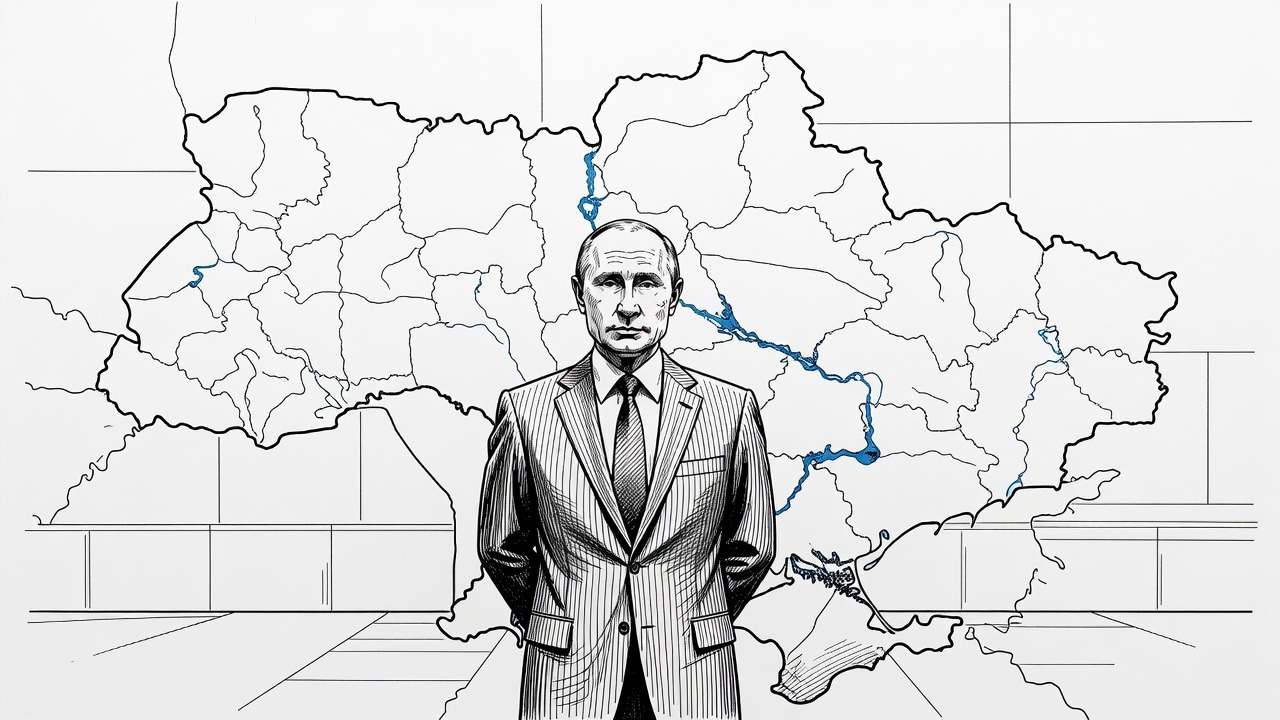
On Ukraine. As if the war were a minor zoning dispute in an otherwise warm relationship. Russia launched the largest land invasion in Europe since 1945, and it holds roughly a fifth of Ukrainian territory. Yet the Director of National Intelligence, Jay Clayton, reached for a qualifier, then added that the president's language was "appropriate" given the setting, a summit in China where Trump sat with Putin and Xi.
The best defense of Trump deserves a hearing. You can't run a world in which 4,000 nuclear warheads sit in the hands of someone you refuse to speak to. Kennedy negotiated with Khrushchev. Reagan sat down with Gorbachev. Civility with an adversary is not treason, and I'd rather have a president who talks than one who dares Moscow to blink.
But that argument proves far less than it needs to. Talking to Putin is statecraft. Calling him a friend is something else. Reagan called the Soviet Union an evil empire and still negotiated arms treaties, and the formula was "trust but verify," not "we're all friends here." Nobody has explained what the word buys. Putin has not softened his demands, shortened his war or returned an acre. Flattery that purchases nothing is not diplomacy. It is a gift.
Notice, too, what Trump said when pressed on whether Putin is America's friend: he "couldn't speak for the country." That is the most honest line in the whole episode. The president is conceding that his warmth is personal, not national. It is a private relationship conducted with a public office, and the American people never signed off on it.
The people who live closest to Russian power have noticed. Donald Tusk said Putin is not Poland's friend and never will be. Poland does not need a seminar on this. It remembers what Russian friendship looks like. Volodymyr Zelenskyy, asked about Trump's remarks, shrugged and walked away. That shrug is worth more than a thousand op-eds. It's what exhaustion looks like when your country is being bombed while the leader of its largest backer trades pleasantries with the man doing the bombing.
My own side should not get off free. Democrats once pressed a literal reset button with Moscow and have underestimated Putin before. But a failed bet on engagement is a different thing from rhetorical affection for the aggressor, and an honest accounting of past naivety is no excuse for repeating it.
The deeper damage is to the intelligence office itself. The point of a Director of National Intelligence is to tell presidents what they don't want to hear and to tell the public what's true when the White House won't. When the director's first instinct is to translate the boss's praise of an adversary into something defensible, the institution stops functioning as a check and becomes a press office. Clayton didn't have to call Trump wrong. He just had to say Putin is not a friend, full stop, and that the language of friendship does not describe a man who has spent four years trying to erase a neighboring country.
Adversaries read signals. Moscow reads this one clearly: the cost of the invasion, at least in rhetoric, is approaching zero. Allies read it too, and they quietly start planning for an America whose commitments end where the president's feelings begin. That is how alliances decay, not through one dramatic betrayal but through a thousand small hedges from people who should know better.