It says something about this war that the most vivid environmental testimony from the Strait of Hormuz came from a 56-year-old man in a swimsuit.
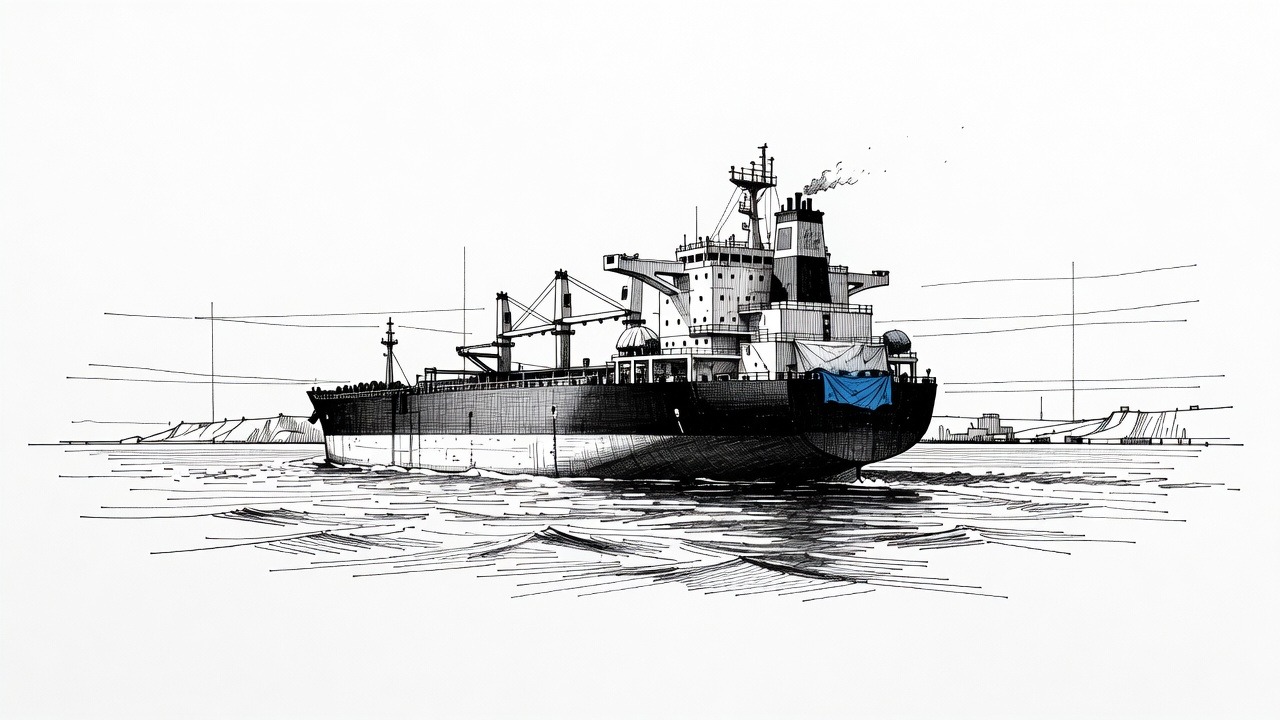
Lewis Pugh swam 15 kilometres over three days off Oman. By his account, an oil tanker was struck a few kilometres away while he was in the water, and other vessels caught fire. Governments with satellites, navies and ministers for everything had not made the case that the sea itself is a casualty. He had to do it with his body, because no one in a position of power was doing it with a budget line.
That is the real story. Wars are tallied in the dead, the displaced and the price of crude. The ocean never appears on the ledger. Yet the Gulf is a shallow, warm, salty and already stressed body of water, with limited exchange with the open sea. Whatever goes into it tends to stay. Pollutants don't observe ceasefires. Neither do the fishing communities on the coast, or the millions of people across the region who depend on desalination plants that draw from that same water for drinking. We have seen what a deliberate oil release in the Gulf did in 1991. Nobody should need a swimmer to remind them.
The usual response is that this is the price of war, regrettable but secondary. That is exactly the choice hiding inside the word "secondary." Someone decides what is secondary, and it is never the people who decide. The costs of a burning tanker are paid later, by fishermen, coastal towns and children who weren't consulted. Those who start and sustain a war do not usually pay for the cleanup, and the law gives them every incentive not to. International humanitarian law nominally protects the natural environment in conflict, but enforcement is close to nonexistent. A rule with no consequences is a suggestion.
The Strait of Hormuz is also the clearest argument for energy independence ever drawn on a map. A fifth or so of the world's oil moves through a channel that any belligerent can threaten. For decades we have been told that cheap fossil fuel is a security asset. It is a hostage situation. Every time a shipping lane becomes a front line, households far away feel it in what they pay for fuel and food, and the lesson should be obvious: an economy that runs on a chokepoint is permanently one missile away from crisis. Every solar panel, heat pump and transmission line is a small act of disarmament.
The Left should also be honest about its own silence. Environmental movements spend enormous energy on emissions targets and very little on the war machine that burns fuel, wrecks ecosystems and swallows money that could fund the transition. Antiwar politics, for its part, too often treats ecological damage as an afterthought to the human toll. Both are failures of imagination. The planet's life support systems are not a separate issue from war. War is one of the ways we dismantle them.
Pugh's demands are modest: stop the fighting, reopen the waterway, clean up the pollution. In a sane political order those would be the baseline, not the cause of a lone endurance swimmer. The fact that they require a three-day swim to register tells us how little the ocean counts when the guns are loud.
The sea can't lobby, vote or evacuate. Somebody has to speak for it, and it shouldn't take a man treading water beside a burning ship.