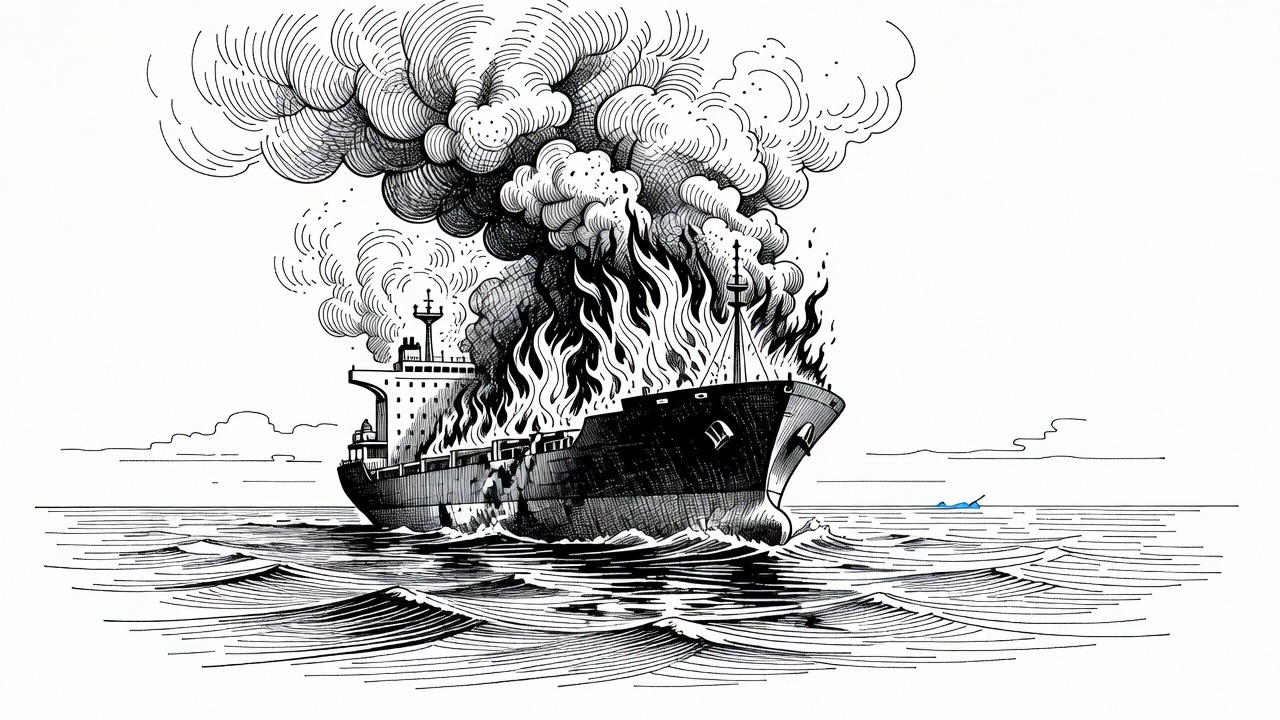
A cargo ship burns in the Gulf of Finland, and Finnish officials say a drone hit it and that Ukraine was "highly likely" behind it. Their own spokesman says the reason for targeting the ship is unclear. That sentence should bother everyone who wants Ukraine to win.
Let me be plain about where I stand. Russia invaded Ukraine. Ukraine has every right to strike the machinery that feeds Russia's war, including ships that carry its cargo. Nobody on the Left should dissolve into hand-wringing about Moscow's "security concerns" while Russian missiles hit apartment blocks in Kyiv. Russia has also spent years menacing Baltic infrastructure, from cut cables to a shadow fleet of rusting tankers. It does not get to play the victim of a Baltic incident.
But a righteous cause is not a strategy, and a strike nobody can explain is not a strategy either. The Gulf of Finland is not a remote theater. It is a narrow, shallow, brackish sea bordered by Finland, Estonia and Russia, two of them NATO members and all of them close enough to feel what happens on the water, busy with civilian shipping and commercial flights. Finland had to impose aviation and maritime restrictions so it could shoot down drones if necessary. Put that sentence in front of a Finnish fisherman or an Estonian ferry captain. The war has become something they have to organize their days around, and no one asked them.
The environmental stakes are real too. The Baltic flushes itself slowly. A burning vessel with fuel aboard is a slow-motion disaster for the coastline and the communities that live off it. When a drone hits a ship in those waters, the people downstream pay, and they are not the ones who chose the target.
The point is accountability. Who decides that waters this close to NATO shores are a legitimate place to open a new front? If Kyiv did this, did its allies know? Did Helsinki? If a drone flew in or near Finnish airspace to do it, that is Finland's problem, and its government is entitled to answers before its citizens absorb the risk. The Kaliningrad governor's report of a "suspicious object" approaching from Lithuania, dismissed as harmless, shows how thin the margin is. One misread radar track and a Baltic member state is accused of hosting an attack.
This is where the failure is political, and it is mostly Washington's. For nearly a year, American policy has swung between flattering Vladimir Putin and threatening to walk away from Europe. Europe is left to guess what the United States will tolerate, and Ukraine is left improvising a war of attrition at the edges. The Right in America treats Ukraine as a bill to be cut. It never asks who pays when the war leaks into the commons. Finland, which joined NATO precisely to avoid being the exposed frontier, is now managing drone alerts in its own gulf.
Supporting Ukraine means supporting it with a plan. That means coordinated targeting with allies and clear rules about what happens near NATO shores. It also means a real diplomatic track, so that the next burning ship is not a rehearsal for something worse. The alternative is a war in which the people with the least say, Baltic coastal communities and the multinational crews of these ships, carry more of the risk each month.
The Left has always insisted that the costs of war be named and the decisions behind them made accountable. Do that here, even when the cause is just. Especially then.
How it may affect me
If you live in or travel through Finland, Estonia or nearby Baltic coastal areas, expect possible temporary airspace and shipping restrictions in the eastern Gulf of Finland, which can delay flights and ferries. A sustained escalation could also raise Baltic shipping insurance costs.