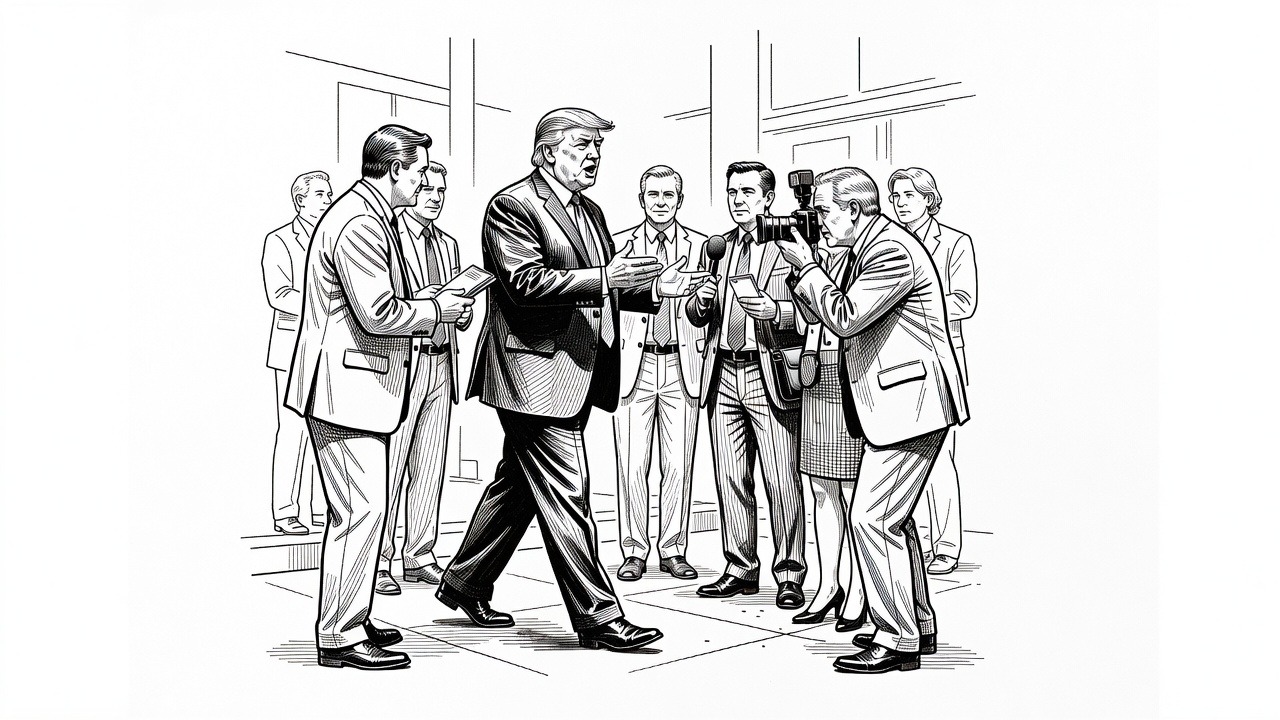
A week before Taiwan elects its mayors, the Democratic Progressive Party filled a junior high in New Taipei and offered a proposition that should insult anyone who has ever paid a housing loan or waited out a flood.
Shen Po-yang, running in Taipei, said voters would decide the future of the two cities, and that cooperation and competition between them could help bring both onto the international stage. Su Chiao-hui, running in New Taipei, said her leadership would connect New Taipei with Taipei, Keelung and Taoyuan and strengthen a regional platform. The hall was at capacity. They needed ten minutes to walk through their own crowd. The lines that defined the rally were not about a city. They were about a stage.
That is the DPP's chronic substitution: take a municipal election and promote it into a sovereignty seminar. Mayors do not grant diplomatic recognition. They do not set the terms on which Beijing harasses the strait. They do not negotiate arms sales. The party that has held the presidency since 2016 already owns those files, and for eight of those years it owned the legislature as well. If Taiwan's international position is not what the DPP wishes, the shortfall is not the absence of a green mayor in Banqiao. Telling New Taipei voters to repair grand strategy by changing the official who signs flood-control contracts is not vision. It is a way of not being judged on the job.
The casting makes the same point. Su is a legislator, and she is also the daughter of Su Tseng-chang — premier, factional heavyweight, party father. The DPP has spent years describing the Kuomintang as a family firm. It is now asking the most populous city in the country to pretend that a famous surname and a party machine are a coincidence it would be vulgar to mention. Shen's reputation was built on disinformation and cognitive warfare, which are real problems and a miserable apprenticeship for school places, night markets and the price of an aging walk-up. A party that answers a mayor's race with an heir and an information warrior is not short of talking points. It is short of people it trusts to run things.
Nor is the joint appearance just enthusiasm. Parties rally together; that is not a crime. What the single stage sells, a week out, is that the two cities are a package. Real cooperation across the Tamsui would be a quarrel: who eats the unwanted social housing, whose land gets upzoned, which MRT line is funded first, how often a mayor is allowed to tell the Executive Yuan no. "Regional platform" is what you say when you want credit for integration and refuse to name a cost. Aligned city halls are convenient for the center. They are not automatically good for the people who live in them. Voters in these cities have had, in recent years, local governments that were not an echo of the Presidential Office, and in 2022 they chose that arrangement in a verdict harsh enough that the president resigned as party chair. The rally at Sanhe Junior High is what it looks like when a party decides the voters failed the test, rather than the other way around.
The serious green reply deserves an answer, not a cartoon. Taipei, New Taipei, Keelung and Taoyuan already function as one housing market and one job market, and four proud city halls can botch a metro as surely as one arrogant party can. Investors notice whether the north looks governable. Beijing's pressure is not a KMT hallucination; the opposition has lost national elections in part by sounding as if trade and talk could substitute for deterrence. None of those facts rescues this pitch. Deterrence is not a sister-city agreement. Metropolitan planning is not a loyalty oath. And a full auditorium is a fact about mobilization, not about competence. The opposition should treat that crowd as a warning against swagger, not as proof that green politics has become a joke. A sneer is not a budget. Candidates who show up with nothing but irritation at DPP theater will deserve to lose to it.
What they will not deserve is to have the subject changed. The future of these two cities will be settled by housing a person in their thirties can actually rent, water that leaves the street, permits that are not a factional favor, and a mayor prepared to lose a fight with his or her own party when the city's interest diverges from the center's. When the appeal on the largest stage, seven days from the vote, is the international stage itself, the campaign has already disclosed its theory of you. You are not a resident. You are an audience.
How it may affect me
If you live in Taipei or New Taipei, the winner controls four years of permits, social-housing sites, flood spending, MRT priorities and whether city hall will contradict the central government in public. Same-party control makes cross-city projects easier to impose and internal dissent rarer; divided control does the reverse. Defense and cross-strait policy remain national. Before voting, compare written commitments — housing numbers, named projects, who pays — rather than rally slogans. Outside these cities, the stake is indirect: the north is Taiwan's administrative and corporate core, so a politicized city hall changes the investment climate more than it changes diplomacy.