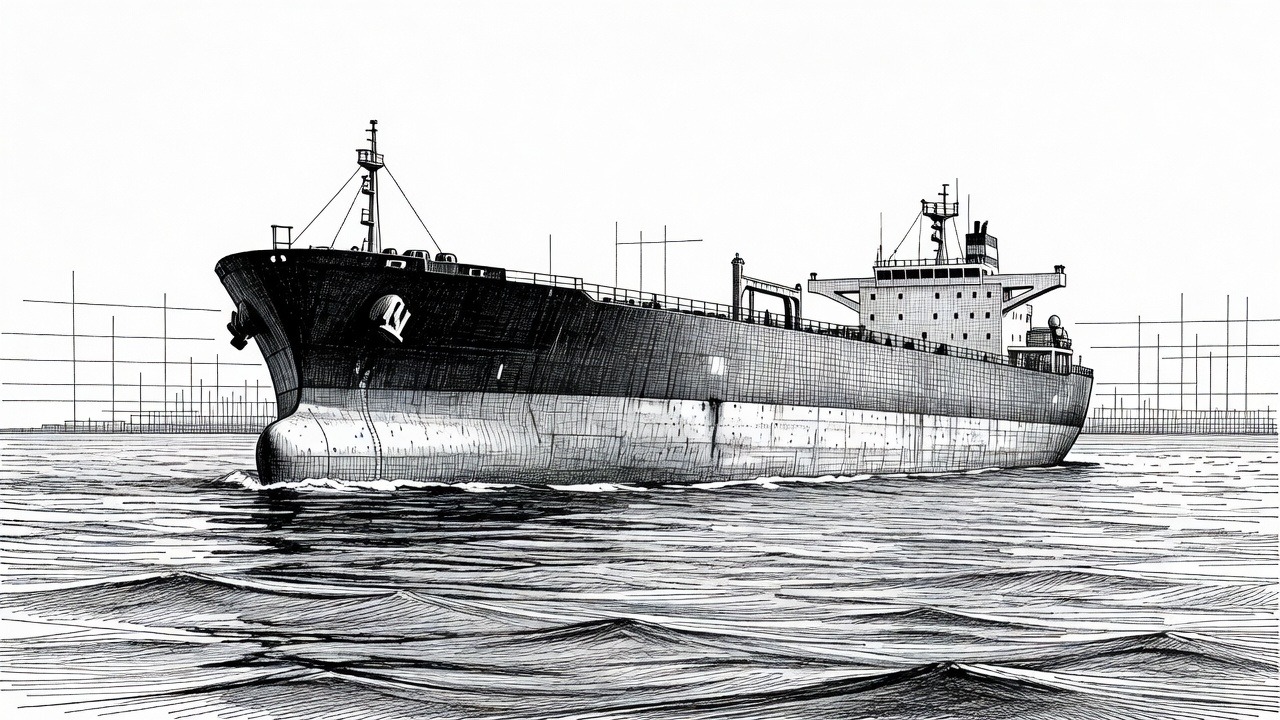
We don't know who hit the tanker. We don't even know whether it was one ship or two. The UKMTO says it can't tell whether a stern strike 11 nautical miles north of Khasab and an engine-room hit 17 miles east were the same vessel or different ones. That uncertainty should govern everything said about this incident over the next few days. It almost certainly won't.
Here is what happens in Washington when a tanker is hit near Hormuz. Within hours, officials and hawkish commentators will be saying "Iran" on cable news, before any forensic work is done. Some will be right. Tehran has harassed and seized shipping in these waters before, and pretending otherwise is the kind of naivety the Right loves to accuse the Left of. But being right by instinct is not evidence. The country that was sold an Iraqi weapons program, and a Tonkin Gulf attack that did not happen as described, has earned the right to demand proof before anyone rattles a saber.
The pattern matters more than any single attribution. A strike on a ship in a narrow waterway is exactly the kind of event that can be used by whoever wants a bigger fight. That might be Iranian hardliners, who gain from pushing the region toward confrontation. It might be Israeli or American hawks, who have long wanted one. It might be a militia freelancing. Each of them has an incentive to make ambiguity look like certainty. Calling a ship hit by an "unidentified object" an act of war is a political choice, not a finding.
Democrats should be loud about this, and too many will be quiet. The constitutional point is not complicated. If this escalates, the decision to take the country into another Gulf conflict belongs to Congress, not to a president reacting to a maritime advisory. A party that spent two decades regretting its votes in 2002 should not spend 2026 hoping the issue goes away. Say now, before the first strike order, that no incident of this kind authorizes force without a vote and public evidence.
Then look at who is actually exposed. It is not the executives and officials who will give the briefings. It is the crew in that engine room, overwhelmingly low-paid seafarers from the Philippines, India and elsewhere, working on contracts that give them no say over where the ship sails. Shipping companies price risk into insurance premiums and pass it on, while the workers bear the physical danger. The ultimate bill goes to drivers, farmers, truckers and anyone who heats a home, because roughly a fifth of the world's oil consumption moves through this one strait. A single projectile can raise the cost of living in Ohio.
This is the part of the story that rarely gets said. Our energy policy has made Americans hostage to a 21-mile-wide channel half a world away. We then act surprised when every flare-up there becomes a domestic price shock and a pretext for military buildup. Every solar array, heat pump, transmission line and electrified bus reduces the leverage this chokepoint has over us. Climate policy is also security policy, and the people who call it a luxury are the same ones who will ask for a larger Navy budget this week.
The environmental impact of the strike is still unknown. So is almost everything else. The responsible response is to demand evidence, insist on congressional authority, protect the crews, and stop treating dependence on the Gulf as a law of nature. Anyone eager to name a culprit before the investigators have finished is not being strong. They are being used.
How it may affect me
If the incident disrupts Gulf shipping or alarms markets, crude prices can rise quickly, and gasoline and diesel prices usually follow within weeks. Higher war-risk insurance on tankers can also raise shipping costs. A single unconfirmed incident may not move prices much, so watch for repeat attacks or attribution to a state.