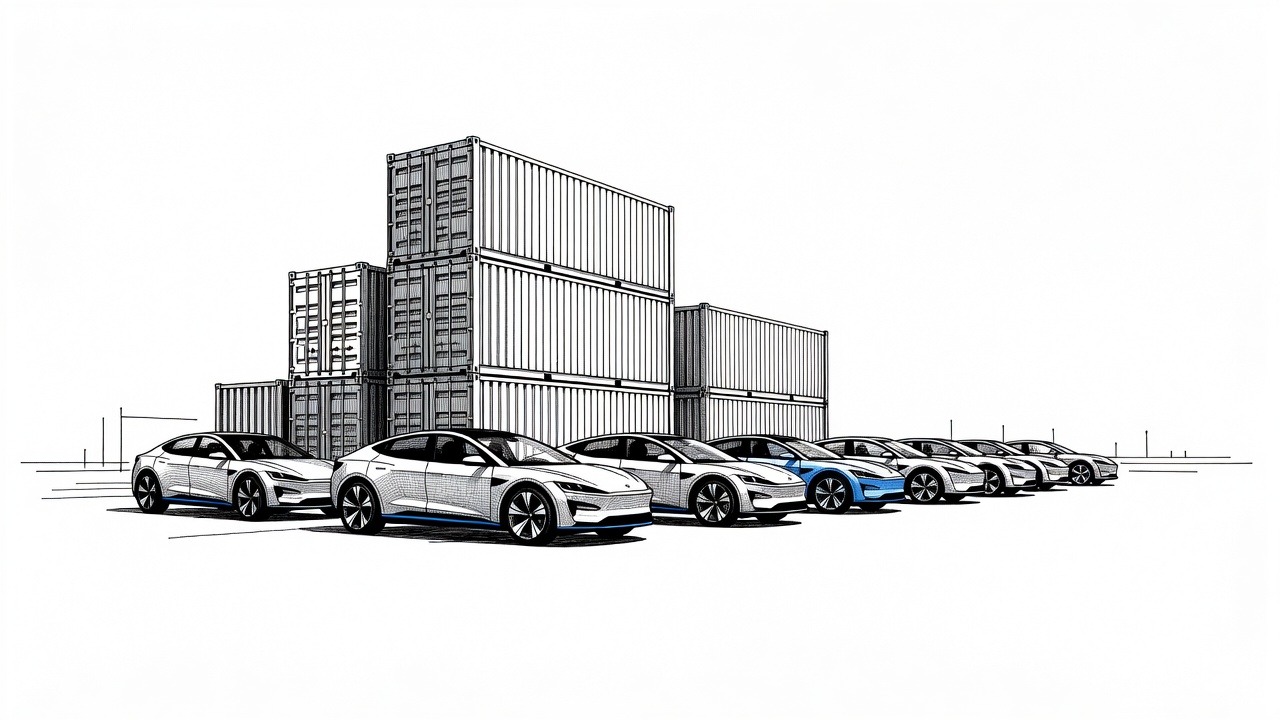
Two facts sit side by side in this story, and together they say more than either does alone. China is tightening the flow of the magnets that run electric motors, wind turbines and fighter jets. And by the industry association's projection, EVs will make up more than 70% of vehicle purchases in China this November, the eighth straight monthly record.
Beijing decided a generation ago what kind of economy it wanted, then built the mines, refineries, factories and consumer demand to match. Washington argued about it.
The American chokepoint was not an accident of geology. In 1995, a consortium with Chinese backing bought Magnequench, the magnet maker born from General Motors, and moved its production to China. Molycorp, the one big U.S. rare earth miner, went bankrupt in 2015. Investors rewarded every executive who offshored the dirty, low-margin, strategically vital work. The same people now lecture us about Chinese "weaponization." China is certainly using its leverage. But we handed it the lever and called the handoff efficiency.
The Right's answer is to stage a tough-guy response: tariffs, deregulation, and a Pentagon price floor for MP Materials. I'll concede the point that matters. Public money for domestic magnets is correct, and the Left should say so loudly rather than sniff that Trump got there first. Industrial policy is not a heresy. It is the only thing that has ever worked against a state-directed competitor.
But look at what else this administration did. It ended the federal EV tax credits, threw wind and solar projects into regulatory limbo, and attacked the demand that would justify a domestic magnet industry in the first place. You cannot build a rare earth supply chain for a market you are busy strangling. Who buys American magnets when Americans aren't buying electric motors? Mostly the military, and that is a niche, not an industry. This is a strategy of subsidizing the mine while sabotaging the customer, and the beneficiaries are a handful of well-positioned shareholders.
China's EV surge is the proof of what coordinated demand does. Gasoline cars, the story notes, bore the brunt of the sales decline. Chinese drivers are escaping a fuel market that Washington keeps insisting is eternal, one in which U.S. families remain exposed to every oil shock and every Gulf crisis. Meanwhile we are told that clean-energy goals are a luxury, as though dependence on foreign petroleum were a sovereign triumph.
Democrats should not escape the lecture. The Inflation Reduction Act was the right instinct, but it was too slow, too tangled in tax-credit complexity, and too often hostage to our own permitting paralysis. Liberals who cheer for a green transition and then fight every mine, every processing plant and every transmission line near their own backyards are asking someone else, somewhere else, to bear the cost. That someone has usually been a poor community in China, Myanmar or the Congo. If we want magnets, we must accept refineries, and we should insist they be built with strong labor and environmental standards instead of pretending the supply appears by magic.
The serious opposing argument is that dependence on China is a reason to slow the EV transition, or at least not to force it. It has surface logic. But gasoline cars have their own dependencies, and slowing down hands China the entire market, along with the factories, the patents and the skilled workforce. Retreat is not resilience.
The choice is not between trusting China and hating it. It is between building something and watching others build it. Fund the mines, the processing, the recycling and the demand together, with public ownership stakes that return gains to the public. Otherwise we will keep learning, one export-data headline at a time, what it costs to confuse the market's preferences with a national plan.
How it may affect me
Tighter magnet supply can raise costs and delay deliveries for EVs, wind turbines, appliances and electronics. With U.S. federal EV tax credits ended, buyers face higher effective prices. Anyone planning a vehicle purchase should compare total ownership costs, including fuel, and expect supply-chain volatility.