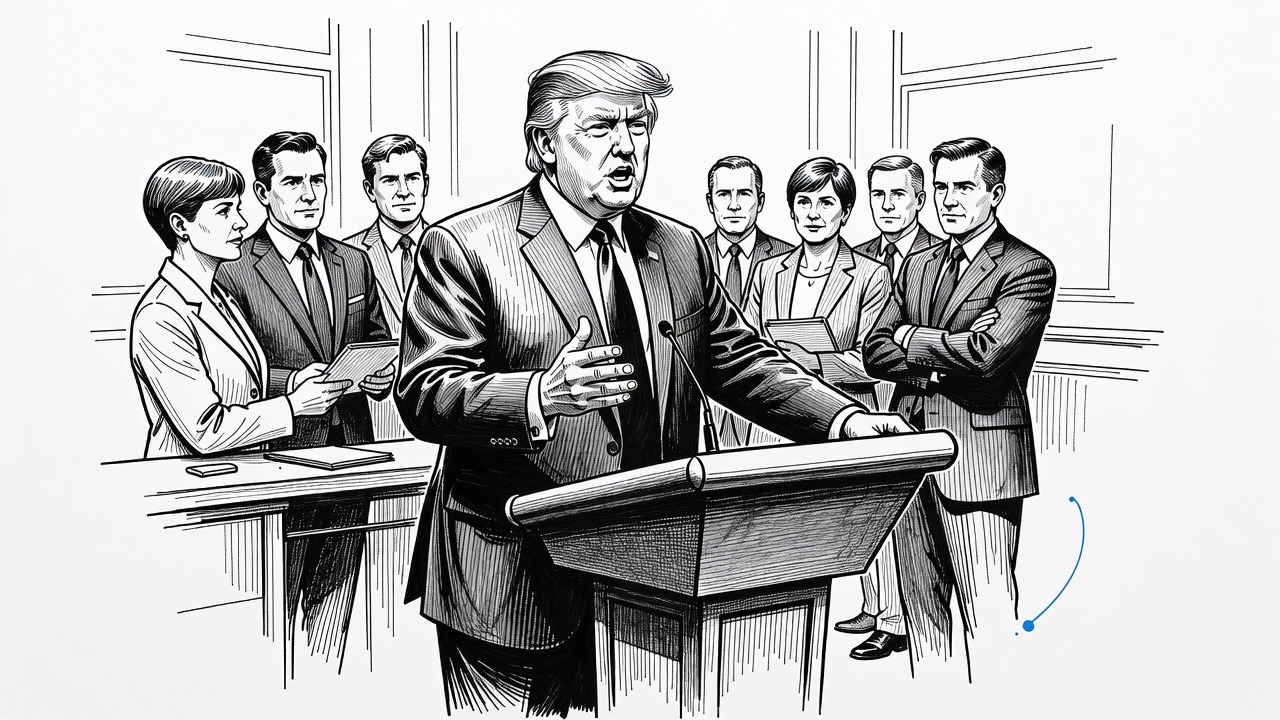
Listen closely to what Rubio said, because it is more revealing than anything Trump did at the podium. The economic relationship with the Philippines, he said, should reflect America's role in providing security under a long-standing defense agreement. Translated: you're paying for protection.
That is not an alliance. It is a retainer. Trump says he demanded that Manila buy all of its farm goods and energy from the United States. The Philippines sits on the front line of Chinese pressure in the South China Sea, and Filipino fishermen and coast guard crews have been rammed and hit with water cannons. Their government has staked a great deal on the idea that the 1951 Mutual Defense Treaty means something. Now it hears that the treaty has a price list.
The cost lands on people far from any briefing room. A country that agrees to buy fuel and food from one supplier because a more powerful patron insists gets no market and no efficiency. It gets whatever the patron decides to charge. Filipino consumers, many of whom live close to the margin, absorb that. The American farmers and energy producers Trump says he's helping get a headline, not a durable customer. Purchases extracted under pressure last only as long as the pressure does.
There is also a strategic stupidity here. Beijing's central argument to Southeast Asia is that America is a fickle, extractive power and China is the permanent neighbor. Telling an ally that security is a commercial transaction hands Xi that argument for free. Every capital in the region is watching, and Tokyo, Seoul and Canberra are doing the arithmetic on what their own treaties will be marked up to.
Then comes the data-center announcement. Trump says American companies will not be allowed to build data centers abroad and will be taxed heavily if they do. The Left has real grievances with Big Tech: its energy appetite, its water use, its tax avoidance, its habit of socializing costs and privatizing gains. Democrats in many states are fighting over who pays when a giant facility plugs into the local grid, and ratepayers are right to be furious. But this is not a policy. It is a sentence. No legal mechanism was described, and no one has explained how it squares with an administration that has spent a year promoting the export of the American AI stack. It reads as a threat looking for a target, which is how much of Trump's economic policy works. Businesses are left to guess, and the guessing favors whoever has the best lobbyists and the closest access to the president.
If Trump wanted to protect communities from data-center costs, there is a real agenda: require these companies to pay for the grid upgrades they cause, disclose their water and power use, and stop handing out subsidies with no strings. None of that is on offer.
Finally, the Xi announcement: the two leaders agreed to jointly establish guardrails around advanced AI. Fine. It would be welcome if it were real. But this is the same administration that has fought to stop states from regulating AI at all. It wants guardrails negotiated privately with an authoritarian rival while dismantling them at home, where voters might actually have a say. Rules written by two heads of state, with no legislature, no public input and no independent oversight, are not safety. They are a duopoly's understanding of how to manage everyone else.
The pattern is consistent. Allies are customers, corporations are hostages, and the public learns the policy afterward. A serious foreign policy builds partners who want to stand with us. A serious technology policy makes the powerful pay their way and answer to the people living next to their servers. Trump offered an invoice and a mood.