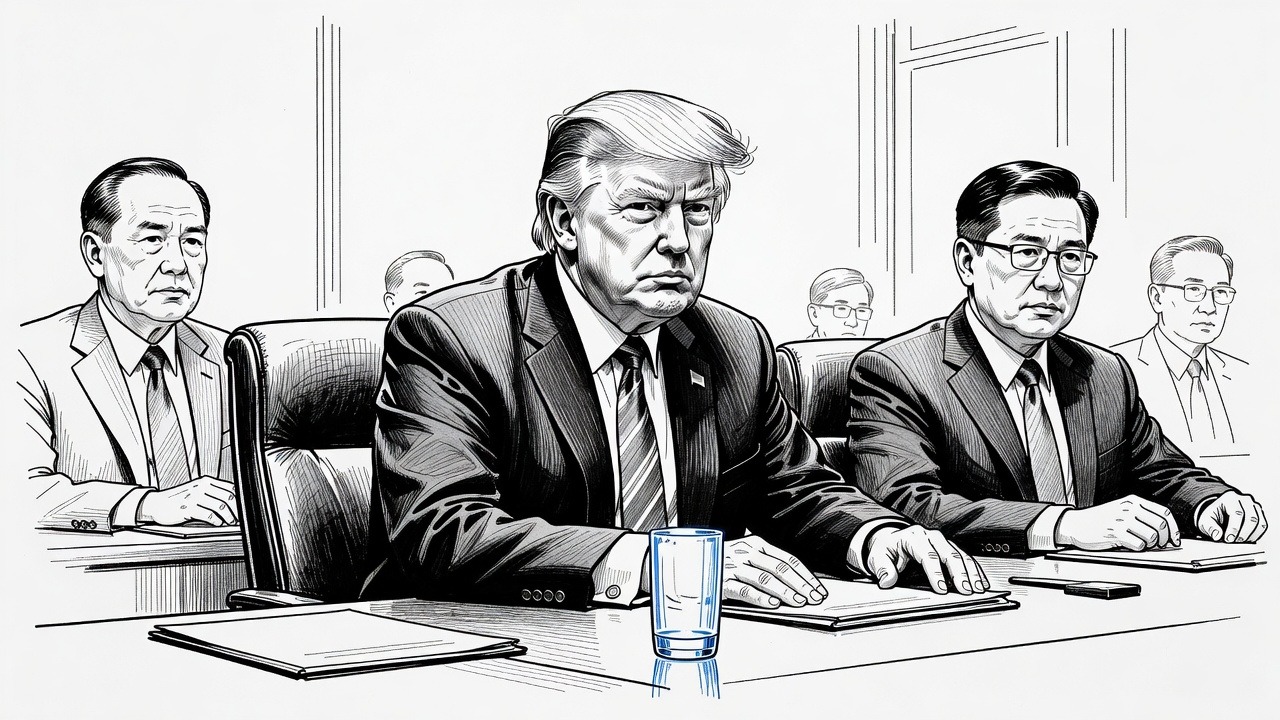
When a political campaign is accused of circulating fake sexual images, the scandal is the images. Yet the Kuomintang caucus has chosen to call the investigation the scandal, saying prosecutors are interfering in the election and acting disproportionately. That is backwards, and it shows what politics will look like if forged sexual smears are treated as ordinary campaign tactics.
Start with what is known. A search was conducted. An assistant to KMT Hsinchu County candidate Hsu Hsin-ying, surnamed Li, is under investigation and residence restrictions. Tseng Sheng-kai says Li admitted circulating false sexual images. Prosecutors have not, in the account we have, confirmed that characterization, and that matters. An assistant's alleged conduct is not automatically the candidate's. Hsu is owed the presumption that applies to anyone: she should not be convicted by a public accusation. Tseng is entitled to demand an explanation, but not to supply the verdict.
But the KMT's "disproportionate" claim collapses against the facts. Prosecutors did not hold Li in a cell. They set bail at NT$100,000, and when Li could not raise it, they swapped it for residence restrictions and a bar on leaving the country or departing by sea. That is a response to a suspect's finances, not a show of force. Anyone on the Left who has watched poor defendants sit in jail because they cannot post bond should recognize it as the right instinct. Money should not decide who is confined while a case is pending. The travel restrictions are a standard way to keep a suspect available for the case.
Nor does the election calendar create immunity. If prosecutors held back because a vote is approaching, any campaign could commit an offense in the final months and then cry persecution when investigators arrived. The timing of this alleged conduct is not the prosecutors' choice. It was chosen by whoever pressed send.
The harm here is also not abstract. Fabricated sexual imagery is one of the cheapest and cruelest weapons in modern politics, and it falls hardest on women, who are punished for the supposed humiliation rather than the lie. It can be made in minutes and spread in hours. A correction never travels as far as the original. Taiwan has toughened its laws on nonconsensual and synthetic sexual images because lawmakers saw that damage. A law that is not enforced during an election, when it matters most, is a slogan.
The Left should not be smug, though. Taiwan's older generation remembers prosecutors as tools of the party-state, and the DPP has itself faced accusations that investigations land conveniently on its opponents. Its legislators are right that no one should pressure the judicial process, and they should apply that rule to their own side too. The remedy is to build trust in outcomes, not to give campaigns a shield. That means transparent charging decisions, prompt resolution, equal treatment of every party's operatives, and courts, not television panels, deciding guilt.
It also means the KMT should answer the question rather than attack the referee. Who made the images? Who authorized or knew about their circulation? Did the campaign pay, direct or tolerate this? If Hsu knew nothing, she can say so plainly and cooperate fully, and she will be stronger for it. If she cannot say that, voters in Hsinchu will draw their own conclusions.
Democracy depends on the idea that you win votes by persuading people, not by humiliating your opponent with counterfeit sex. Investigators enforcing that principle are not corrupting the election. They are protecting its terms.