When a prime minister who has spent years dividing the country suddenly discovers the sacred value of unity, check his calendar first and the threat second.
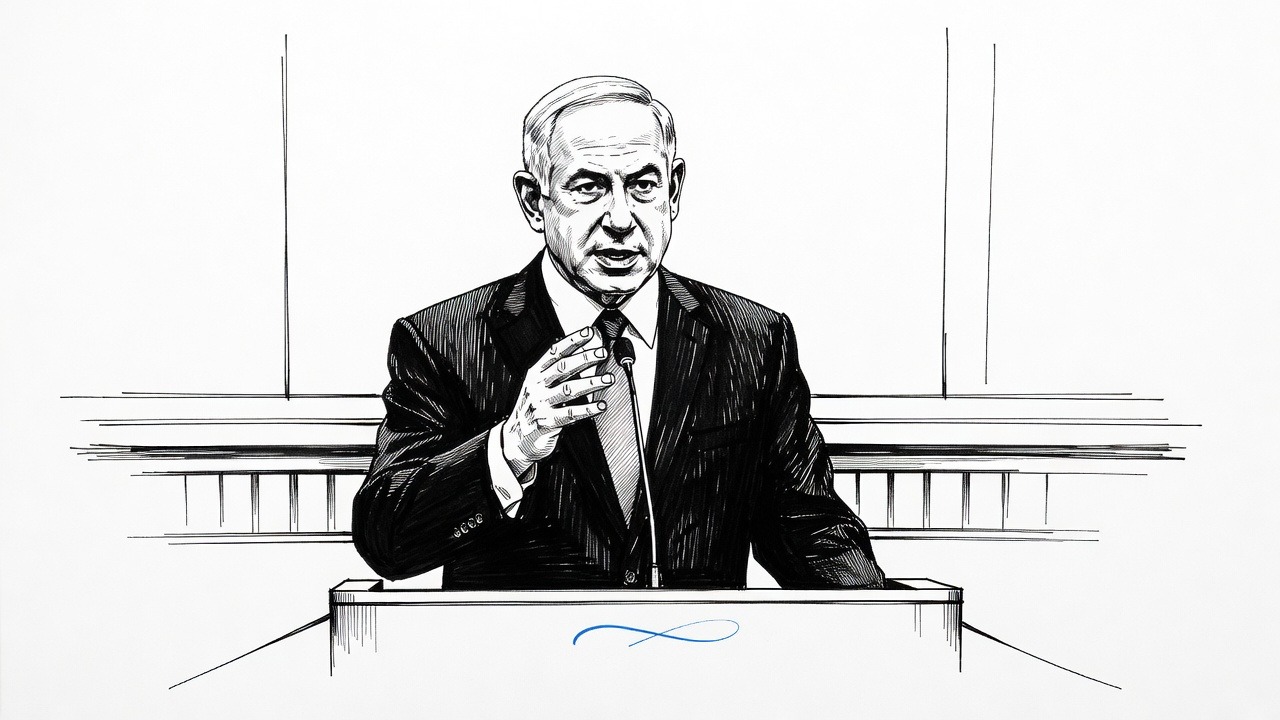
Benjamin Netanyahu says Israel faces "historic security decisions." He did not say, at least in the public account, what they are. He has briefed Avigdor Lieberman, Naftali Bennett and Gadi Eisenkot, and now wants them in his cabinet before the opposition can assemble a majority of its own. The urgency is real. It is the urgency of a man watching his coalition arithmetic slip.
The tell is the warning that a narrow government might rely on Arab parties. Arab citizens are roughly a fifth of Israel's population. They vote, pay taxes, serve in hospitals and courtrooms, and send representatives to the Knesset. Netanyahu's argument is that their representatives are a contamination, and that any majority touching them is illegitimate. That is not a security argument. It is an old political technique: make the votes of one-fifth of the country count for less.
He knows better. In 2021, Netanyahu himself courted Mansour Abbas and Ra'am when he needed seats. Arab votes were poison only when they went to his rivals. Yitzhak Rabin governed with outside Arab support in the 1990s, and the campaign to brand that government illegitimate helped create the poisonous climate that ended with Rabin's murder. Netanyahu stood in that rally culture. He is not a bystander to this tactic. He is one of its masters.
And what does "unity" mean when the man proposing it has a criminal trial hanging over him and a record of resisting a full, independent state inquiry into October 7? It means his rivals share the blame without sharing the power. It means the officials who might demand accountability become co-owners of the war's management, and an accountability reckoning gets postponed because the nation is, once again, too endangered for it. Wartime unity governments have a habit of becoming rescue operations for the incumbent. Israel has had enough national emergencies that "not now" has become a permanent political position.
But the Left should not stop at Netanyahu. The change bloc has its own problem, and it is moral as well as tactical. Bennett, Lieberman and Eisenkot have spent years flinching at the idea of depending on Arab votes, as though it were a shameful habit. That flinch hands Netanyahu his script. Every time the opposition says an Arab-backed government would be an embarrassment, it tells Arab citizens that their franchise is tolerated, not valued, and it confirms Netanyahu's premise that those votes are dirty. If you believe democracy has to mean something, then a majority built with Arab parties is not a security risk. It is simply a majority.
The opposition should say that plainly. It should also be honest that supporting a government from outside is not partnership. If Arab voters are to be the margin of victory, their priorities, including civic equality, policing and violence in their towns, and a political horizon that is not permanent war, belong in the bargain. Using their votes and then ignoring them is the same contempt wearing better manners.
The opposition's answer to Netanyahu's offer should not be a panicked yes, and it should not be an eager hunt for a clever loophole. It should ask for specifics. What decisions? What timetable? What accountability? Will Netanyahu accept an independent inquiry? Will he leave the next election to the voters rather than manage it from inside a government of national unity?
If the threats are real, he can lay them out and let the Knesset decide. If they are not, then "unity" is just a more flattering word for survival. Israelis have lived long enough with his version of emergency. The country can be secured without leaving its fate to the man who most needs it to stay frightened.