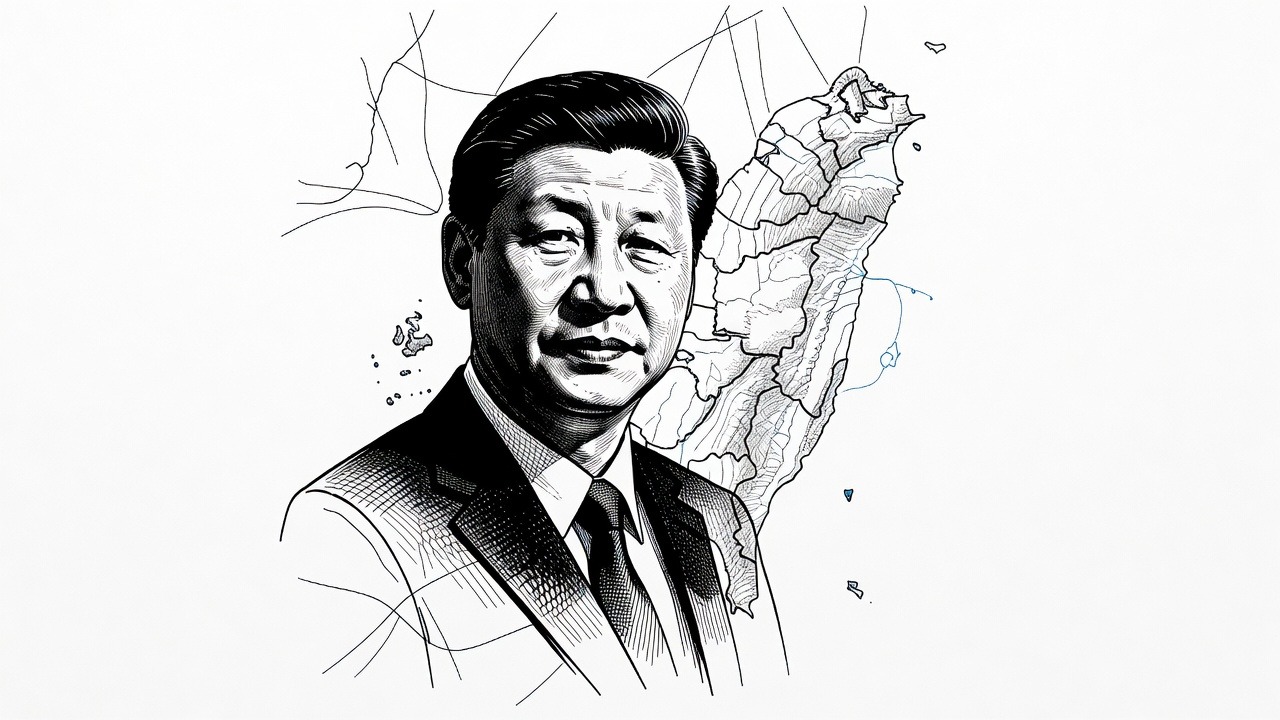
China did not need to win an argument in Shenzhen. It needed to host one. The leaders of the United States and Russia came to the showroom city of the Chinese tech state, sat for the photographs, and left the policy that actually matters — the sale of Nvidia’s H200 chips to China — exactly where Xi Jinping wanted it. Treasury Secretary Scott Bessent said so in plain language. The threshold stands. The permission stands. A summit with the rival racing to put artificial intelligence inside its military did not move it an inch.
That is the story. The rest is garnish.
President Trump and Xi agreed that humans should remain involved in military decisions involving superintelligent systems, and that those systems should not have autonomous authority over major military actions. No serious person wants a machine freelancing a war. Read the verbs anyway. “Involved” is not “in command.” “Should” is not “shall.” Nothing announced supplies a definition, an inspection, or a penalty. A colonel who taps approve on a target list a model has already built is involved. A launch authority that is human only on the org chart is still human enough for a communique. Beijing has signed cleaner sentences than this and treated them as optional — on trade, on intellectual property, on the South China Sea. The pattern is public. Calling this arms control is how a government loses to its own press release.
There is a serious case for the chip policy, and it is not the lobbyist version. Keep the absolute frontier at home. Sell China something a step behind. Take the revenue, fund the next generation, and avoid daring Huawei and SMIC into a faster sprint. Bessent’s insistence that Jensen Huang was not mentioned is the administration trying to say: this is our threshold, not Nvidia’s request.
It does not survive contact with how China actually works. Military-civil fusion is state policy, not a slogan. There is no clean room where an H200 trains a chatbot and never a targeting model, a cyber tool, or the logistics of a blockade. Compute is not a consumer gadget with a military cousin. It is the factory. China is already racing to replace American chips. Our sales do not buy a truce in that race. They subsidize the overlap — the years when imported silicon and domestic silicon run side by side — which are precisely the years that matter for the balance in the Western Pacific.
Nor should anyone on the Right romanticize the venue. Talks with adversaries are not weakness. Miscalculation between nuclear powers is not a campaign line. But a great power does not have to accept the other side’s living room as the headquarters of the future. Shenzhen is an argument: that the century’s technology is being hosted and narrated from China, and that Washington and Moscow are guests. Russia, already the junior partner in its own partnership, looked more so. We looked available.
The president likes a deal. This one offers him the appearance of statesmanship and offers Beijing the substance. The adjectives about human control will age the way unenforced assurances always age. The chips will still be in the racks. A China policy worthy of the country that elected this administration is simpler than a hosted conversation. Deny the compute that shortens Beijing’s path to military advantage. Treat a pledge you cannot verify as a speech, not a shield. And stop letting the Chinese Communist Party throw the party.
How it may affect me
Bessent’s confirmation is a market fact: H200 sales to China remain permitted, so Nvidia and the surrounding AI-chip trade still have that revenue channel — and Washington can still revoke it after the next headline, congressional fight, or crisis. The human-control pledge changes no export rule and protects nothing you can use. If a Taiwan shock reprices the chip supply chain, it will be this hardware policy, not the Shenzhen language, that showed what Washington was willing to live with.