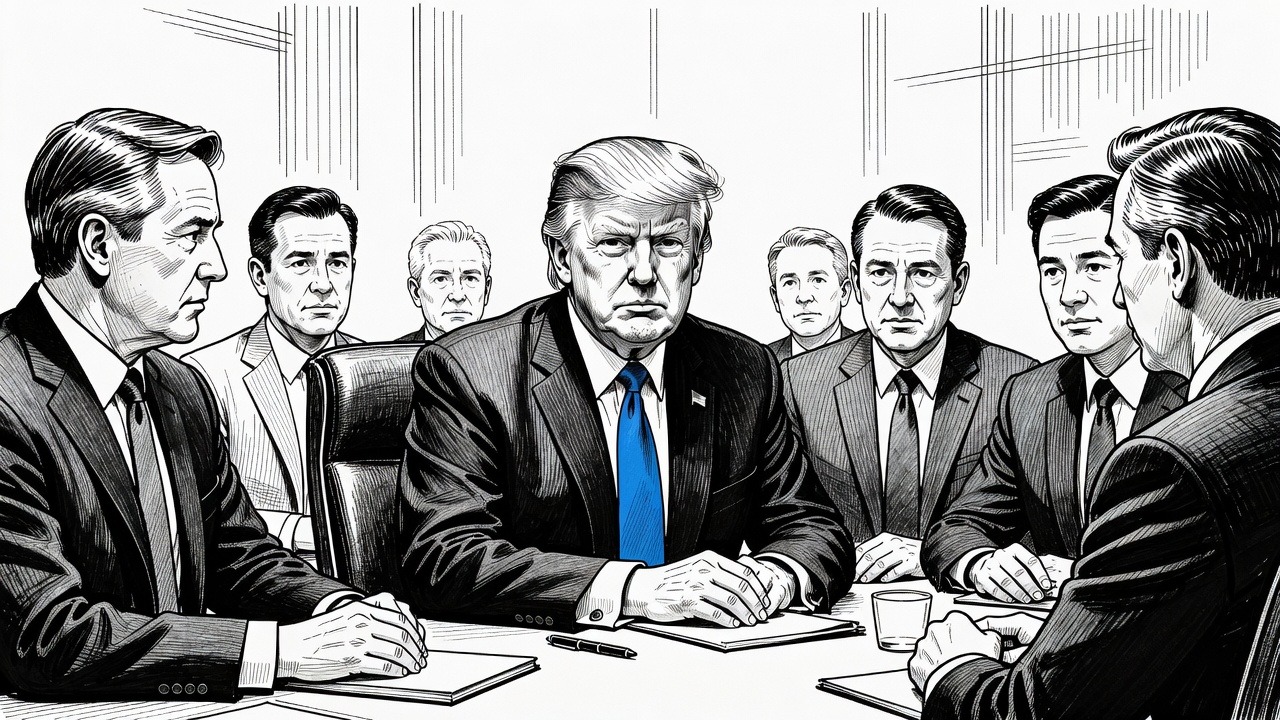
Three men who command more than 10,000 nuclear warheads between them sat down in Shenzhen and produced a declaration about reducing nuclear risk that contains no reductions. They promised something on energy supplies and something on United Nations reform. On the war that has killed hundreds of thousands of people and is the reason this meeting matters, they produced nothing formal at all.
Let me say first what I am not arguing. The Left should not become the party of permanent war. Many of us spent years uneasy at how little serious diplomacy accompanied the Western effort in Ukraine, and talking to adversaries is not appeasement. Arms control has always meant sitting across from people you despise. If Trump had gone to Shenzhen to negotiate verifiable limits, with Kyiv and European capitals in the loop, I would be applauding.
That is not what happened. A trilateral summit is a different thing from diplomacy. It is a concert of powers, and the history of those arrangements is not kind to the people who are discussed rather than seated. Volodymyr Zelenskyy said it would be a mistake for major powers to decide the world's future. He was not being sentimental. He was describing the oldest trick in geopolitics: the strong settle matters among themselves and call the result peace.
Consider what Putin said afterward: Moscow has accepted peace terms, and Ukraine is to blame for the continued fighting. That is the same line he has run for years, now delivered next to an American president who says he is optimistic. Optimism is not a plan. Trump has repeatedly announced that a deal is close, and the killing has continued each time. The danger is that the American president comes to treat the appearance of progress as progress, and that the pressure falls on the party that is easiest to squeeze. That party is the invaded country, which depends on American weapons and intelligence.
Then there is the nuclear question. The last treaty capping American and Russian arsenals, New START, expired in February. The obvious deliverable of a three-way meeting with the world's nuclear superpowers would have been a framework to replace it, ideally one that pulled China into the process. Instead we got a promise to reduce "risk," a word that costs nothing and binds no one. Risk reduction without reductions is a press release. Ordinary people everywhere carry that risk, and none of them were consulted.
The line on United Nations reform deserves more suspicion than it has received. The U.S., Russia and China all hold Security Council vetoes, and each has used them to shield its own conduct. When the three most powerful veto-holders announce they will reform the institution, the sensible question is whom the reform is for. This administration has spent the year gutting American commitments to multilateral institutions and foreign aid. A reformed UN designed by these three would not be more democratic. It would be more openly a club for the powerful.
Here is where my own side owes some candor. Democrats have been slow to articulate an alternative to both Trump's deal-making and a reflexive hawkishness. The alternative is not complicated. Negotiate relentlessly, but with the invaded party present. Tie any sanctions relief to enforceable terms, not to a handshake. Treat arms control as the central business of these summits rather than a footnote. And insist that Congress, not three leaders in a convention hall, decide what America signs.
Trump loves to say he is the great dealmaker. A dealmaker who emerges from a room with Xi and Putin holding a vague statement, while the victim waits outside, has not made a deal. He has hosted a photo op for two men who got what they wanted: legitimacy, and time.