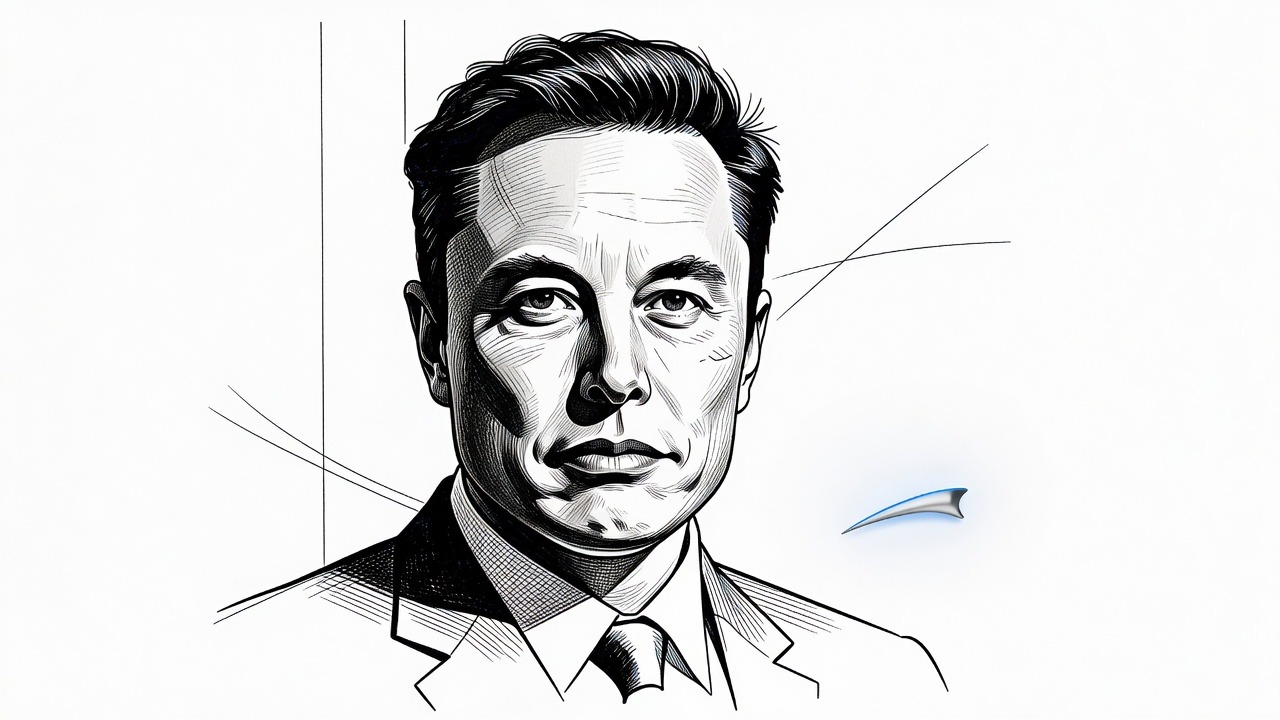
Let's separate two stories, because Nvidia's public relations team would love for us to blur them. One is about a chief executive's private conduct, which got him pushed out. The other is about whether the most strategically important company in America helped a geopolitical rival obtain advanced chips or confidential information, and whether it misled its own investors about the risk. The first is tabloid material. The second is why Rob Bonta's subpoena matters.
The allegations are an inquiry, not a finding, and the public record doesn't tie Huang's departure to the chip questions. But the scrutiny is overdue, and the reason a state attorney general is doing this work is itself an indictment of Washington.
For years, Jensen Huang ran one of the most effective lobbying campaigns in the country against export controls on his products. He argued that restrictions were futile, that China would simply build its own, and that America's real interest was selling to everyone. Last summer, the Trump administration let Nvidia resume sales of its H20 chip, a Hopper-generation product, to China in exchange for the government taking a cut of the revenue. Think about what that means. A national-security restriction, supposedly grounded in the gravest concerns about military and surveillance applications, became a negotiable price. Policy that should be set by law and expert judgment was settled in a bargaining session between a president and a CEO.
That is how concentrated corporate power operates. It does not need to break the rules. It can get the rules rewritten, or make enforcement a favor. A company worth trillions, whose products sit at the center of the AI economy, enjoys leverage that most governments would envy. When the executive branch treats that leverage as a revenue opportunity, someone else has to ask whether the law is being followed.
That someone is Bonta, and the jurisdiction is not a stretch. Nvidia is headquartered in Santa Clara. Its shareholders include California pension funds and millions of ordinary savers. State securities and unfair-practices law does not wait on Washington's permission. If a company told investors one thing about its China exposure and its compliance while the reality was something else, that is a classic disclosure case, and it doesn't become less serious because the product is exotic.
Some on the Right will call this a stunt by a Democratic attorney general with a national profile. Some on my own side will worry about states freelancing in foreign policy. Both objections deserve a real answer. Bonta is not setting export policy. He is asking whether a California corporation broke California-enforceable obligations to its investors and the public. That's what attorneys general are for. And if his subpoena is a stunt, the cure is the evidence. Nvidia can produce it.
Nvidia's response so far also deserves skepticism. The interim CEO says Hopper sales to China have halted. Fine. But a halt announced amid a subpoena and a leadership collapse is not a reckoning. It is damage control, and it can be reversed the moment the headlines move on. The board's insistence that Huang will not return is similarly convenient. Pushing out a founder over personal conduct is easy. Explaining what the company knew, when it knew it, and what it told shareholders is harder.
The Left should resist two temptations here. One is to let the scandal about Huang's personal life become the story, because that makes the matter about one man's character rather than a company's incentives. The other is reflexive China hawkishness that ignores how little consistency the political class has shown. The principle is simpler: if export controls are law, they bind the powerful. If they are bargaining chips, the public deserves to know who is bargaining and who profits.
Bonta's subpoena won't settle that. But it is the first sign in a while that someone with legal power is asking the question.
How it may affect me
If you own Nvidia directly or through an index fund or 401(k), you hold part of the company under investigation. A securities inquiry can bring volatility, legal costs and possible disclosure changes. No wrongdoing has been established, so avoid reacting to headlines alone, but check how concentrated your retirement account is in a few AI-linked stocks.