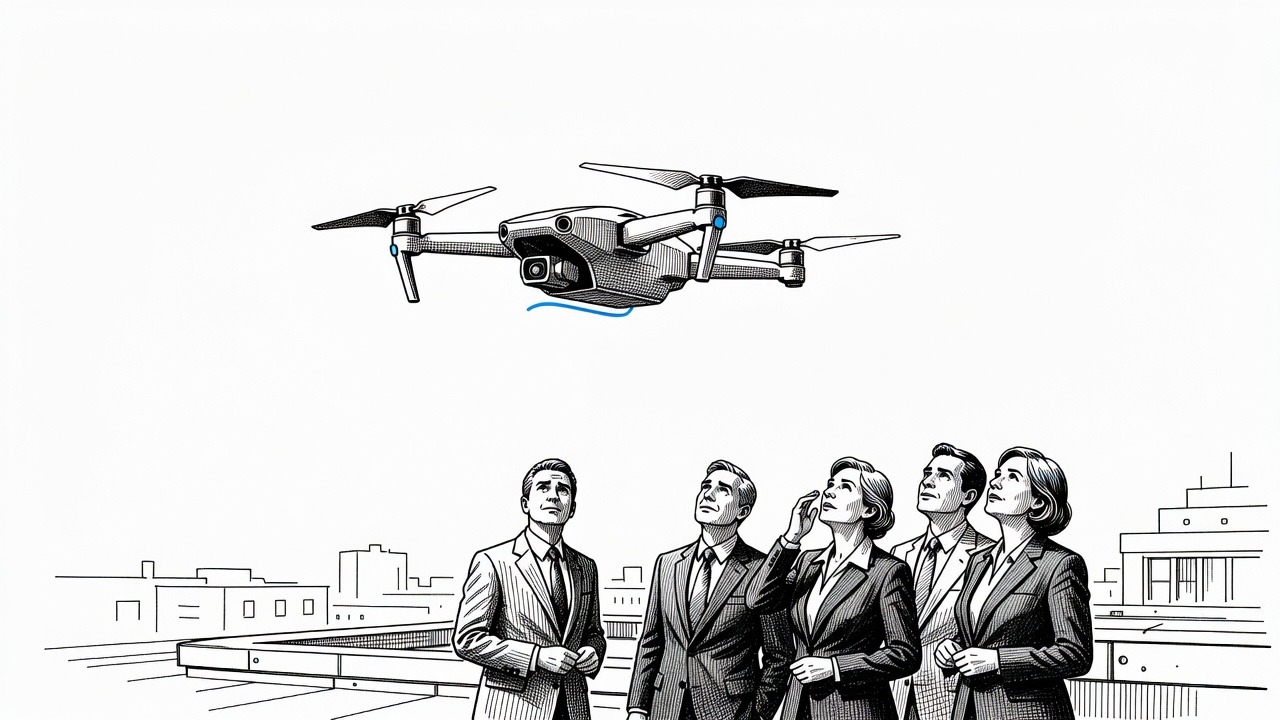
One drone, seven warships and two official vessels. By the standards of recent years, that is a quiet day around Taiwan, and the quietness is the point. Beijing has made intimidation routine enough that a daily count of Chinese hardware barely registers as news. Meanwhile the real news in this story is a sentence that sounds almost polite: Xi Jinping asked Washington to ship fewer weapons to Taiwan.
That is a demand to trade away a democracy's ability to defend itself, and the person on the receiving end is a president who has never hidden how he thinks about such things. Donald Trump has complained that Taiwan "stole" America's chip industry. He treats alliances as protection rackets and security guarantees as line items. Xi does not need to invade to profit from that worldview. He only needs to make Taiwan look like a negotiable cost of doing business, a bargaining chip to swap for soybeans, tariff relief or a nicer photo op.
The Left should say plainly what is wrong with that. Twenty-three million people live on Taiwan. They hold real elections, change governments peacefully, have legalized same-sex marriage, and run one of the freest societies in Asia. They are not a rounding error in a superpower summit. Whatever you think of American foreign policy, and the Left has earned its skepticism after Iraq and Vietnam, self-determination is not an American project that can be shelved when it becomes inconvenient. It is the moral core of every anti-imperial argument we make. We cannot invoke it for Ukraine, Palestine and Hong Kong and then go quiet when it is Taiwan's turn.
That does not mean cheering every arms package. The Left's suspicion of the defense industry is well founded, and Taiwan has been a profitable customer. Billions of dollars in approved weapons have sat in a delivery backlog for years while contractors collect and Taipei waits. If Washington is serious about deterrence, it should deliver what it has sold, prioritize the cheap, mobile, survivable systems that make an invasion costly, and stop treating Taiwan as a showroom for expensive platforms that look impressive and arrive late.
Taiwan also has its own politics to answer for, and honest friends should say so. Fights between the governing party and an opposition-controlled legislature over defense spending, conscription and readiness are not a footnote. Democracies are messy, but a government that asks Americans to bear risk for its safety has to show it is willing to carry its own share. Deputy Foreign Minister Chen Ming-chi says Taipei is in constant contact with Washington about its needs. Fine. The needs are partly Taiwan's to meet.
The larger lesson is about how coercion works. Beijing is not mainly trying to win a battle. It is trying to wear down a population's belief that resistance is worth it, and to wear down an ally's belief that the cost is worth paying. Every drone crossing the median line, every patrol and every diplomatic "warning" is a bid to make the status quo feel exhausting. The answer is not bluster and not another round of ritual alarm. It is steadiness: deliver the weapons, keep the commitments consistent, and refuse to let Taiwan's future be discussed as though its people were absent.
The cynical view is that a deal over Taiwan's head is just realism, the way great powers have always behaved. Realism has a long record of calling other people's freedom expendable, and the people who pay are never the ones signing the communiqué. If Xi wants fewer arms shipments, the answer should come from the one place with a legitimate claim to answer it: the people of Taiwan.
How it may affect me
Taiwan produces a large share of the world's advanced semiconductors, which go into phones, cars and medical devices. A deeper crisis, or even a prolonged blockade, could disrupt supply chains and raise prices on electronics and vehicles. Tensions also feed into U.S.-China trade talks, so tariffs and consumer prices can move with the diplomacy.