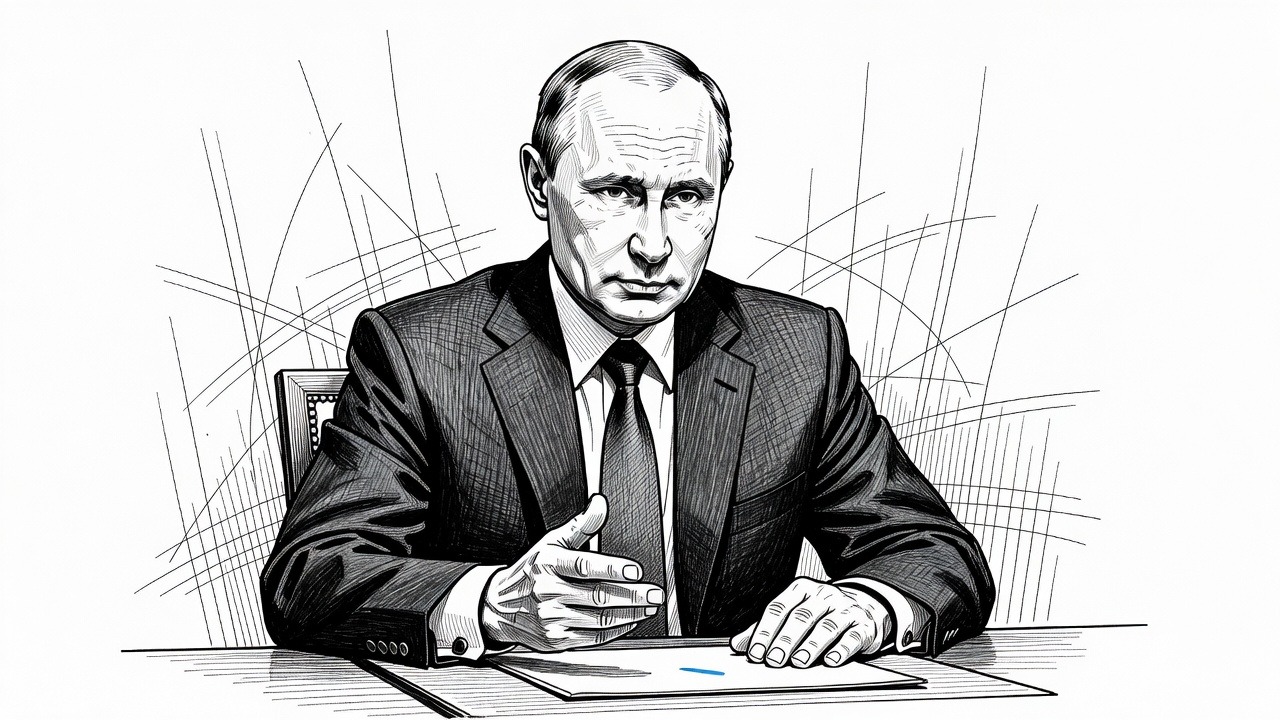
Every few months someone on the left tells me the way to end the war in Ukraine is to stop arming it and start talking. The week's news is a useful test of that theory. Ukraine hit the Crimean Bridge again. Vladimir Putin vowed retaliation. And he rejected proposed maritime and energy ceasefires, the smallest and most verifiable kind of pause there is.
Consider what he turned down. An energy ceasefire means not bombing power plants, substations and heating networks as winter arrives. For years Russia has methodically attacked Ukraine's grid, leaving apartment blocks dark and cold, hospitals on generators, and old people in stairwells wrapped in blankets. This is not collateral damage. It is a strategy of making civilian life unbearable. A mutual pause would also have spared Russian infrastructure from Ukrainian strikes, so Putin gave up something to keep the option of freezing Ukrainians. A man who wanted a way out would have taken the offer. He did not want one.
That should matter to a left that claims to put civilians before geopolitics. The peace camp is right that wars end at tables, and right that the dead do not care whose map is redrawn. But "negotiate" is not a policy when one side treats negotiation as a delay while it improves its position. Putin's refusal is the strongest evidence yet that the obstacle to peace is not Western weapons or Kyiv's stubbornness. It is the Kremlin's belief that attrition, winter and Western fatigue are on its side.
The bridge deserves the same clear-eyed treatment, which means resisting both easy reactions. Russia built it to bind an annexed peninsula to the mainland, a land grab that violates the UN Charter and the principle that borders aren't changed by force. It also carries military supplies, which makes it a defensible target under the laws of war. But no one should pretend its civilian cost is nothing. The new passenger ferries between Krym and Kavkaz are a reminder that ordinary people in Crimea, many of whom never chose this war, pay for each strike with longer, riskier journeys. A principled left can say both things: the strike is legitimate, and the harm to civilians has to be weighed each time, not waved away because the target is cinematic.
What the left should not do is mistake explosions for strategy. Hitting the bridge again is a morale boost and a logistical nuisance, but it is not a plan for ending the war. That plan has to come from the governments that claim to back Ukraine, and so far they have supplied weapons in dribs and drabs, set red lines and then erased them, and left Kyiv fighting a war of endurance without the means to win one. Democrats who talk about defending democracy abroad should be ashamed of that stop-start approach. It is cruelty by hesitation.
On the other side, anyone in the progressive movement who still treats this as a proxy dispute between two imperial blocs has to explain why the one imperial power rejecting a pause on freezing civilians is the one they ask us to reassure. Anti-militarism means protecting people from armies, not asking the invaded to accept the invader's timetable.
The left's position should be plain. Press for ceasefires, narrow ones first, with monitoring and enforcement. Keep Ukraine armed and its grid defended until Moscow decides a pause is worth taking. And say aloud that the person refusing peace this week has a name and an address in the Kremlin.