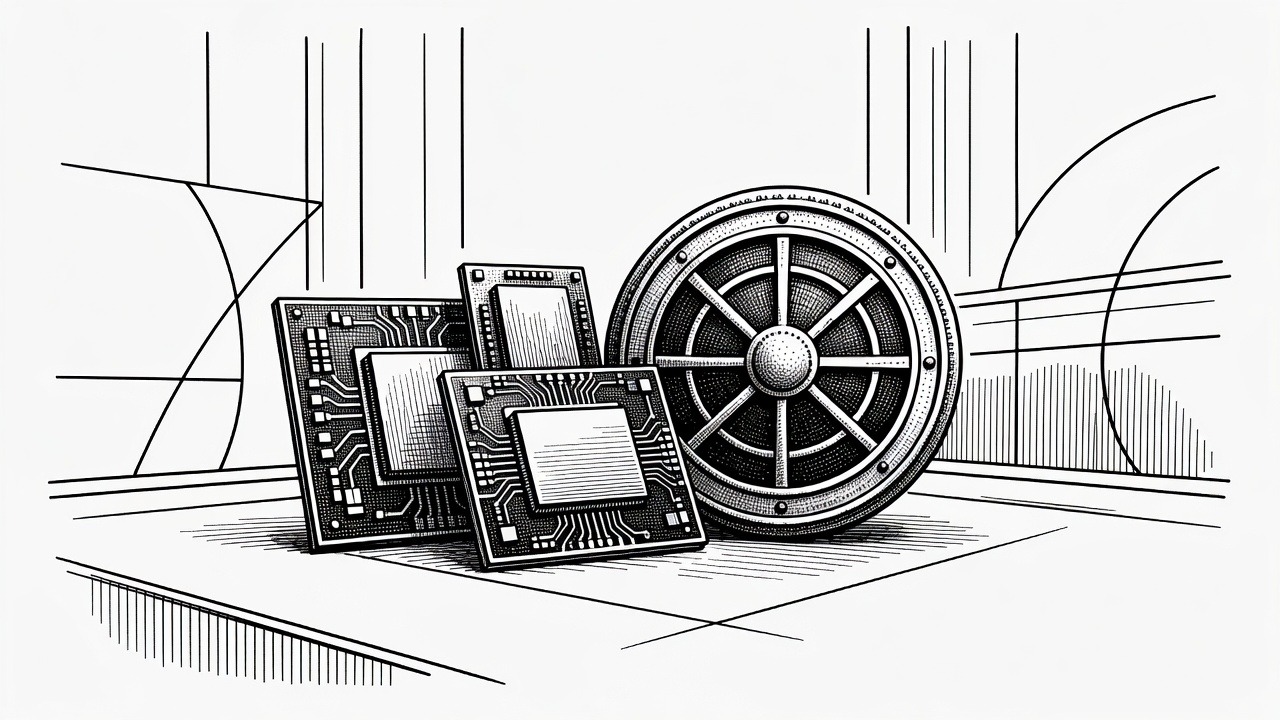
Here is the sentence that should end careers in a capital that claims to take China seriously: the United States government approved the export of nearly 900,000 of the world's most advanced AI chips to Chinese companies in six months, and some of the deals touched firms the Pentagon itself labels Chinese military companies.
That is the picture the House Foreign Affairs Committee's records paint. Approvals are not shipments, and Nvidia says it has stopped sending H200s to China and that its permits carried volume limits. But a company that halts shipments after the paperwork is out is not reassuring anyone. It is managing a headline.
The defense Nvidia and AMD offer is that they follow US export law. Of course they do. That is the scandal. Export law here is not a wall. It is a door the executive branch opens and closes at its discretion, and this year it was opened after intense lobbying by a CEO who has spent months treating the White House as a client. The President announced that H200 sales to China would resume, with Washington taking a cut of the revenue. Earlier came the H20 reversal, also with a cut. When national security restrictions can be loosened in exchange for a percentage, they stop being restrictions. They become a price list.
The Left should say plainly why this matters, and it is not because we want a new Cold War. Plenty of us are wary of China-panic politics that treat every Chinese student and every trade flow as a threat. But whether to sell the most important industrial technology of the decade to a rival state is exactly the kind of decision a democracy is supposed to make in public, with reasons, and not through a deal between a president and a chip executive. Nobody voted for this. Nobody was shown the logic. We learned who got the chips only because a congressional committee pried the records loose.
The strongest case for the policy deserves a hearing. Sell China slightly older chips, keep its developers hooked on American software, and starve Huawei of a market. Maybe that is defensible as strategy. But the administration did not make that argument and then submit it to scrutiny. It made a commercial argument, and its approvals reached companies tied to the Chinese military. If the plan was to keep China dependent, someone should explain why the Pentagon's own blacklist did not stop transactions the Pentagon would plainly find alarming.
This is also a story about corporate power. Nvidia is now so central to the economy, and so important to the stock market's mood, that its interests get treated as the national interest. Jensen Huang does not need to win every argument. He only needs the government to fear the consequences of crossing him. That is concentrated private power shaping public security policy, which the Left has warned about for decades in oil, finance and pharmaceuticals. AI is not exempt because the logo is friendlier.
Democrats should resist the temptation to make this only a hawkish attack line. The sharper charge is one of corruption by design: a government that sells what it claims to protect, rewards the loudest lobbyist, and calls it dealmaking. Congress should demand the full licensing rationale, a ban on approvals involving Pentagon-listed firms, and a hard legal answer on whether the government can take a cut of export licenses at all. The Constitution bars taxes on exports. Calling it a revenue share does not make it a different thing.
If these chips are as valuable as the industry says, they are too valuable to be bargaining chips. If they are not that valuable, why is everyone fighting so hard to sell them?