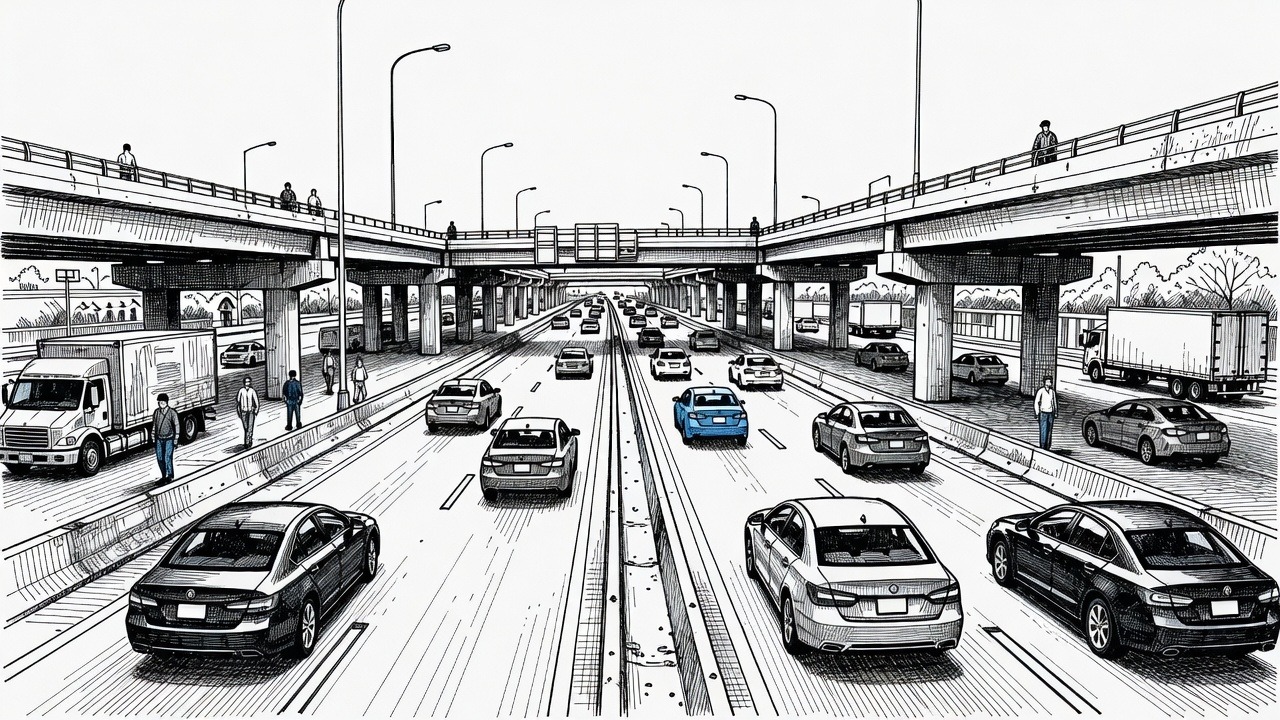
Notice the phrasing of the police notice: officers will be deployed to "direct traffic." Route 4, one of Israel's central arteries, may be shut in both directions, and the state's response is a detour suggestion. This is how a government talks about weather.
The Jerusalem Faction is not a spontaneous outburst of conscience. It is a hardline fringe of the ultra-Orthodox world that has made blocking highways a routine tool against conscription. Its latest grievance is an arrest at Ben Gurion Airport, where military police have been detaining draft-eligible men who are leaving or entering the country. Its demand amounts to this: the law should apply to everyone except the people who have decided it does not apply to them.
The context is hard to ignore. In June 2024, Israel's High Court ruled unanimously that, absent a lawful exemption framework, the state must draft yeshiva students like any other eligible citizens. Israel has spent more than two years fighting on multiple fronts. Reservists have served hundreds of days, businesses have collapsed in their absence, marriages have strained, and funerals have filled the news. Meanwhile, tens of thousands of men of draft age sit in exempted limbo, and the coalition that governs the country has spent its political capital designing ways to keep them there.
This is not a fight between secular and religious Israel, and the Left should refuse that framing. Many Haredim serve, and many more would if their leaders did not punish them for it. The real conflict is between a political class that sells a shared sacrifice and a coalition built on exempting its own kingmakers. Netanyahu needed Haredi parties to survive, so the state's most basic obligation, equal burden in a country at war, became a bargaining chip. The result is a government that demands everything from some citizens and almost nothing from others.
Then comes the policing. Israelis who blocked this same highway to demand a hostage deal or to defend judicial independence know how it goes: water cannons, mounted police, arrests, and a minister suggesting they were enemies of the state. Rules for road blockers depend on who is blocking and whose government benefits. When the blockers belong to a bloc the coalition cannot afford to offend, police "maintain order." Equality before the law cannot mean equal treatment for those who obey and a different standard for those who threaten to block the roads.
To be clear, none of this means the Left should cheer a mass-arrest campaign as policy. Jailing yeshiva students will not build an army, and it will deepen a segregation that already runs from schools to employment. The Haredi community's poverty, its thin secular education, and its leaders' fear of assimilation are the underlying problems. Serious reform means a real draft schedule, real sanctions for institutions that evade it, and civilian service and job-training pathways that make service a route into the economy rather than out of the community. The Left should say plainly that it wants Haredim integrated, not humiliated.
But enforcement is not optional. When a court order is ignored with the government's tacit blessing, the country is learning a lesson more corrosive than any highway closure: that obligations in Israel scale with leverage. Reservists who see this will draw their own conclusions about who the state believes it owes.
The Left's job is to insist that one law apply to all, and that a government unable to enforce the draft cannot call itself serious about national security. The airport arrest is the law doing what it should. The blocked road is a reminder of who is trying to stop it, and of the coalition that has not found the nerve to stop them.
How it may affect me
If you drive through central Israel on Thursday afternoon, expect Route 4 to be partly or fully closed in both directions between Aluf Sadeh and Em HaMoshavot, near Geha Junction. Police advise using alternative routes and allowing extra time, especially around 4 p.m.