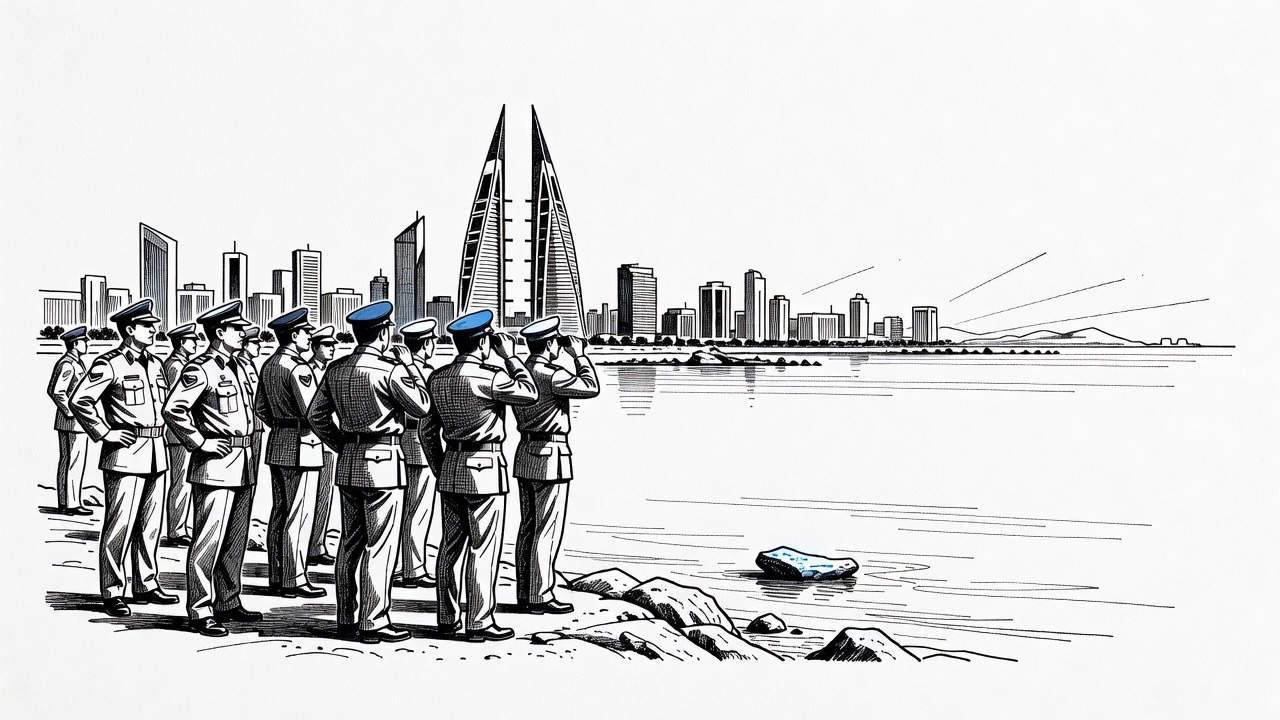
Every American should look hard at the sentence in this story that sounds like a throwaway: an Iranian general warning that Bahrain's Al Khalifa monarchy may not survive. It reveals what the U.S. military presence in the Gulf really protects, and who decides when Americans risk their lives for it.
Start with the regime in Manama. The Al Khalifa family is a Sunni monarchy ruling a Shia-majority island. In 2011, when Bahrainis took to the streets during the Arab Spring, it answered with arrests, torture allegations and demolished Shia places of worship, backed by Saudi troops rolling across the causeway. Doctors who treated wounded protesters were prosecuted. The main opposition society, al-Wefaq, was later dissolved. Washington's response over the years was to keep the Fifth Fleet headquarters in port and keep the arms flowing, while talking about human rights in the voice of a man reading a terms-of-service agreement.
That was always a bargain: a permanent base in exchange for our silence. Now the bill is arriving, and it is being paid by sailors and their families rather than by the officials who signed the deal.
Let's be clear about Tehran, because the Left earns nothing by flattering the IRGC. Brigadier General Mohebbi is not a champion of Bahraini democracy. The Guard Corps crushed Iran's own uprisings and has jailed and killed its own citizens. Talk of a "new regional security order" is a threat from one armed state apparatus against another, not liberation. Bahrainis who wanted a say in their government have been squeezed between a monarchy that jailed them and a revolutionary guard that would use their grievances as ammunition. Nobody should mistake drones for solidarity.
But that is not the question Americans need answered. The question is why a U.S. base on a tiny island is a legitimate target in a war that, as far as I can see, Congress never voted for. No authorization for the use of military force names Iran. The 2002 Iraq resolution has been stretched like taffy by presidents of both parties, and the habit of treating Article I as a suggestion is bipartisan. Democrats who now decry escalation but spent years letting executives wage undeclared wars have little standing to act surprised. If this is a war, a vote should be held, with members of Congress on record, before more Americans are placed in the path of incoming fire.
The interception of these drones is a relief and nothing more. CENTCOM and Bahrain stopping this wave tells us nothing about the next one. Cheap drones are a bargain for the attacker and an expensive problem for the defender. Each exchange hands hardliners in both capitals the argument they want: that retaliation is mandatory, that restraint is weakness, that the other side only understands force. The people who profit politically from that spiral are the Guard Corps in Tehran and the hawks in Washington, while ordinary Iranians, Bahrainis and American service members absorb the risk.
The hawks will say that pulling back would signal weakness to an aggressor. That is a serious argument, and it deserves a serious reply: weakness is also a war with no stated objective, no congressional mandate and no exit. Strength would be a defined goal, a public debate, an active diplomatic track and a clear-eyed look at which allies are assets and which are liabilities. A monarchy that has spent a decade proving it cannot be trusted with its own people's consent is not a stable foundation for American security.
The Gulf basing network was sold as deterrence. When the drones come in, it looks more like a tripwire. Congress should vote, the administration should say plainly what it is trying to achieve, and Washington should start treating its relationships with autocrats as the strategic risks they are.
How it may affect me
If hostilities keep spreading around the Gulf, expect possible disruption to shipping and energy markets, which can show up in gasoline and airfare prices. Families of U.S. service members stationed in the region face the most direct risk. Travelers to Bahrain and neighboring states should check State Department advisories before booking.