Every politician now says they will "protect communities" from data centers. Very few will say what that costs, and fewer still will say who they are protecting communities from.
The answer is a trillion-dollar industry that has grown used to getting what it wants quietly: tax breaks, cheap power, local officials bound by nondisclosure agreements, and water drawn from places that did not know to ask. It is not a few eccentric developers. It is the most capital-rich sector in the country, and it treats local consent as a delay to be engineered around.
So Gina Hinojosa's call for a pause on approvals in Texas deserves to be taken seriously, not waved off as technophobia. A moratorium is a blunt tool, but the industry made it necessary. When a facility can move into a drought-prone county and the public learns its water and power draw only after the pipes are laid, a pause is how a community gets back into the room. Rules written after the concrete is poured protect no one.
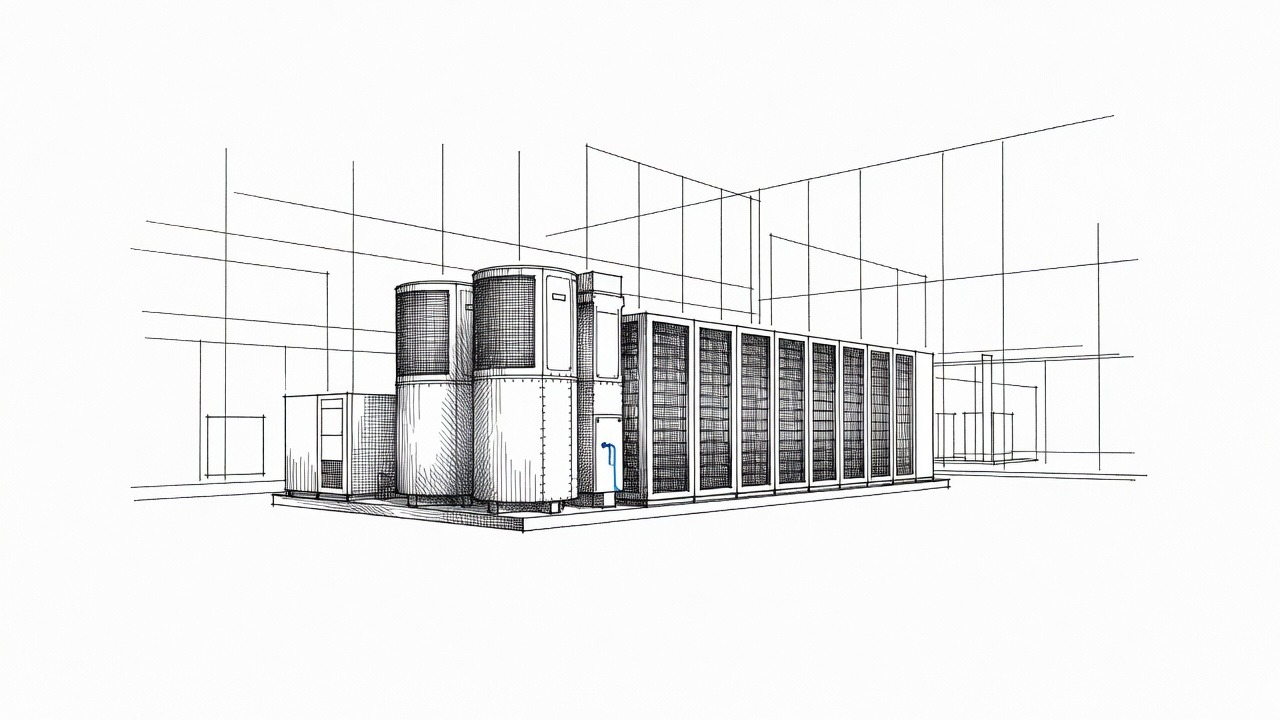
Consider the industry's own answer. Ecolab's CEO says closed-loop cooling can recycle the water that cools the processors. Good. But the technology will go into new buildings, not existing ones. The facilities already pulling from local supplies keep pulling. A voluntary fix that begins where the pain hasn't started is a press release. And closed-loop systems often trade water for electricity, which sends the argument back to the grid and the ratepayers who share it.
This is where Democrats have to look at themselves. The Korea Center for International Finance estimates that about 80 percent of planned or under-construction U.S. data center capacity sits in states heading into Democratic governance. A foreign analyst can see what the party often won't say aloud: Democratic governors love the ribbon-cuttings as much as anyone. Jobs, investment, the AI race, a photo with a chip executive. The party that talks about corporate power all year is tempted to treat the largest new concentration of it as an economic development win.
The jobs argument is the weakest. A data center is a huge building with a small staff. The construction work is real but temporary. What lasts is the load on the grid and the aquifer, and the long tax abatements that guarantee the host county sees little revenue. Anyone selling these projects as a rural jobs program should show the payroll.
The strongest counterargument is that a pause just exports the problem: the projects go to a state with looser rules, or to another country, and the community that wanted a say loses the tax base too. That is a real risk. It is also the argument every industry makes against every regulation, and the answer is to set a floor wide enough that there is no race to the bottom. Democratic governors control most of the relevant territory. They have the leverage to act together, and they should use it.
The terms should be simple. Publish water and power use before approval, not after. End the secrecy agreements. Make large users pay the full cost of the grid capacity they require, so that households do not subsidize a chatbot's electric bill. Require water-saving cooling in existing facilities, not just shiny new ones. Tie tax incentives to enforceable community benefits. Any company that finds this unreasonable is telling you what it planned to do.
AI may well be transformative. That is exactly why it should not be built on the assumption that ordinary people will absorb the costs and be grateful for the attention. The Left's job is not to stop the machines. It is to insist that the public gets a vote, a price and a meter before the machines arrive. If Democrats cannot do that in the states they run, they have no business talking about corporate power anywhere else.
How it may affect me
If you live near a proposed or existing data center, ask your county or utility commission what water and power contracts have been signed, and whether large-load customers pay their own grid costs through a separate tariff. Those hearings, not national debates, shape local water supplies and, in some regions, your electric rates.