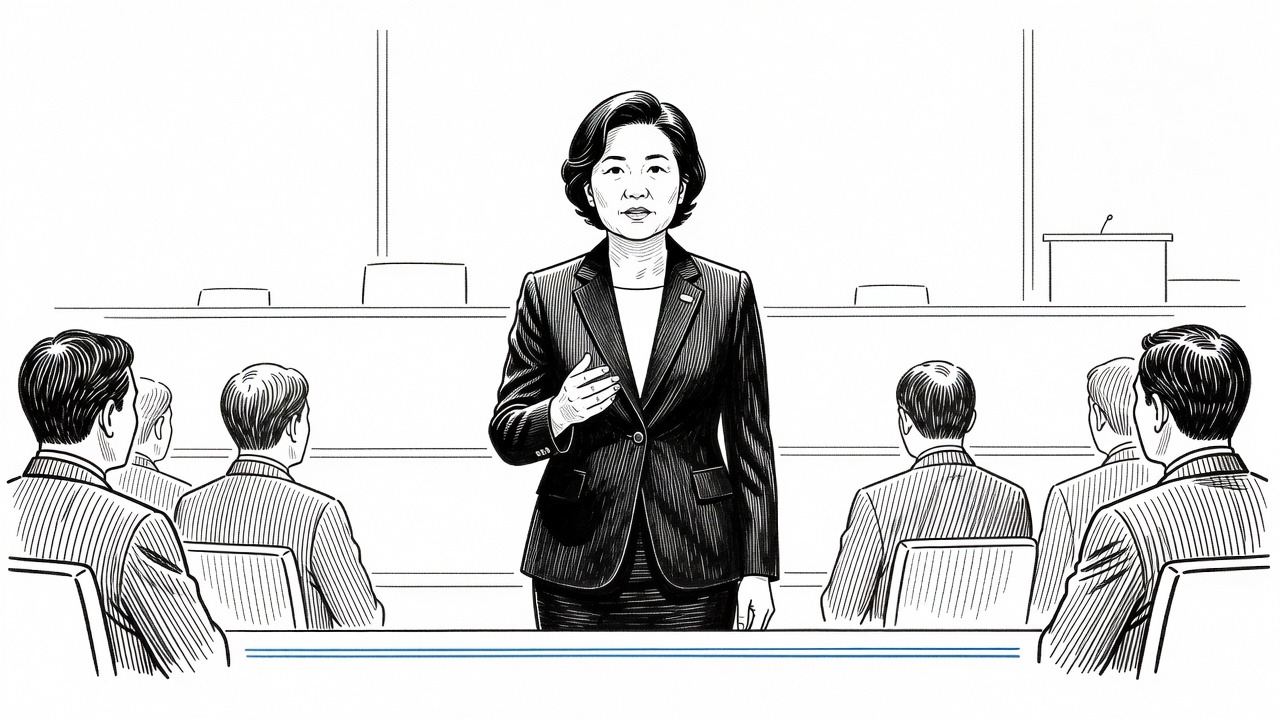
The easy way to read Lee Jae-myung's Shenzhen speech is as diplomatic wallpaper: a leader at a trade summit, asking for "lasting peace" between paragraphs on AI and supply chains. Pyongyang has spent two years calling the South a hostile state, and has shown no interest in the olive branch. Why bother?
Because the alternative has been tried, at length, and the scoreboard is public.
For most of the last three decades, the dominant Western answer to North Korea was pressure: sanctions, isolation, and the hope that Pyongyang would collapse or capitulate. The most recent version arrived under Yoon Suk Yeol, who took a hard line, leaned into confrontation and treated engagement as appeasement. The result was not a chastened North. It was more missiles, a deepening military partnership with Moscow, and a regime that no longer needs Seoul's goodwill or Beijing's patience. The sanctions architecture has been hollowed out by Russia's veto power at the UN. Anyone insisting that pressure alone is the serious, tough-minded option should explain what it has actually produced.
Lee's critics will say he is repeating the Sunshine Policy's mistakes. I take that seriously. Summits under Moon Jae-in produced photographs and warm feelings, then nothing durable. But the lesson is not that talking is futile. It is that talking without a ceiling on ambition and a floor of practical measures is theater. Military hotlines, incident-avoidance rules near the border, and a halt to the provocations that make accidental escalation likelier are modest, verifiable and worth having whether or not Kim ever smiles for a camera. That is the version of engagement the Left should demand, and Lee should be pressed to say plainly that this is what he means.
The venue matters, and so does the packaging. Lee did not give a separate peace speech; he folded the Korean Peninsula into the language of shared prosperity, energy security and supply chains. That is the right instinct. South Korea imports nearly all of its energy, and its economy lives on trade routes that a single border incident could rattle. For ordinary South Koreans, the "Korea discount" on their markets and the permanent low-grade fear of war are not abstractions. Peace is an economic policy. The Right has long treated security and prosperity as competing claims on the budget. In reality, tension is a tax everyone pays.
There is also the matter of who is in the room. Shenzhen is Chinese soil. Beijing has more leverage over Pyongyang than anyone, and it is hosting the leaders Lee needs to persuade. Washington, meanwhile, has a president who has said openly he'd like to sit down with Kim. Seoul cannot afford to be a spectator while Trump and Kim trade deals over its head, a risk that should alarm Korean progressives and conservatives alike. A South Korean president who keeps dialogue alive is not being soft. He is insisting that the country most exposed to the consequences gets a seat at the table.
The Left's honest burden is to avoid fantasy. Kim Jong Un may not answer. He has strategic reasons to prefer Russia's embrace, and no sunny speech will undo a nuclear arsenal he considers non-negotiable. But a closed door is not the same as a locked one, and the cost of leaving the offer on the table is close to zero. The cost of taking it off, as the last few years show, is a more armed, more isolated and more dangerous neighbor.
Lee is right to keep asking. The test of his presidency will be whether the asking becomes a concrete, patient, boring program of risk reduction, rather than another speech about peace.