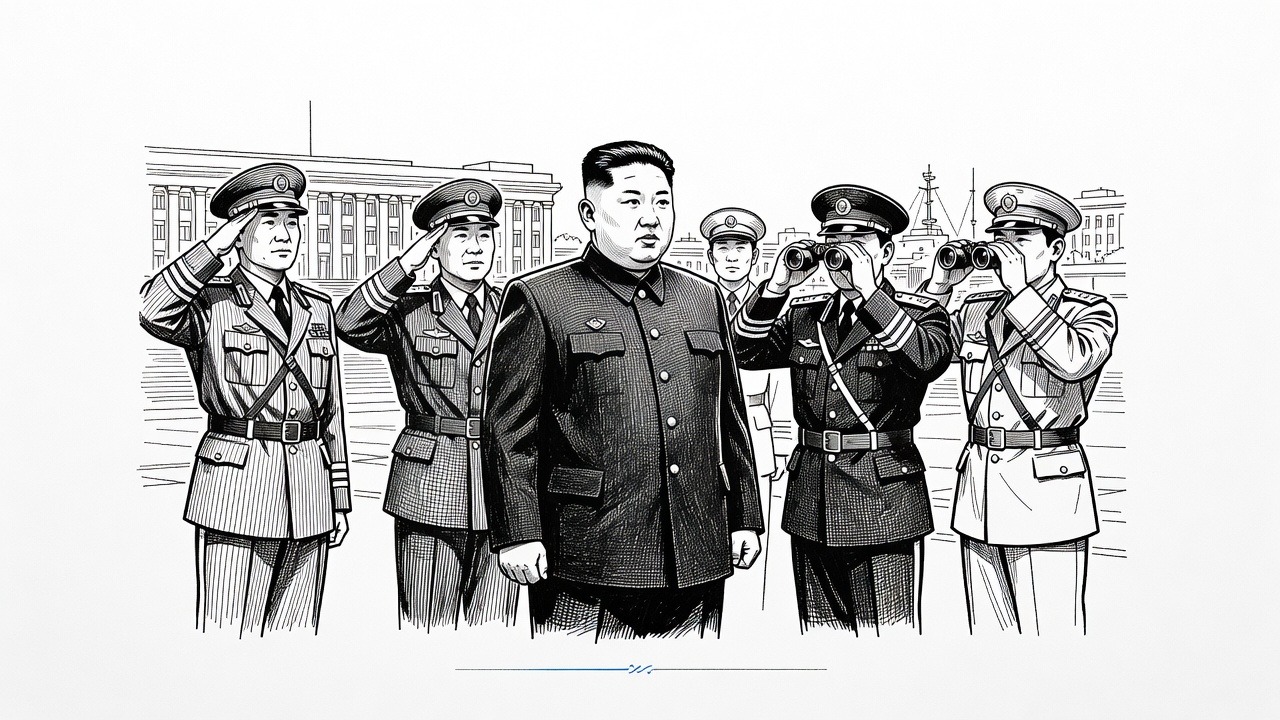
Donald Trump lands in Shenzhen, muses that he might bump into Kim Jong Un, and the world is invited to hold its breath. Meanwhile Kim spends the same two days at a naval university talking about training combat-systems experts. One man is planning a summit. The other is planning a navy. Guess which one has a schedule.
Let me say something that will annoy some of my own side: the Left should not be sneering at the idea of talking to Pyongyang. Engagement has always been the position of people who take nuclear risk seriously. The alternative, what Washington has practiced for decades, is sanctions, exercises, rhetoric and hope. That produced a country with a growing arsenal and a leader who now fields new warships. Anyone who thinks diplomacy is naive should explain what realism has delivered.
But talking is not the same as diplomacy, and Trump has already shown us the difference. Singapore in 2018 gave us a vague pledge, a handshake and a gift of legitimacy. Hanoi collapsed because nobody had done the staff work to define what was being traded for what. Panmunjom gave us a photo of a president stepping across a line. In the years since, Kim has not paused. He has expanded his arsenal and built a partnership with Moscow, one that reportedly includes North Korean troops and munitions for Russia's war in Ukraine. That relationship gives him money, technology and a patron who will never again vote for tougher sanctions at the UN. He is in a far stronger bargaining position than he was in 2019, and the question is why he would want to meet a president who only wants the picture.
That is the point the 'will they or won't they' coverage misses. Trump is treating a meeting as the prize. For Kim, the meeting is a chip, and he will spend it only for something real: sanctions relief, recognition of his nuclear status, or a reduction in the American presence in South Korea. A president who craves the spectacle will be tempted to pay those costs just to get it. That is how you end up conceding in public what you would never defend in a negotiating room.
Notice who is not in the room. China says it knows nothing. Seoul's presidential office sees no sign of anything imminent. Those are the governments with the most to lose from a botched deal, and Trump is improvising around them. South Korea has a government that wants to reopen channels with the North, and it should be the partner in a coordinated approach. Instead it is being left to read about American intentions in the news. This is the pattern with Trump's foreign policy: personal, transactional, and allergic to allies and process.
Democrats do not get a pass. Biden's North Korea policy was a polite shrug, an offer to talk anywhere, anytime, that Pyongyang ignored while Washington looked elsewhere. Neglect is not a strategy either. If the party that claims to prefer diplomacy has nothing to offer but 'not Trump's way,' it has surrendered the field.
What would a serious Left position say? Start with working-level talks, not a summit. Aim first at a freeze on missile and fissile-material production in exchange for limited, reversible sanctions relief. Treat Seoul and Tokyo as partners, and put humanitarian access on the table, because the people living under both Kim's rule and the sanctions are the ones who pay for this standoff. And stop mistaking an announcement for an achievement.
Kim is touring construction sites and naval classrooms because he is building something durable. If America wants to stop him, it needs a plan that is just as durable. A dinner invitation is not one.