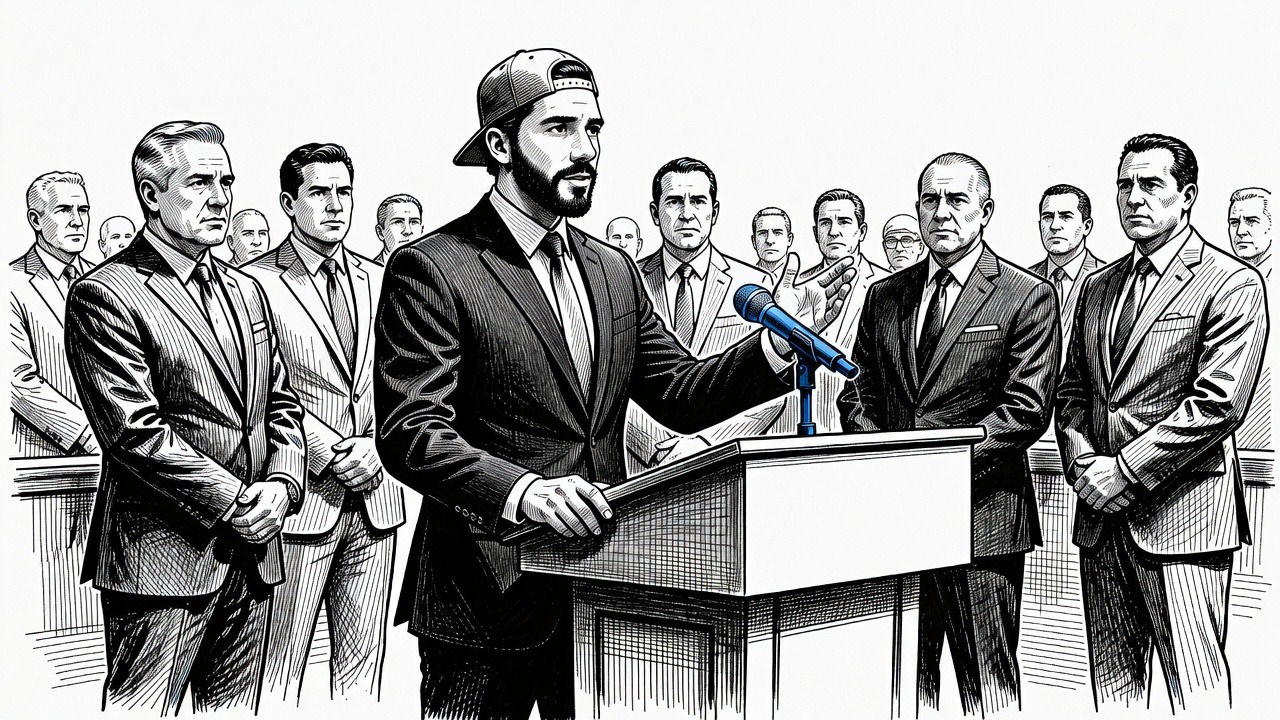
Start with the crowd, because the easy response to this story is to sneer at it. Thousands of Haitians filled the streets of Port-au-Prince to cheer foreign soldiers. Anyone who treats that as manufactured, or as colonial Stockholm syndrome, has never lived where gangs decide whether your child can go to school. UN documentation counts nearly 4,600 violent deaths in ten months. People who live under that do not need a lecture on sovereignty from comfortable capitals.
But the rally is not a vindication of Nayib Bukele. It is an indictment of everyone else.
Haitians are cheering Salvadoran troops because the rest of the world gave them so little to cheer. The Kenyan-led mission was understaffed and underfunded, and the wealthy countries that voted for it mostly declined to pay for it. The United States, which has long treated Haiti as a place to manage rather than help, has been generous with statements. Now a small Central American strongman arrives with 2,000 soldiers and a brand, and desperate people grab for it. When the only offer of order comes from a man who jails first and asks later, the failure is that the alternatives were allowed to rot.
The Left should say plainly what that brand is. El Salvador's crackdown has run for years under a state of exception, with tens of thousands detained, many without meaningful due process. Human rights groups have documented arbitrary arrests, deaths in custody and prisoners disappearing into a system built to be unreviewable. Bukele's own popularity is real, and so is the democratic erosion that came with it: a captured legislature, a pliant judiciary, a press under pressure. Salvadorans traded rights for quiet. That is a choice they were pushed into, and now it is being exported as a model.
Haiti is a worse place to try it. Bukele took on gangs in a country with a functioning state, however authoritarian. Haiti has no elected government and no trusted courts, and the police are thin and compromised. The gangs there are not outsiders to the elite. They have long been entangled with politicians and business interests who used them for muscle and are now trapped by their own creation. The guns largely come from the United States, trafficked through Florida. Soldiers can clear a neighborhood. They cannot arrest the financiers, close the arms pipeline or rebuild a justice system. Without those, force produces a pause and a body count, not security.
The UN's warning that lethal force should be a last resort will be dismissed as squeamish. It isn't. In Haiti, the people who pay for a heavy-handed campaign are poor residents of the same neighborhoods the gangs hold hostage. Haiti also knows what unaccountable foreign forces can do. UN peacekeepers brought cholera that killed thousands and left a trail of sexual abuse allegations, and almost nobody was held to account. A mission that answers to a president who calls human rights monitors enemies deserves hard scrutiny.
The Left has its own failure here. Too often the reflex is to oppose every intervention and then offer nothing when Haitians ask what else is on the table. Anti-interventionism that leaves a population at the mercy of killers is not a principle. It is a way of keeping one's hands clean. If the answer is not Bukele's troops, it has to be something real: sustained funding for a properly staffed mission, aggressive enforcement against arms trafficking and gang financing, independent civilian oversight, and human rights monitors with access and teeth. Then comes the slower work of building a government Haitians can vote for.
The crowd in Port-au-Prince is telling the world something simple: they want to live. The test is whether that demand gets met with a mission that protects them or one that merely acts in their name. We should not let desperation be mistaken for consent to whatever follows.