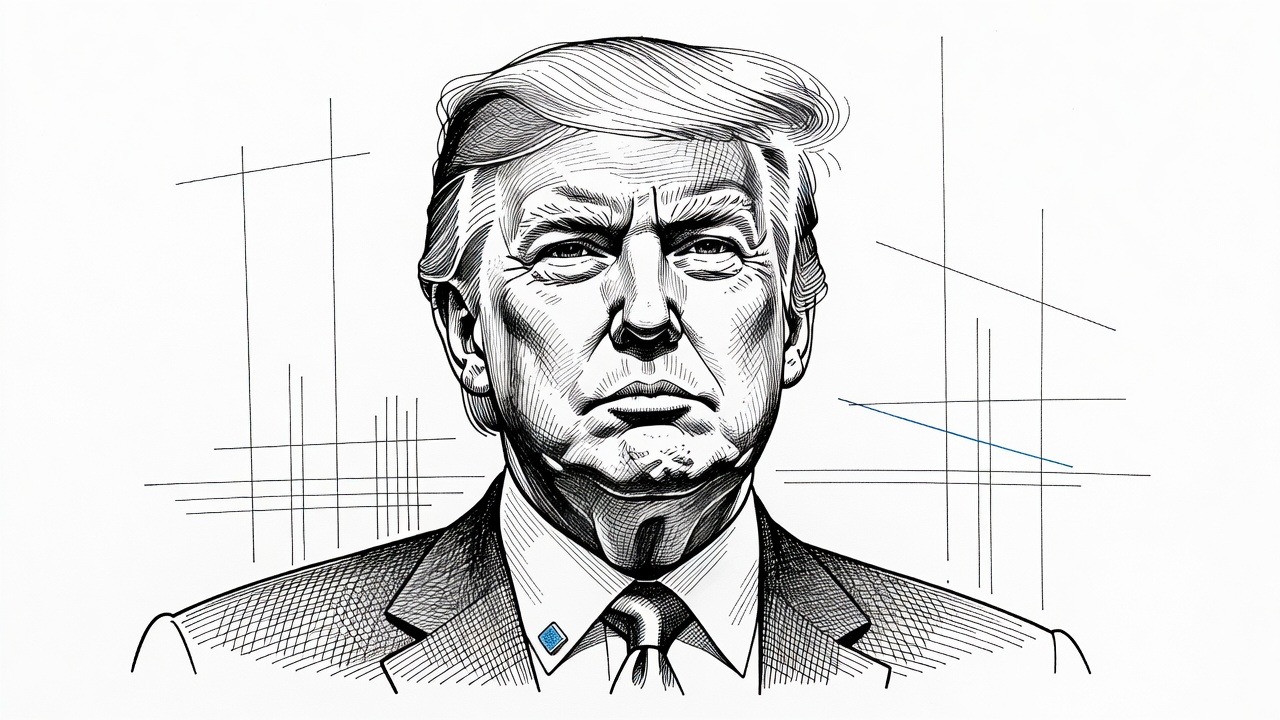
Let's say the plain thing first, because too many people on my side get strangely mumbly about it: a foreign government plotting to assassinate an American president, or any American political figure, is monstrous. It doesn't matter that the target was Donald Trump. It matters more, not less, that we say so without a "but." Asif Merchant got 27 and a half years, and nobody should lose sleep over that.
The more interesting question is how he got caught. Merchant was no master assassin. He was a Pakistani businessman who came to the US allegedly on Iranian instructions and went looking for people to carry out killings. He was arrested in Houston in July 2024, before anyone was hurt. A jury convicted him. A judge sentenced him. That is a counterterrorism success story. It is also dull, patient, unglamorous work by investigators, prosecutors and courts.
That is the machinery this administration has spent a year and a half treating as an enemy.
The same Justice Department that announced this sentence disbanded the FBI's Foreign Influence Task Force in early 2025. It has purged prosecutors and agents who worked on cases the president disliked, and it has pulled agents off national security work to chase immigration enforcement. Its attorney general, Todd Blanche, was Trump's personal defense lawyer. When he stands up to say the president was the intended target, the case is real, but the institution speaking is one the president has turned into an instrument of personal loyalty. Every time Trump's DOJ sends investigators after his critics, it spends the credibility that makes cases like this one stick with the public, with juries and with allies abroad.
The lesson is not complicated. Trump's safety, and ours, depends on a professional, apolitical counterintelligence apparatus. Hollowing it out in the name of fighting the "deep state" is like firing the fire department because it once ticketed your car.
Then there is Iran policy. According to prosecutors, the plot was driven by revenge for the 2020 killing of Qassem Soleimani, which Trump ordered. One can argue that killing Soleimani was justified. Plenty of serious people do. But you cannot sell "maximum pressure" as a strategy that makes America safer and then act shocked when the other side answers in the only asymmetric currency it has. Tehran bears the guilt for this plot, and Tehran's denials are worthless. But hawks who promise escalation without cost owe the public an accounting of the costs. One is a regime that treats American soil as a legitimate battlefield for contract killers, and Trump's own rhetoric and strikes have only made that regime more eager to prove it can reach us.
Merchant's testimony is also worth a sober look, even though it won't excuse him. He said his handlers named Trump, Biden and Nikki Haley, and that he went along to protect family in Iran. The jury evidently didn't buy that he was just a reluctant bystander, and the sentence reflects it. But the detail that Biden and Haley were on the list should be a reminder to Washington that Iran's targeting doesn't respect party lines. Protecting officials from foreign assassination is not a Republican cause or a Democratic one. It is a basic function of the state.
So here is the Left's case, and it should be made without embarrassment. Take the threat seriously. Punish it severely. Then ask why a government that claims to be tough on foreign enemies is dismantling the people who actually catch them. Security isn't built on slogans and loyalty tests. It is built on competent, independent institutions that work whoever is in the White House. Merchant is in prison because those institutions worked. That is worth defending, even from the people currently in charge of them.