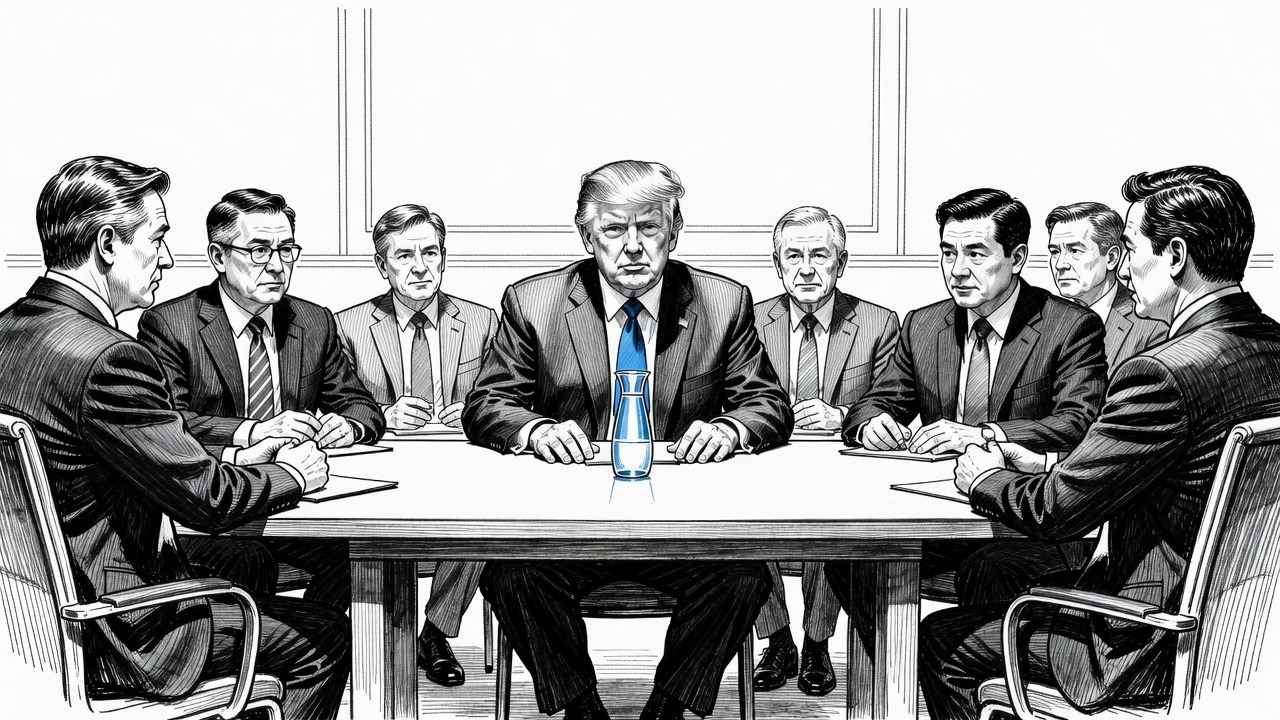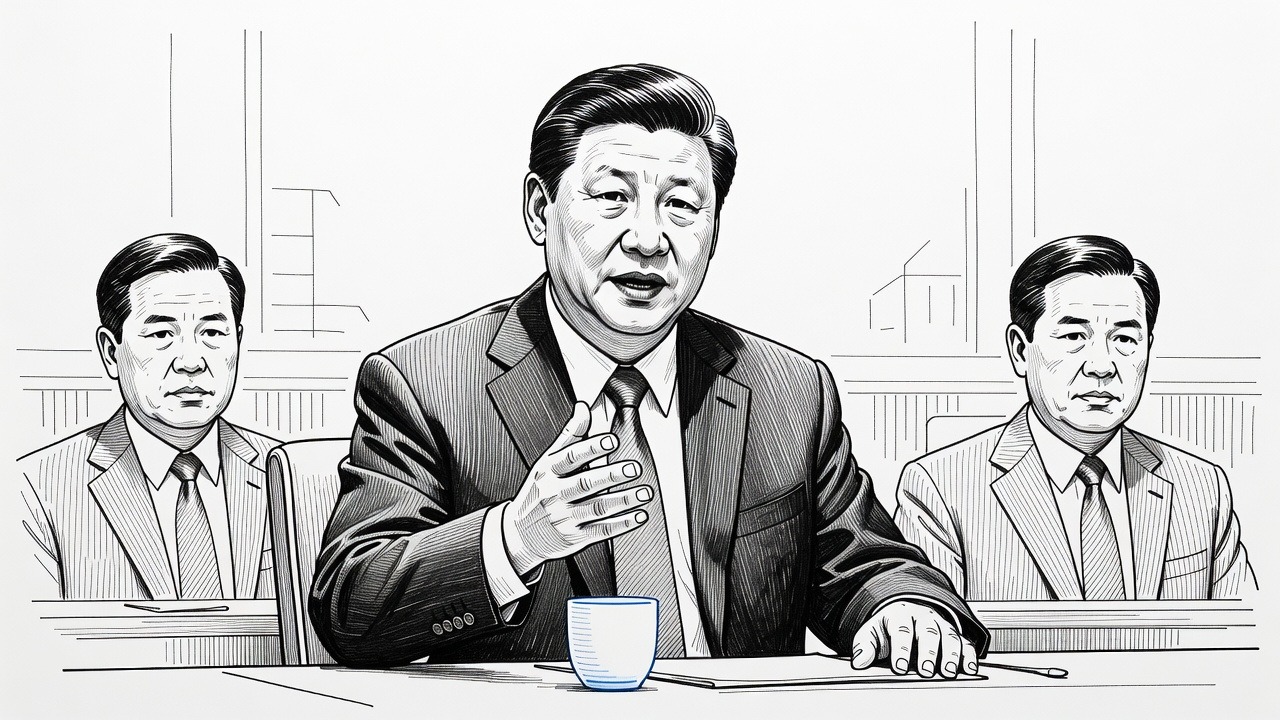
There is something grimly funny about watching the head of a one-party state lecture the world on open markets while the president of the United States arrives to ask whether China will please honor the last deal. Xi Jinping, in Shenzhen, is auditioning as the adult in the global economy. That he can do it with a straight face is Donald Trump's accomplishment.
Let's be clear about what Xi is selling. A China that promises "full access for foreign businesses in manufacturing" is promising to let outsiders compete in the sector where Beijing has spent a decade subsidizing champions, flooding world markets and leaving other countries' factory towns to absorb the damage. Workers in Ohio and Guangdong alike have reason to be skeptical. Xi's pitch is not free trade. It is Chinese trade, offered in the vocabulary of openness, to an audience of Asia-Pacific governments that have noticed Washington has stopped being a predictable partner.
But the Left shouldn't use Xi's hypocrisy to excuse what Trump has built, because Trump's version is worse for the people he claims to defend. Tariffs are a tax paid mostly by American importers and, ultimately, American shoppers. They have been imposed by decree, adjusted by mood and handed out with exemptions for the well-connected. A real industrial strategy has a theory of what to rebuild, who gets the jobs and what standards come attached. This has a theory of leverage and, so far, little else.
Look at the detail buried in this story. China says it will buy more American agricultural goods only if agreed tariff cuts are implemented. Think about what that sentence means. American farmers, a core Trump constituency, are now customers whose orders depend on Beijing's satisfaction. They have been here before. In the first trade war, Washington spent tens of billions of dollars bailing out growers who lost their markets. Taxpayers paid to patch the damage of a policy sold as strength. Then, as now, the farmers were the hostages and the president called it winning.
The deeper failure is strategic. Confronting China's overcapacity, its subsidies and its labor repression is a legitimate project, and the Left has argued for decades that corporate-driven globalization hollowed out American communities. The only way to confront it at scale is with allies: Japan, South Korea, the Europeans, Vietnam, the countries now sitting at Xi's table. Trump has spent years taxing those partners, insulting them and treating alliances as protection rackets. Then he is surprised when they take the meeting in Shenzhen. Meanwhile he has worked to dismantle the domestic investments in chips, clean energy and manufacturing that would give American workers something to stand on.
And on Thursday the schedule offers a tableau: Trump and Putin both seeking time with Xi, on Xi's turf, as host. The country that built the postwar trading order is now a supplicant to it, haggling over implementation of existing agreements. That is not leverage. It is dependence with better lighting.
Democrats should resist two temptations. One is nostalgia for the pre-2016 consensus, which asked workers to trust that someone else would handle the losses. The other is to treat any criticism of Trump's tariffs as a defense of Beijing. The argument worth making is harder: trade policy should be built around labor standards, allied coordination and public investment, not presidential whim and photo-ops. Xi wants the world to believe the choice is between his open markets and Trump's closed fist. The American Left should refuse that menu.
How it may affect me
If tariff cuts are delayed or reversed, expect continued price pressure on imported goods and uncertainty for farmers who depend on Chinese purchases. Watch whether agricultural orders actually resume after Thursday's meeting; that is the clearest test of whether any deal is being implemented.