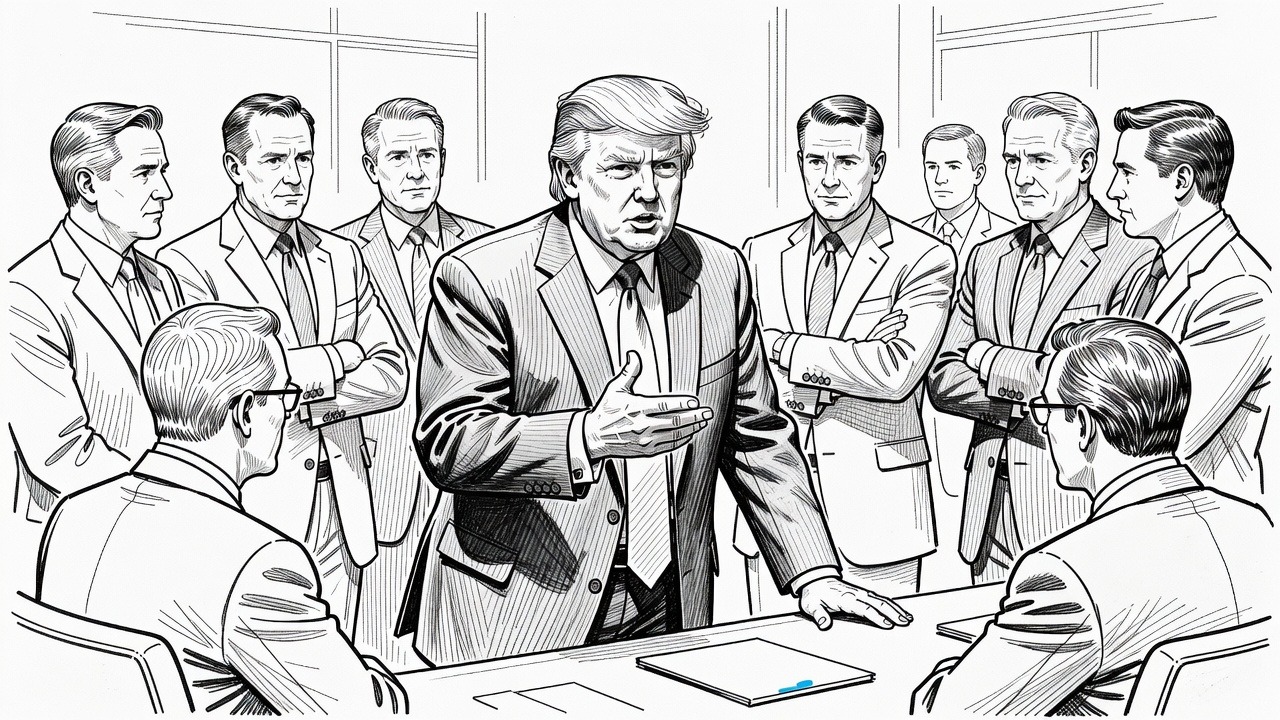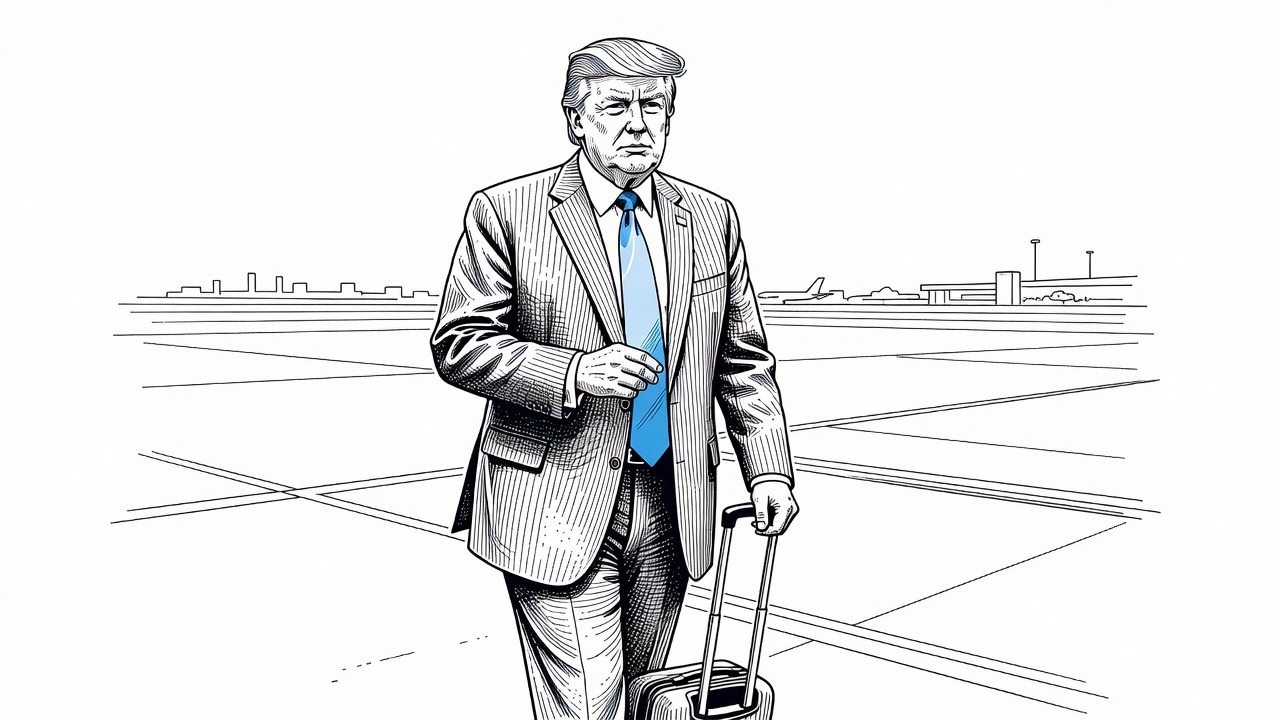
Watch the choreography. Trump lands in Manila to reassure the nations nervous about Beijing, sits down with the Quad and dines with Southeast Asian leaders. Then he flies to Shenzhen, on Xi Jinping's home turf, to sit with Xi and Putin, and says he'd happily meet Putin alone if the schedule allows. Allies get the dinner. Adversaries get the deal.
That ordering is the story. The Philippines is a treaty ally that lives on the front line of Chinese coercion. Its coast guard and fishermen take water cannons and ramming at disputed shoals, and Manila has bet its security on the credibility of American promises. Credibility is the whole asset. A security guarantee is worth exactly as much as the other side believes it will survive the next summit.
This president has spent a year and a half teaching everyone that nothing survives the next summit. He slapped punishing tariffs on India, the Quad's most delicate member, and on Japan, an ally he treats as a debtor. He hit Southeast Asian partners with tariff rates that made clear access to the American market is a favor, not a partnership. He gutted USAID, handing Beijing a gift in countries where American aid and public health programs were among our few forms of soft power. Then he asks these governments to trust him on the hardest question of all: whether Washington will stand beside them when China pushes.
The Quad meeting will produce a communiqué about the East and South China seas. Such statements are easy. What matters is whether anyone in that room believes the American president would hold the line over a rock shoal if Xi offered him soybean purchases, chip concessions or a handshake photo. After a year of watching Trump trade, threaten and flatter, they would be foolish to bet heavily on it.
Putin's presence makes it worse. Trump's eagerness to meet him separately, while Ukraine bleeds, tells Asian capitals what he thinks of borders and sovereignty when a strongman wants something. Why would Manila assume its waters are treated differently from Kyiv's territory?
I'd rather Democrats not answer this with reflexive China hawkery. Many on the left, and plenty of voters, are tired of a bipartisan foreign policy class that treats every confrontation as a test of manhood. Diplomacy with Beijing is not appeasement. Talking to Xi about trade, fentanyl, climate and military hotlines is exactly what a sane superpower does. The question is whether the talking is built on institutions, allies and a coherent strategy, or on one man's appetite for a deal.
The usual pro-Trump defense is that unpredictability is leverage, that Beijing doesn't know what he'll do and so tiptoes. That might work for a bully with no friends. It fails for a country whose power depends on a network of partners who choose to stand with it. Allies who must hedge will hedge. Look for Manila, Tokyo, Delhi and Canberra to quietly build their own arrangements, including with Beijing, because they can't count on Washington's.
There's also a democratic problem. Commitments of this size, whether defending the Philippines, bargaining over Taiwan's status or easing pressure on Russia, are made in hotel rooms and announced on social media. Congress is a spectator. The public learns the terms afterward, if at all.
The tragedy is that the people paying for this improvisation are not in the room. They are Filipino sailors, Taiwanese families, Ukrainian civilians and American workers whose jobs depend on trade policy that changes by the week. Summitry that treats allies as props and rivals as partners is not strength. It is a very expensive form of vanity.
How it may affect me
Whatever Trump agrees with Xi in Shenzhen could change tariff levels, so prices and availability of electronics, appliances and other imported goods, plus export markets for farmers, may shift. Those effects typically show up over months, not days.