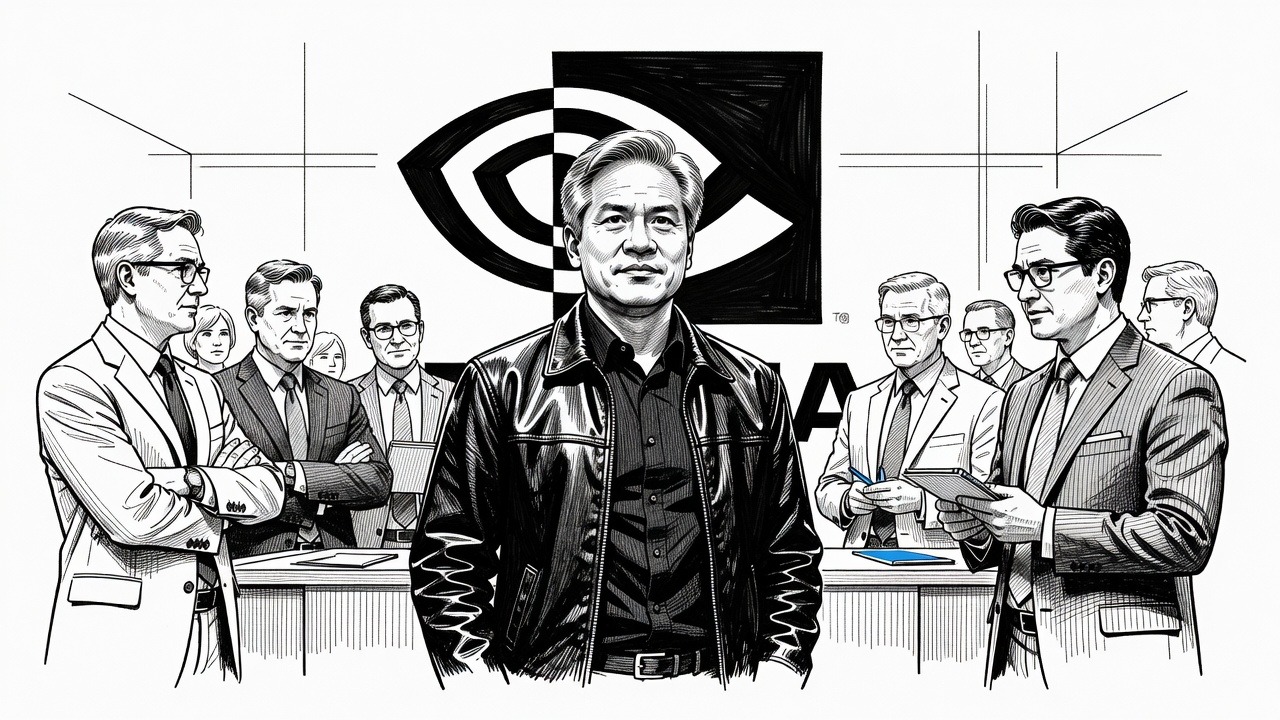
Wall Street is now doing what it always does when a story stops flattering it: discovering that the story was a story. Nvidia has shed $2 trillion in market value since October. The man who embodied the AI boom is gone from the CEO's chair. Steve Eisman, who made his name seeing the 2008 wreckage before the people selling it, says the neoclouds are exposed and that Anthropic's public offering no longer matters much to the AI trade because expectations have cooled. Anthropic is going public anyway.
The Left should not gloat. We should ask who pays.
For three years the public was told that AI was inevitable, and inevitability is the most useful word in American capitalism. It silences questions. Why are utilities planning gas plants and rate hikes for data centers? Inevitable. Why did towns hand out tax abatements for facilities that employ a few dozen people? Inevitable. Why were writers, artists and ordinary workers told their labor was raw material and their jobs were a rounding error? Inevitable. Why is the leading chip company financing the customers who buy its chips, in loops that make demand look sturdier than it may be? The market will sort it out.
Well, it is sorting. The profits from the run-up went overwhelmingly to a thin layer of founders, early investors and executives. The losses will be spread out. They will land in index funds that hold these stocks at enormous weight, in pension portfolios, in 401(k)s that most Americans never chose to concentrate in a handful of companies, and in municipal budgets that counted on a data-center windfall. That is the oldest trick in the book: privatize the upside, socialize the hangover.
The neoclouds are the clearest case. These are firms that borrow heavily to buy chips and rent computing power, a business that works beautifully as long as the music plays. Eisman's warning is the kind lenders should have heeded before the money went out the door. They did not, because everyone was staring at the same chart. If this unwinds, expect the familiar sequel: creditors protected as far as possible, workers laid off, communities left with empty buildings and strained grids, and a chorus insisting that no one could have known.
Then there is Anthropic. It has built its brand on being the grown-up in the room, the safety-conscious lab, structured as a public benefit corporation with a trust meant to guard its mission. I take that seriously, and I want it to be real. But an IPO is where mission statements meet quarterly pressure. Once public shareholders own the company, the question is no longer whether leadership says it cares about the public interest. It is whether any governance device survives a bad earnings call. Eisman says the offering has become less significant to the trade. It has not become less significant to the public, because the real question is who will be allowed to make decisions about a technology this powerful once the fiduciary duty runs to shareholders.
This is also where my own side has been too timid. Democrats have spent years either cheering AI as an industrial-policy triumph or muttering about it without a program. Neither helps. We should be demanding real disclosure of the circular financing between chipmakers and their customers. Data centers should pay their full cost of power rather than pushing it onto residential ratepayers. Tax breaks should come with enforceable jobs and clawback terms. And retirement savers deserve to know how much of their security rests on a single speculative theme.
None of this requires believing AI is fake. The technology may well prove transformative. But a transformative technology and an overvalued stock are not contradictory, and the railroads and the internet proved it. The question was never whether the tools work. It was whether the rest of us would be made to carry the risk for someone else's bet. Right now, the answer looks like yes.
How it may affect me
If you own a broad stock index fund or a target-date retirement fund, a meaningful share of it is likely tied to Nvidia and other AI-linked giants, so a prolonged slide can dent your balance. Check your fund's top holdings. Separately, watch your local utility's rate filings: data-center power demand is increasingly cited in proposed residential rate increases.