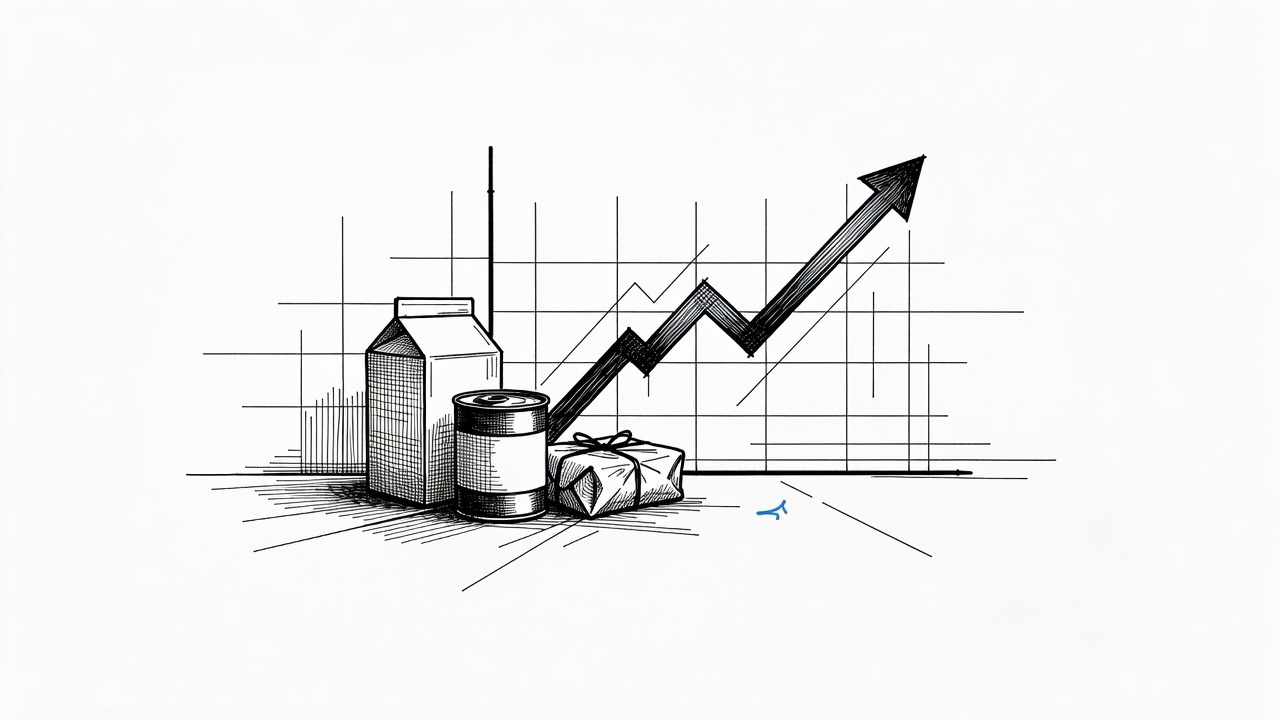
Buried at the bottom of this story is the sentence that matters most. Price pressures are accelerating, an analyst says, with rising costs "being passed on as profit margins improved."
Read that again. Margins are improving while prices rise. That is not a story about too many dollars chasing too few goods in the abstract. It describes companies that have found they can raise prices and keep the difference. Markets are now 93.4 percent sure the Federal Reserve's answer will be a quarter-point rate hike. The Fed's remedy is aimed at households, not at the firms doing the pricing.
That is the choice hiding behind the neutral language of "weighing a rate rise." A hike works by making borrowing costlier, cooling demand and loosening the labor market until workers have less leverage and fewer jobs to choose from. It does nothing to the pricing power of a firm that has learned customers will pay more. It works on the people who take the hit when hiring slows: the worker who doesn't get the raise, the young person who can't find the first job, the family carrying a credit card balance at punishing rates. Those who pay for the cure are rarely those who profited from the disease.
The serious counterargument deserves a hearing. Inflation is not a abstraction to working people. It hits those with the thinnest cushions hardest, and a central bank that lets price expectations drift will eventually need harsher medicine. That is true, and the Left should not pretend otherwise. Anyone who has watched a grocery bill climb knows that "it's only temporary" is cold comfort.
But taking inflation seriously means taking its causes seriously. If margins are widening while prices climb, then a policy that only squeezes wages and demand is aimed at the wrong target. Research from central banks, including the ECB, has found that corporate profits contributed meaningfully to the post-pandemic inflation surge. The honest policy conversation should ask where pricing power is concentrated and why firms can pass costs along so easily. In concentrated markets, a price increase is a decision, not a law of nature.
The Fed has one tool, and a hammer sees nails everywhere. That is why the rest of Washington cannot keep treating inflation as the central bank's problem alone. Where are the antitrust enforcers looking hard at the sectors where a handful of firms set prices? Where is the push for price transparency, for supply-chain investment, for housing construction that rate hikes will only choke further? Higher rates make it more expensive to build the homes that would ease the largest household cost of all. Defeating shelter inflation by freezing homebuilding is a bad bargain.
Democrats should be especially wary of staying silent. If the party's answer to rising prices is to wait for the Fed to produce a slowdown and hope voters credit them for the pain, they will lose twice: once at the ballot box, and once on principle. Voters can tell the difference between a government that fights the firms squeezing them and one that outsources the fight to a rate-setting committee and shrugs.
The Fed may well hike in December. It is a defensible decision for an institution with a narrow mandate and a single instrument. What isn't defensible is a political class that treats the hike as the whole answer. When profits are rising alongside prices, the question isn't just how much pain workers can absorb. It is why they are the first ones asked.
How it may affect me
A December hike would likely push up rates on credit cards, home equity lines and other variable-rate debt within weeks, while mortgage rates may also stay elevated. Savers may see somewhat better yields on high-yield savings accounts and CDs. If you carry a variable-rate balance, paying it down or locking in a fixed rate now could soften the impact.