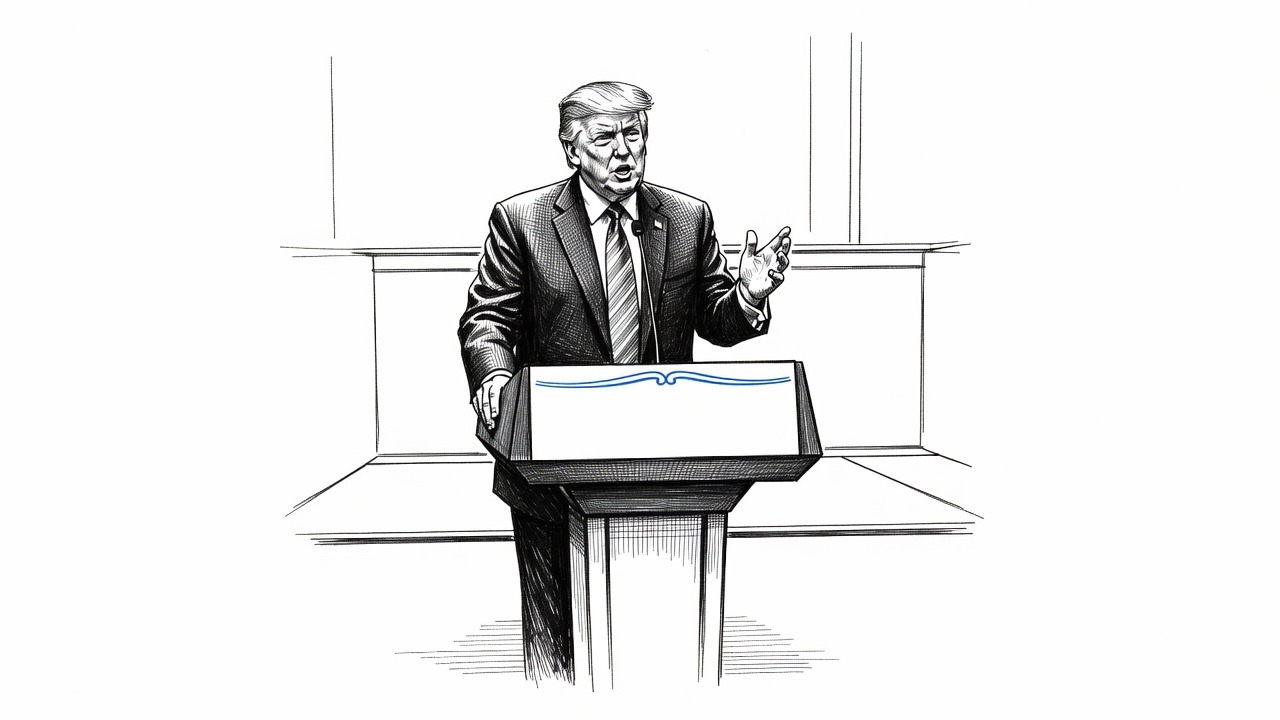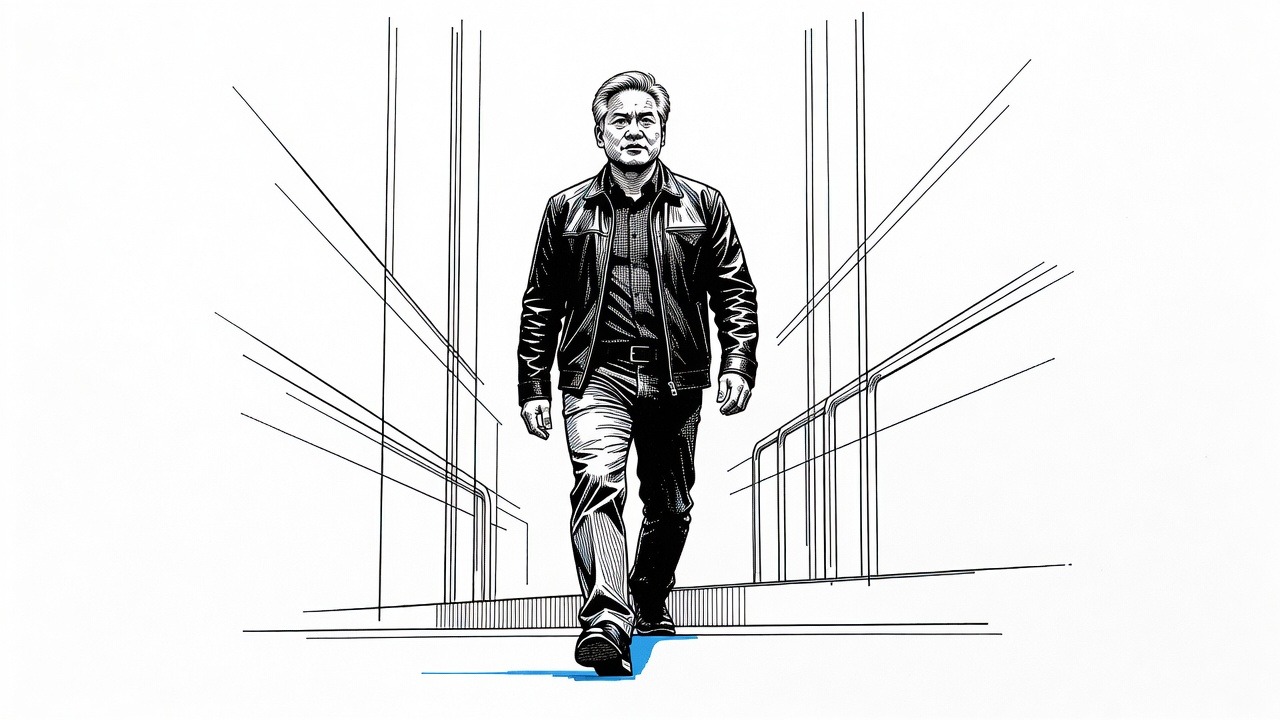
When a central bank governor must go before lawmakers to reassure them about one company's personnel decision, the problem is bigger than the personnel decision.
Jensen Huang has resigned as Nvidia's president, chief executive and board member. A chief financial officer is now holding the chair while a search begins. Taiwan's market lurched. Governor Yang Chin-long says the disruption should be short-lived, but that "uncertainty would persist" until a permanent leader announces a long-term strategy. Read that again. A democratic society's economic stability now waits on a strategy memo from a company in Santa Clara.
This is what the AI boom has actually built. We were told it was a triumph of market genius. In practice it is a tightly wound dependency running through a handful of firms, one geopolitically exposed island, and one charismatic founder whose departure can move a nation's stock exchange. Nobody voted for that arrangement. Nobody was asked whether Taiwanese workers, pension holders and taxpayers wanted their economic weather set by one executive suite.
Notice, too, how the founder myth is doing its usual work. Industry executives insist nothing will break, while also conceding that customers may drift to AMD, Broadcom and Amazon. Both can't be comforting. If Huang was replaceable, why did markets flinch? If he wasn't, then a trillion-dollar edifice has been resting on a single person's judgment, and we've been invited to call that efficiency.
The Bare Story doesn't say why he left, and that silence matters. A man who built one of the most consequential companies on earth walks away from every seat at the table, and the public gets a succession notice. When firms are this large, their governance is a public matter. Investors, workers and governments are all exposed to decisions made behind closed doors.
American policymakers, Democrats included, have spent years pouring public money and diplomatic capital into this supply chain. The CHIPS Act, export controls and the whole strategic logic of keeping advanced semiconductors on our side of the geopolitical ledger all assume a stable corporate core. We have socialized the risk and privatized the control. When the core wobbles, the public learns it has no seat, no information and no leverage.
The Right's answer will be that this is just capitalism doing what it does: a company changes leaders, the market reprices, life goes on. That is true for a mid-sized firm. It stops being true when a single company becomes infrastructure. We regulate utilities, banks and airlines because their failures spill over onto people who never signed a contract with them. A company that can rattle an entire economy through a succession plan belongs in that category.
The Left should say so plainly, and not just as a gripe about tech billionaires. The demand is practical. Disclosure requirements and succession transparency for systemically important technology firms. Public conditions attached to public subsidies. Serious investment in diversifying chip supply, so that Taiwan's security and prosperity are not hostage to one company's boardroom. And a little humility from a political culture that keeps mistaking founders for natural law.
The next CEO will give a long-term strategy. The question is who gets to hold it accountable, and right now the answer is almost nobody.
How it may affect me
If you own a broad index fund or a 401(k), you likely hold substantial Nvidia exposure, since it is among the largest companies by market value. Leadership turmoil there can move your balance. Consumers may also see AI hardware pricing and availability shift if customers turn to rival chipmakers.