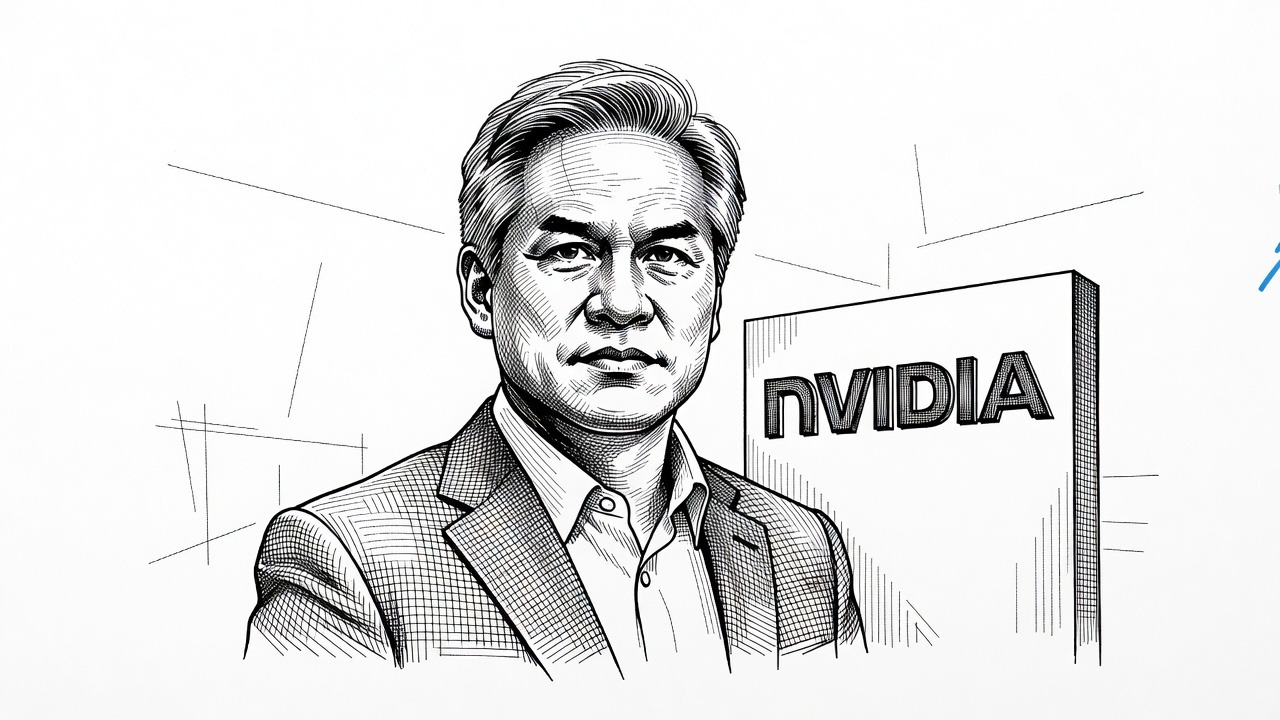
The most revealing detail in the Nvidia story is not who might replace Jensen Huang. It is who is lobbying for him to come back, and what they are not talking about.
On one side are two prominent investors, Brad Gerstner and Gavin Baker, urging the board not to rush and to consider a Huang return. Elon Musk has backed an online petition for reinstatement. On the other side is the Treasury Secretary, who wants an outside successor and wants export-control compliance questions answered within 10 days. We are told why the investors want Huang back: he is a genius, a founder, the man who built the thing. We are told much less about the underlying question, which is whether the world's most strategically important chip company has been honest about where its products end up.
That question matters. Advanced AI chips are not sneakers. Export controls exist because the same hardware that trains chatbots can speed up surveillance states and military systems. Reporting over the past couple of years has described prosecutions and investigations involving smuggling of restricted Nvidia chips through third countries. Nvidia has also lobbied hard against tighter limits. Anyone on the Left who cares about human rights, or about not arming authoritarian governments with the tools of mass monitoring, should want these questions answered fully, publicly and without a founder's mystique getting in the way.
But the Left should not applaud this particular enforcer either. Scott Bessent is part of an administration that has treated export controls as a bargaining chip. It reversed course on selling advanced chips to China in exchange for the government taking a cut of the revenue, a deal that turned a national-security rule into a toll booth. An administration that auctions its rules does not get to pose as their guardian. A 10-day ultimatum and a public demand for an outside CEO look less like law enforcement than like a Treasury Secretary choosing who runs a private company. If compliance is real, it should come through investigators, evidence and consequences that do not depend on whether the White House likes the executive in the corner office. Rule of law means the same standard applies whether the CEO is a friend or an enemy of the president.
Then there is the investor-and-billionaire chorus, which treats corporate governance as fandom. A petition to reinstate a CEO is a fan campaign. It is how markets talk when they would rather not discuss risk. Nvidia is worth trillions, sits at the center of the AI buildout, and has been propped up by public research, public infrastructure and a regulatory environment that allowed it to grow. Yet the arguments in circulation are about loyalty to a founder and the board's patience. The public, whose security and electricity grids are bound up in this industry, gets no petition.
The story as reported does not say why Huang left, and we should not pretend to know. That is exactly the point. The board owes shareholders, regulators and the public a clear account of what happened and what it found on compliance, before it decides who gets the job. If Huang is cleared, say so with evidence. If systems failed, show the fixes. A CEO's brilliance is not a compliance program.
The lesson is uncomfortable for everyone. Corporate power this concentrated cannot be trusted to police itself, and government this transactional cannot be trusted to police it fairly. The fix is boring and necessary: independent enforcement, transparent audits, and rules that do not change with the politics of the week. Whoever ends up in the chair, that is the thing worth fighting for.
How it may affect me
Nvidia is one of the largest holdings in major index funds, so most 401(k) and IRA investors own it indirectly. Leadership turmoil or an export-control enforcement action could move its stock price and, through it, broad market index values.