Here is a quiet fact about American industrial policy: it is working, and the people in power are doing their best to make it stop.
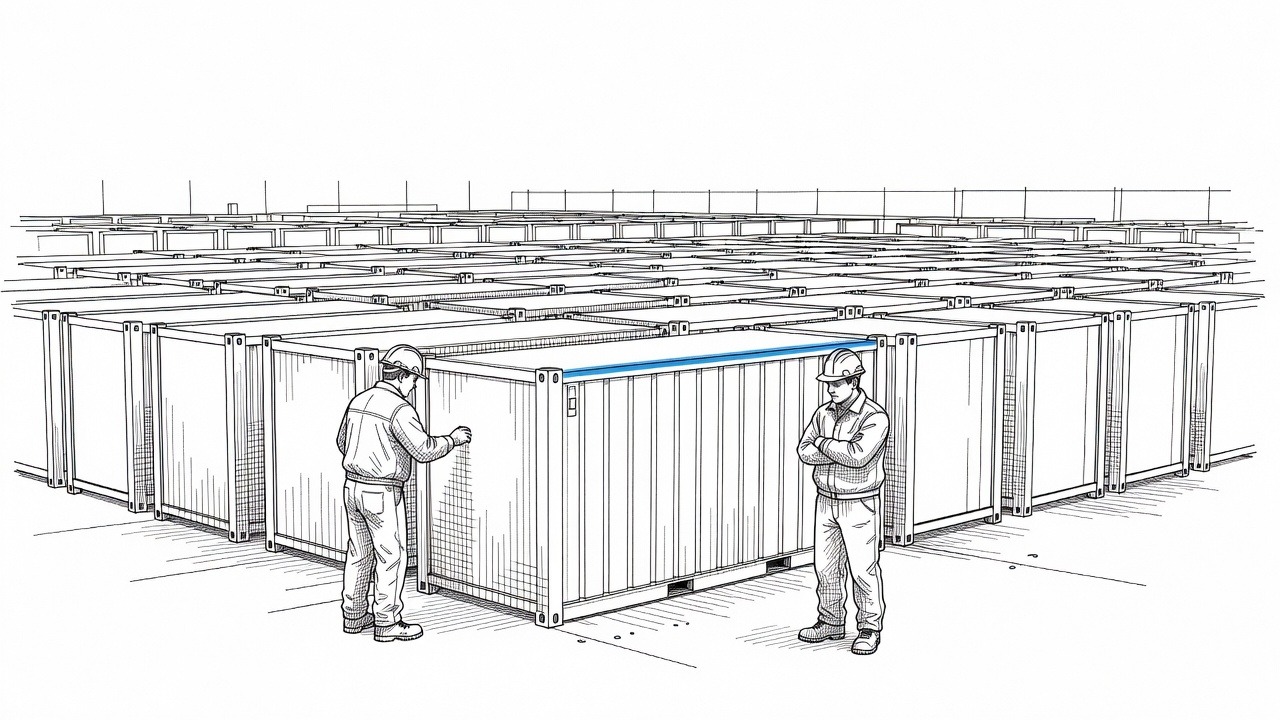
Samsung SDI will ship 16 gigawatt-hours of lithium iron phosphate batteries to Jupiter Power, bringing the pair's total orders to roughly 27 gigawatt-hours. The cells will be built at the StarPlus Energy plant in Indiana, a joint venture with Stellantis. That is a Korean manufacturer, a Texas-centered storage operator, and an American factory in a state that voted for Donald Trump by double digits. This is what a green industrial strategy looks like on the ground: not a slogan or a tweet, but a factory that has a buyer.
The buyer matters more than the factory. The plant's original purpose was electric vehicles, and the EV market has stumbled. The federal consumer credit is gone, and automakers, Stellantis included, have been retreating from their own promises. Storage is the demand that has not blinked. Data centers, heat waves and a grid built for the last century are all pulling on the same wires, and batteries are the fastest, cheapest way to answer. Capacity that might have sat idle is being redirected to the one product everyone needs. Any serious Republican who says he cares about grid reliability and American manufacturing should be cheering.
Instead, we get sabotage by installment. The party that spent years complaining about China's dominance of battery supply chains then used its congressional majority to cut the incentives meant to break that dominance. And in September, federal agents raided the Hyundai-LG battery site in Georgia and shackled hundreds of workers, most of them Korean technicians sent to install equipment. If you wanted to tell every foreign manufacturer that building here is a legal and political gamble, you could hardly design a better advertisement. Samsung SDI surely noticed. Notice, too, that this deal's deliveries begin in 2029. That is a long runway, and part of what it prices in is a wager that Washington will still be a reliable partner by then.
The opposing case deserves a hearing. Conservatives say this is subsidy-fed, that real demand for storage would produce real supply without the government picking winners, and that taxpayers are underwriting a foreign conglomerate. Some of that is fair. Samsung is not a charity, and a Korean chaebol collecting American credits is not inherently a public triumph. But the "let the market decide" argument ignores who built the market. China did not come to dominate batteries by accident or by free competition; it did so through decades of patient state financing. Declining to match that is not neutrality. It is unilateral disarmament dressed up as principle. And the credits here are tied to production on American soil. They pay only when someone builds something in Kokomo.
The Left should not coast on this, either. The question we must ask is what the public gets for its money. Does the Indiana workforce get union-scale wages, safety standards and local hiring commitments, or merely a ribbon-cutting? Subsidies that enrich a developer and a multinational while leaving workers with temp contracts are not a strategy; they are a transfer. Democrats who passed these incentives were often better at announcing factories than at enforcing the terms under which they were built. If we want voters in Indiana to believe that clean energy means their paychecks, the job quality has to be written into the deal, not trusted to goodwill.
Still, the lesson is plain. Public policy created the conditions for this factory, and public policy is now the largest threat to it. A 27-gigawatt-hour order book is not a miracle. It is what happens when government sets a direction and then holds steady long enough for private capital to believe it. The danger is not that the model fails. It is that its opponents succeed in making the next investor look at Indiana, Georgia and Washington and decide to build somewhere else.