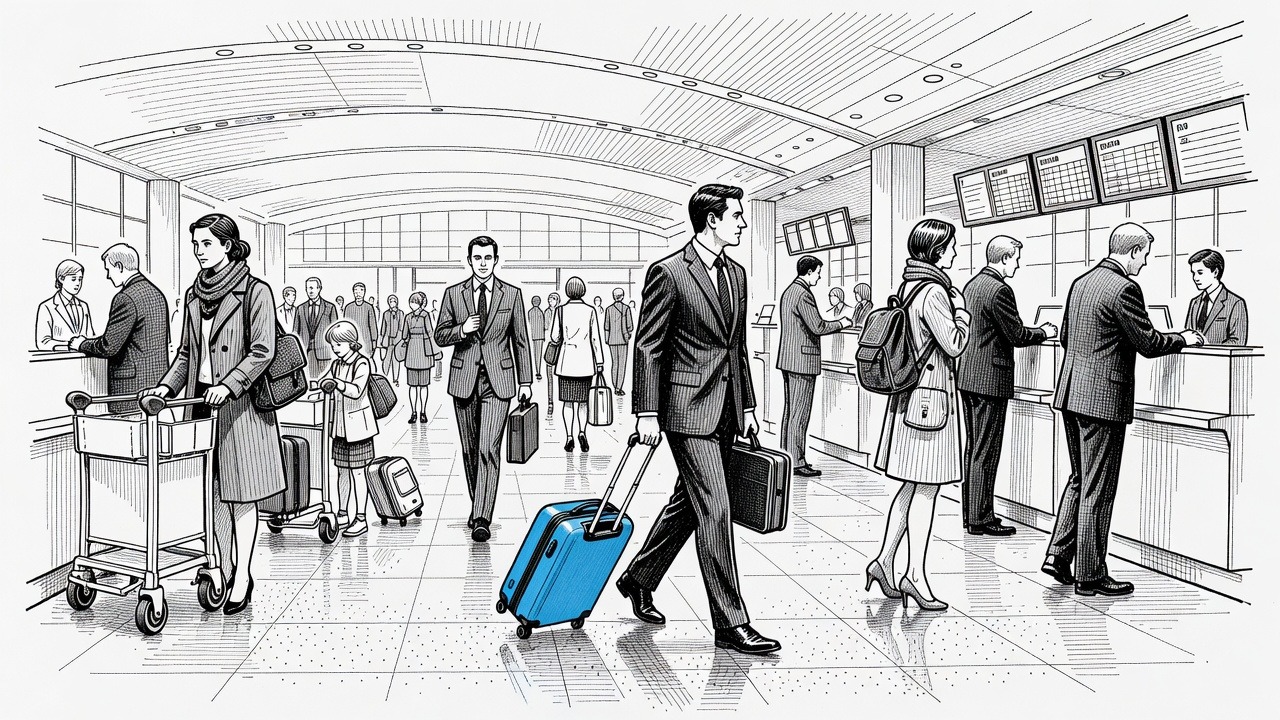
The headline says Thanksgiving travel will dip by 0.1%. That is a rounding error. The story underneath it is that getting home for dinner now costs a lot more, and the people paying are the ones who can least absorb it.
Start with the numbers AAA tucked into the later paragraphs. Regular gas is $3.82 a gallon, against $3.08 a year ago, an increase of about 24%. September airfares were up more than 22%. The average booked domestic flight is $800, up 17%. Few household paychecks jump by a fifth or a quarter in a year, and families feel a spike like that all at once, at the pump and at the ticket counter. A family of four driving six hours to see grandparents is now paying a surcharge for being a family. A family of four flying is paying a premium that would have covered a decent used appliance.
AAA's measure is a total count of travelers, and a count can't show who dropped out and who kept going. A flat total can hide a lot of churn: the comfortable fly regardless of price, while others shorten the trip, skip it, or put the cost on a credit card at current interest rates. We will hear that 81.5 million people are still traveling, so everything is fine. Nobody counts the people who stayed home, and they don't show up in a forecast about movement.
Then there is the Friday ground stop. A nationwide FAA halt lasting more than four hours is not a hiccup in a system that works. Secretary Duffy and Administrator Bedford promise traffic will be back to normal by the holiday, and AAA says it won't matter unless it happens again. That is a reassurance with a loophole attached. Everyone who studies air traffic control knows the system runs on aging technology and too few controllers. The administration itself has acknowledged that modernizing it needs far more money than Congress has provided. Whether a Thanksgiving traveler gets home on time shouldn't depend on keeping our fingers crossed.
This is where the Left has something real to say, and where it should be honest about its own habits. Democrats like to talk about "affordability," but the word has become a mood rather than a program. It's easy to point at a gas pump. It's harder to say what we would do about an airline industry consolidated enough that four carriers dominate the market and can raise prices without fear of losing customers. It's harder still to insist on sustained, boring, unglamorous investment in air traffic control and public transit. Those are public goods, and the market won't build them for us.
The Right's usual answer is that prices are what they are and travelers should shop around. That is a strange comfort to someone who has one airport within driving distance and one carrier flying the route. Competition is a fine slogan, but in much of American aviation it has been quietly merged out of existence. Meanwhile an administration that promised lower costs now offers reassurance that the planes will mostly fly.
Thanksgiving is among the few rituals Americans of every class and region still share. The act of going home, crossing the country to sit at a crowded table, is a thin thread of common life. When that ritual gets 20-odd percent more expensive and runs on infrastructure that can freeze for four hours, we are not looking at a travel statistic. We are looking at a country that has decided its shared systems can limp along while households pay the difference.
A 0.1% decline sounds like stability. It is closer to a warning that the public has stopped being able to buy its way around failing systems, and that someone in power should be answering for it.
How it may affect me
If you're flying, check your flight status before leaving for the airport, and know that federal rules generally entitle you to a refund if an airline cancels your flight and you choose not to rebook. If you're driving, budget for gas roughly 24% above last year's price. Travel is expected to be heavy from the Tuesday before Thanksgiving through the following Monday.