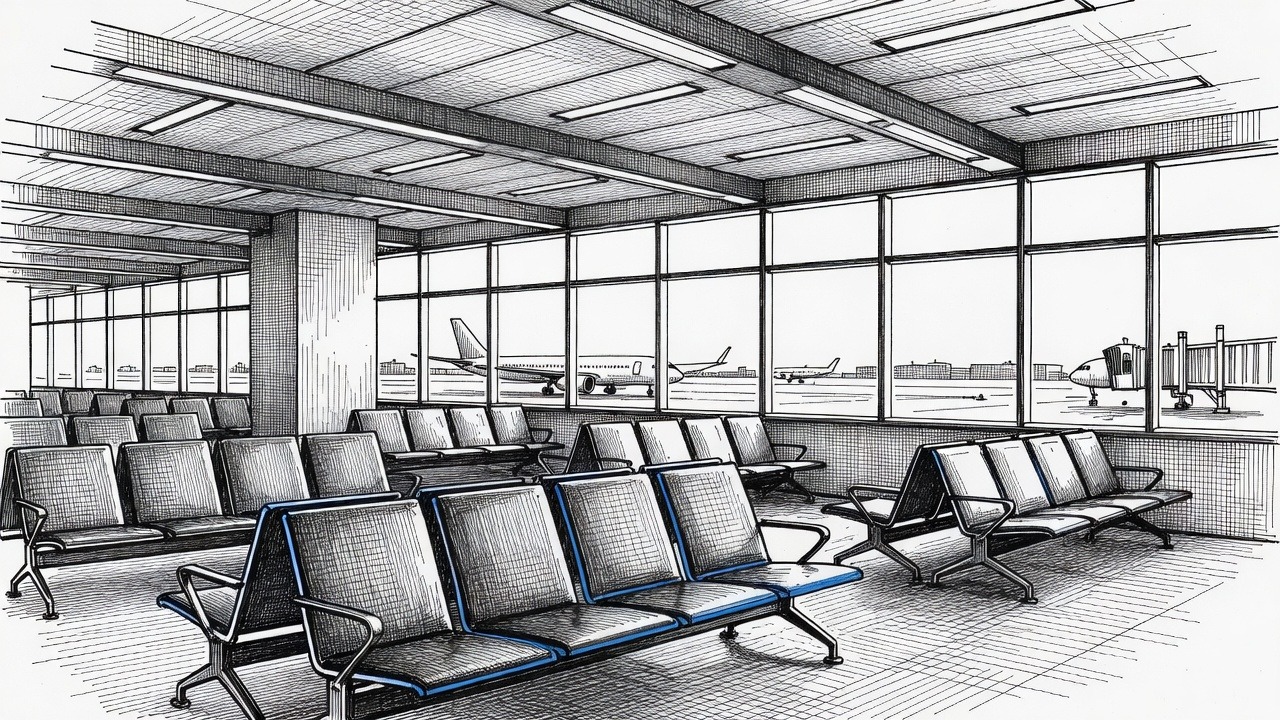
Four hours. That is how long the world's largest aviation system stood still on Friday, and the first thing Washington did was start looking for someone to blame.
Trump blames Biden. Buttigieg asks why the safeguards failed. Duffy points at a contractor. Mullin rules out AI and hackers, as though those were the only two alternatives to simply neglecting a critical public system. Everyone is performing a whodunit. The real story is less exciting and more damning: this is what it looks like when a country treats basic infrastructure as a talking point instead of a responsibility.
For decades, the air traffic control system has run on a patchwork of old hardware, stopgap software and workarounds held together by people who know where the bodies are buried. Everybody in Washington has known this. Controllers have said so. Inspectors general have said so. Newark's repeated radar and communications failures last year made it obvious to anyone paying attention. Yet modernization has been funded in dribs and drabs, subject to the whims of appropriations fights and shutdown brinkmanship. The administration now asks Congress for more money. Fine. But Duffy himself has said the job costs far more than the roughly $12.5 billion the Republican reconciliation bill provided. That bill found hundreds of billions for tax cuts and enforcement. The system that moves millions of people a day got a down payment.
Trump's complaint that Biden worsened the problem deserves a serious answer, and the honest answer is mixed. Democrats should not pretend they were blameless. Buttigieg presided over the January 2023 NOTAM outage that also grounded the country, and four years in office is long enough to own the state of the system. The Biden administration did seek modernization money and pushed for more controller hiring, but Congress never delivered the scale of investment required, and Democrats could have made that fight louder and more central. "I asked and they said no" is an explanation, not an absolution.
But the president who now sounds like an infrastructure reformer is the same one whose administration spent last year purging federal staff, offering buyouts across the government and presiding over a shutdown in which air traffic controllers worked without pay. You cannot spend a year treating the federal workforce as a cost center to be cut, then act surprised when the machinery wobbles. Controllers are not an abstraction. They are skilled public employees working long hours in a system short on staff, and the people responsible for keeping them there showed contempt for them at the very moment they were needed.
The contractor angle is the part the public should watch most closely. Officials say work at a single site may be connected to the instability. If so, the question is not just who made the mistake but why one site's work could cascade into a national halt. That is a design failure, and design failures are policy failures. Outsourcing critical functions to private firms can bring useful expertise, but it also blurs accountability. When something goes wrong, the government blames the vendor, the vendor blames the spec, and the traveler in Atlanta sleeping on a terminal floor gets an apology email.
And who pays? Not the senators with flexibility and frequent-flyer status. The cost lands on hourly workers who lose shifts, families who miss funerals, patients whose travel for care collapses, small businesses that cannot reroute freight. Resilient public systems are an equality issue because the wealthy can buy workarounds and everyone else absorbs the shock.
The investigation should be thorough and the findings public. But we do not need a final report to know the larger truth: modernizing air traffic control should have been a bipartisan, fully funded national priority a decade ago. Every party in Washington had a chance to treat it that way. Pay for the system, protect the workforce that runs it, and build redundancy so that one failure cannot freeze a continent. Anything less is just waiting for the next Friday.
How it may affect me
If you have upcoming travel, check your airline's app for rebooking options and know that when a cancellation is within the airline's control, you are generally entitled to a refund if you choose not to travel. Meals or hotels are typically not required for disruptions like this. Build in buffer time, avoid tight connections, and consider travel insurance only after reading what it covers.