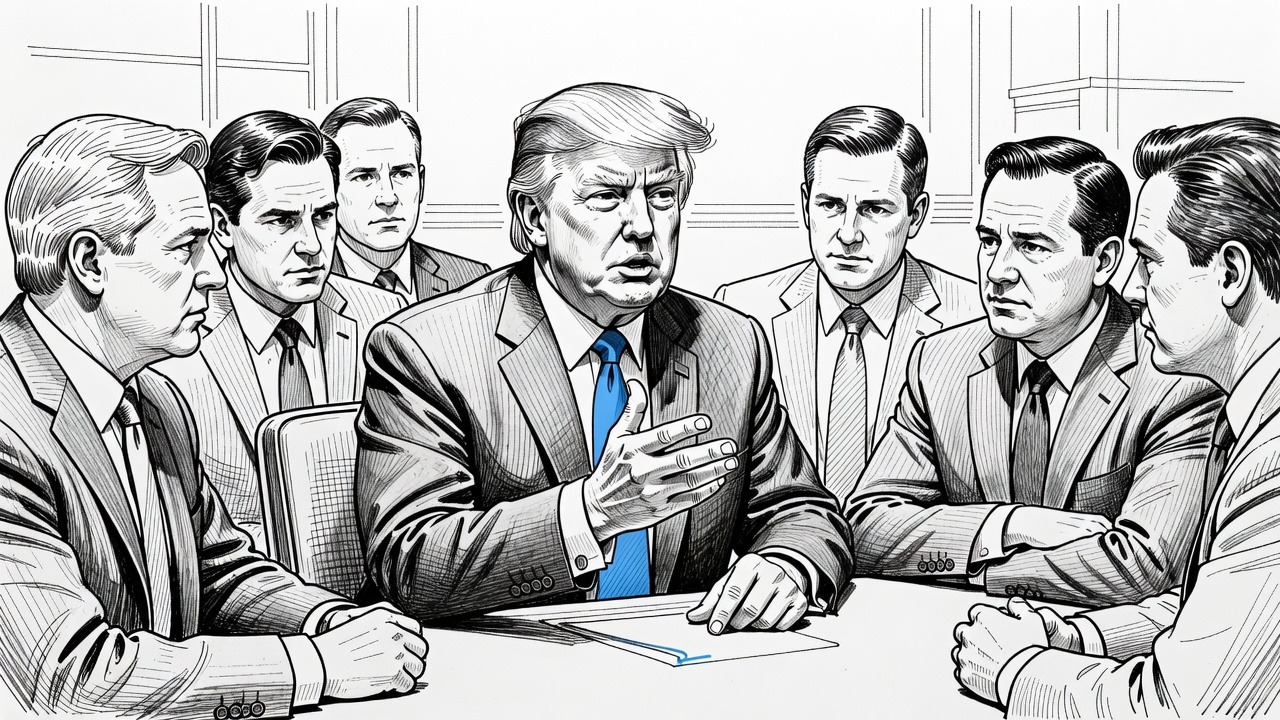
The most revealing number in Tuesday's vote isn't 211 or 204. It's one. Thomas Massie was the lone Republican who refused to bury the Hegseth impeachment resolution, and the rest of his conference sent it to the Judiciary Committee, where it can sit and die quietly.
The referral is a dodge, and everyone in the chamber knows it. A vote to refer is a vote to avoid a vote. Republicans don't have to defend Pete Hegseth on the record, and they don't have to say that killing suspected drug smugglers from the sky, without any declared war or congressional authorization, is fine. They get to say they have 'concerns' about how he handles military matters, then vote to make sure those concerns never become anything. Criticizing the man in a hallway interview while shielding him on the floor is not oversight. It is cowardice with a press strategy.
Hegseth calls this a 'political dispute over policy.' That is the defense of someone who hopes nobody reads the charges. Whether to bomb Iran is policy. Whether the president can order lethal strikes on boats in the Caribbean, killing people who were never charged, tried or even identified, is a question of law. So is whether a defense secretary can go after a sitting senator for reminding service members of a duty every one of them swears to uphold. Mark Kelly, a retired Navy captain and astronaut, is the target here, and the alleged crime was speaking up against illegal orders. A Pentagon that punishes that speech sends a message to every junior officer: don't ask questions.
Republicans used to know how to talk about this. They spent years warning about executive overreach, usually when a Democrat held the office. Congress is supposed to guard its own war powers and its own members from retaliation by the executive branch. Instead, the party now in control treats those powers as a favor it extends to the president. Hegseth didn't take them. Congress handed them over, piece by piece, and Tuesday's vote handed over a little more.
The obvious objection is that impeachment of a Cabinet secretary was never going to succeed. Removal needs two-thirds of the Senate, and no one thinks 67 senators are available. That's true, and it's not the point. Impeachment is also Congress's power of inquiry: hearings, documents, witnesses, sworn testimony about who ordered what and on what legal theory. Burying the resolution in committee under a friendly chair doesn't just kill a vote. It kills the record. That is the real purpose of the referral.
Democrats should resist the urge to congratulate themselves, though. A party that wants to claim the mantle of war-powers restraint has to mean it when its own presidents are in office, and the record there is mixed. The principle has to hold across administrations, and the Iran conflict and the boat strikes are where Democrats can show it does. That means making the case in plain language, not in the vocabulary of procedural outrage. People understand the idea that the military shouldn't be turned loose on suspects without a trial, and that a senator shouldn't be threatened for saying so.
Massie, a libertarian-leaning Republican who has spent years being a nuisance to his own leadership, deserves credit for being the only member of his party to act like a legislator instead of a loyalist. The other 210 Republicans who voted to refer have each told us something. They will say whatever they like about Hegseth, so long as it costs him nothing. This vote is what they actually did.