Let's start with what we don't know, because the rest of this story depends on it. We don't know that Alice Huang was an intelligence asset. We don't know what her relationship with Jensen Huang was, or whether it mattered. All we have are claims attributed to unnamed U.S. intelligence officials, a flat denial from Beijing, and a board that says it has "no reason to believe" anything was compromised, a conclusion it announced just as it began investigating. Anyone who tells you the case is already closed, in either direction, is selling something.
The Left has a particular duty here. We lived through the China Initiative, which treated Chinese and Chinese-American scientists as suspects and wrecked careers on the strength of insinuation. A leak from the security state is an allegation, not evidence. Treating it as a verdict would hand the worst instincts of American politics a trophy.
But skepticism about the leak is no reason to wave off the structure that made it matter. The real scandal isn't one relationship. It's that the most consequential trade-policy question of the decade, who gets the chips that power advanced AI, has been effectively negotiated with one company's CEO.
Huang has spent years lobbying Washington to loosen limits on sales to China. He got results. The Trump administration reversed course on the H20, and has since moved toward allowing more advanced chips to be sold, in exchange for the government taking a cut of the revenue. Whatever you think of export controls, that is a strange way to run national security: a tariff-style tollbooth where access is priced and the seller's CEO is a regular guest at the White House. Add a firm like Megaspeed, a Singapore-based data company whose chip purchases have reportedly drawn scrutiny over possible diversion to China, and the question stops being romantic or espionage gossip. It becomes whether anyone outside Nvidia can verify where the product goes.
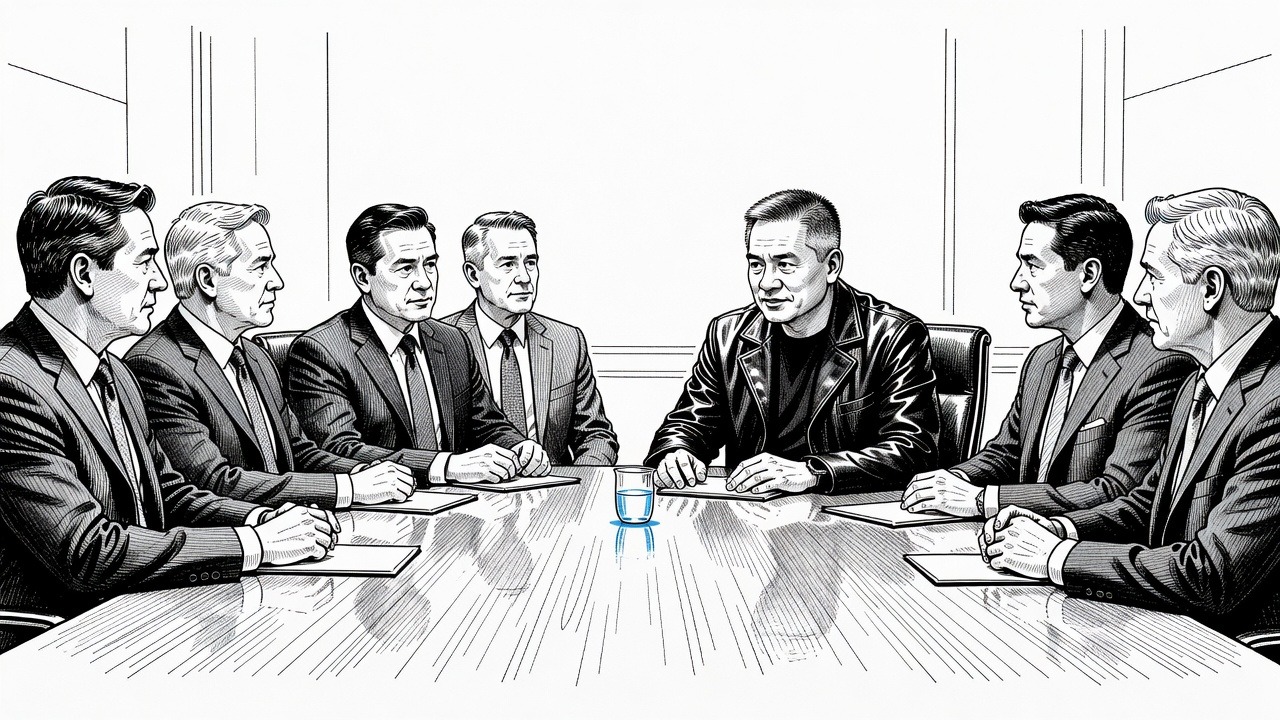
Now look at who is doing the checking. A committee of directors, advised by outside counsel the company hired, is investigating the man who co-founded the company and whose personality is a large part of its valuation. Maybe they'll be rigorous. Boards sometimes are. But this is the same governance model that is supposed to have caught the problems at Boeing, Wells Fargo and a long list of other firms where directors discovered their duties after the damage was done. The public gets a press statement. Congress gets nothing. Shareholders get a stock dip.
A $4 trillion company is not a private matter. Nvidia's chips sit at the center of an AI buildout that is straining power grids, reshaping the labor market and propping up a stock market that retirement accounts depend on. If there is a real counterintelligence concern, it belongs with an accountable body, not behind privilege and a legal retainer. If there isn't one, the officials who floated it owe Huang and the public an explanation for why a vague charge reached the press.
Democrats shouldn't hide from this by retreating to China-hawk theater. Shouting about Beijing while ignoring how export policy actually gets made is the same cowardice in a different costume. The better demand is dull and firm: independent review of chip-diversion channels, public reporting on where advanced chips go, and a clear wall between corporate lobbying and licensing decisions. Nobody should have to take Jensen Huang's word. Nobody should have to take his board's, either.
A man with that much leverage over national policy shouldn't be judged by rumor. He shouldn't be exempt from scrutiny because he's rich, either.
How it may affect me
If you own an S&P 500 or total-market index fund, including through a 401(k), Nvidia is one of your largest holdings, so a prolonged leadership dispute can move your balance. Expect volatility rather than a verdict; the investigation has no stated timeline.