Notice the vocabulary. "Limited." "Defensive." "Not a return to full-scale combat." Each word is doing the work of a permission slip, and the American public is expected to accept the slip without asking who signed it.
Start with "defensive." U.S. officials say the strikes on Qeshm Island followed Iranian fire on an American aircraft. That may be true. It is also the account of the party that chose to fly military aircraft along Iran's coast, next to the most volatile chokepoint in the global oil trade. Iran says it downed two U.S. reconnaissance drones, and Washington denies it. I can't tell you who is right, and neither can you. We are working from dueling claims and a government that has every incentive to describe its own actions as reactive. "Defensive" is a description, not a finding.
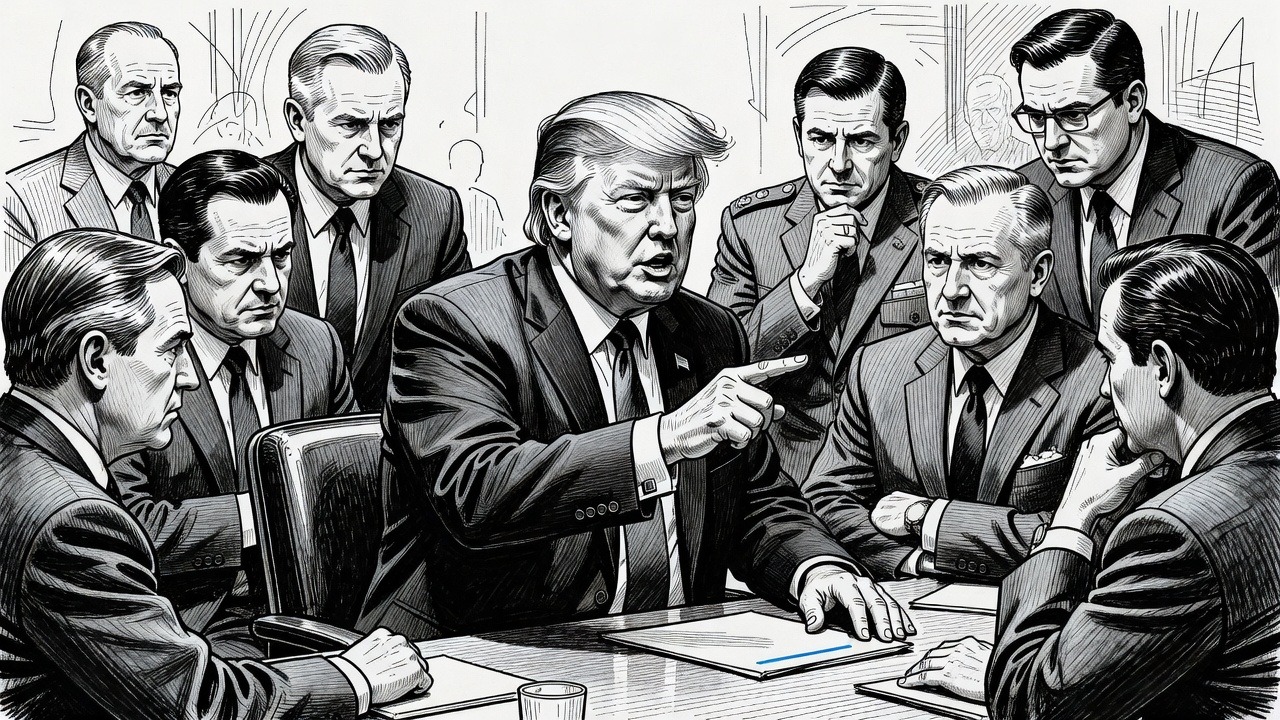
Then consider the pairing: strikes on Monday, talk of settlement the same day. Vice President Vance is optimistic. Trump says a deal is possible, and also that further action could follow if talks fail, and also that Pickaxe Mountain, a deeply buried site, could be a target. This is negotiation by menace, and it is a gamble with other people's lives. Every round of "limited" fire gives hardliners in Tehran a reason to argue that diplomacy is a trap. It gives the same argument to the hawks here who never wanted a deal. Escalation does not need anyone to want it. It only needs enough incidents, each one small enough to be called limited.
Pickaxe Mountain deserves its own scrutiny. After last summer's strikes, the president told the country Iran's nuclear program had been obliterated. If so, why is a mountain fortress back on the target list? Either the earlier triumph was oversold, or the new threat is theater. The public has been handed a victory narrative and a fresh threat narrative, and no one has to reconcile them.
Here is the constitutional problem, and my own side should be ashamed of its part in it. Congress has not authorized a war with Iran. Presidents of both parties have spent decades stretching "self-defense" and "limited operations" until Article I became a ceremonial clause. Trump is using that stretched authority with unusual bluntness, but he did not build it. Too many Democrats have been happy to issue a strongly worded statement, vote against a war powers resolution when it counted, or hide behind "I'm not privy to the intelligence." If a president can strike a sovereign country's territory, threaten more, and dangle a deal, all without a vote, then the war power belongs to one man, and our objections are just commentary.
The costs also fall unevenly. The pilots and sailors in range of Iranian missiles are mostly working-class kids who never got a vote. The Strait of Hormuz carries roughly a fifth of the world's oil, and any disruption lands first on people who commute in older cars and heat their homes on tight budgets. The architects of these decisions will be fine.
The Left's position should not be naive. Iran's government is repressive, its regional conduct is dangerous, and a nuclear-armed Tehran is a real concern. But the answer to a dangerous regime is a coherent strategy, and a strategy has to be debated in public. What we have is a series of improvisations, each labeled "limited" after it has already happened.
Congress should vote on this, in the open, before the next incident. If a deal is truly within reach, the administration should say what it is, and stop pairing it with strikes that make it harder to reach. A country that can be walked into war one "limited" step at a time has already lost control of the decision.
How it may affect me
Roughly a fifth of the world's oil passes through the Strait of Hormuz, so escalation near it can quickly move crude prices and, with a lag, gasoline, diesel and airfares. If tensions keep rising, expect volatility at the pump. Military families should also watch for any changes in deployments.