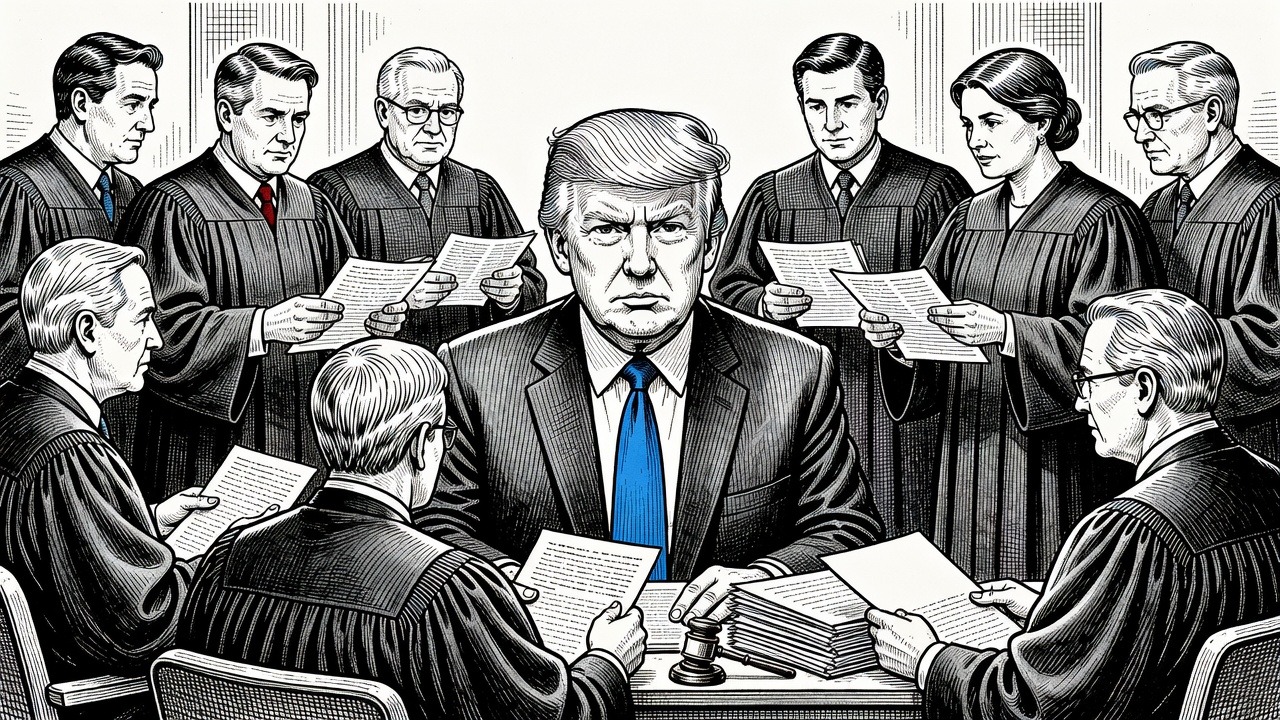
Notice the timing before you notice anything else. The Trump administration sued California on Oct. 15. It lost before a district judge and before a divided 9th Circuit panel. Then, on the eve of Election Day, it ran to the Supreme Court demanding that California pull more than 20,000 voters' ballots out of the pile. The government had weeks to make a careful case. It chose to make an emergency out of a list.
The list is the whole problem. The Justice Department says the voters were identified as possible noncitizens, and the solicitor general says they are "likely" not citizens. Possible. Likely. That is the vocabulary of a hunch, and a hunch is not a basis for treating a voter's ballot as contraband.
We have seen how these lists perform. In 2012, Florida's purge list started at roughly 180,000 names and shrank to a few dozen actual removals after the scrutiny began. In 2019, Texas flagged about 95,000 registrants as possible noncitizens and then retreated when it emerged that many were naturalized citizens, people who had done everything the law asked of them. Matching databases that were never designed to verify citizenship against voter rolls is a reliable way to ensnare Americans who immigrated lawfully, changed their names, or were naturalized after a record was created. California says this list may contain errors. History says that is the safe bet.
So what does "segregating" these ballots accomplish? The government calls it preservation. But a ballot set aside is a ballot singled out. It becomes a ready-made category of suspect votes, available for challenge, delay and litigation after the count, precisely when the pressure to question results is greatest. Anyone who thinks that is paranoid has not been paying attention to how this administration and its allies talk about elections they might lose. Creating a pile labeled "illegitimate" before anyone has proved a single ballot illegitimate is how you build a post-election dispute in advance.
Then there is the injury that matters most. If a flagged citizen's ballot is separated, the voter is not harmed merely in theory. Ballot secrecy, due process and the presumption that a registered voter is eligible all get put on the shelf. If the government is wrong about even a small share of 20,000 people, thousands of lawful voters are treated as suspects for exercising the most basic right of citizenship. The government is asking the country to accept that cost on the strength of its own unverified say-so.
The conservative movement also owes us an answer on federalism. For years, the argument was that states run elections and Washington should keep its hands off. Courts invoke the Purcell principle to refuse late changes to election procedures because last-minute meddling breeds chaos. Now the administration wants the Supreme Court to override a state's election administration a day before voting ends, on an emergency docket that works without full briefing. Lower courts declined to do that, citing both disenfranchisement and California's authority over its own procedures. They were right on both counts. If Purcell means anything, it means this application should be denied.
None of this requires pretending that noncitizen voting is lawful. It is illegal, and people who do it can be prosecuted. But the evidence that it happens at scale is not there. When Georgia audited its rolls in 2024, it found about 20 noncitizens among more than 8 million registrants. A genuine concern for election integrity would have the government verifying names individually, with notice and a chance to respond, long before an election. It would not be dumping a 20,000-name list on the Supreme Court at the last minute.
That is why this looks less like election security than election theater, with a legal stunt in place of evidence. The justices should say no, and the rest of us should remember who asked.
How it may affect me
If you're a naturalized citizen or recently changed your name, and you vote by mail, confirm your registration status with your state or county election office, and keep your naturalization documents accessible in case you are challenged. If you receive any notice questioning your eligibility, respond promptly and in writing, and contact your county elections office or a voting-rights hotline.