A federal judge in Miami did not find that Donald Trump wrote a birthday letter to Jeffrey Epstein. He did not find that Trump didn't. He found something narrower, and under current law entirely ordinary: that a public figure who says a newspaper got a devastating fact wrong can almost never get a jury to hear it.
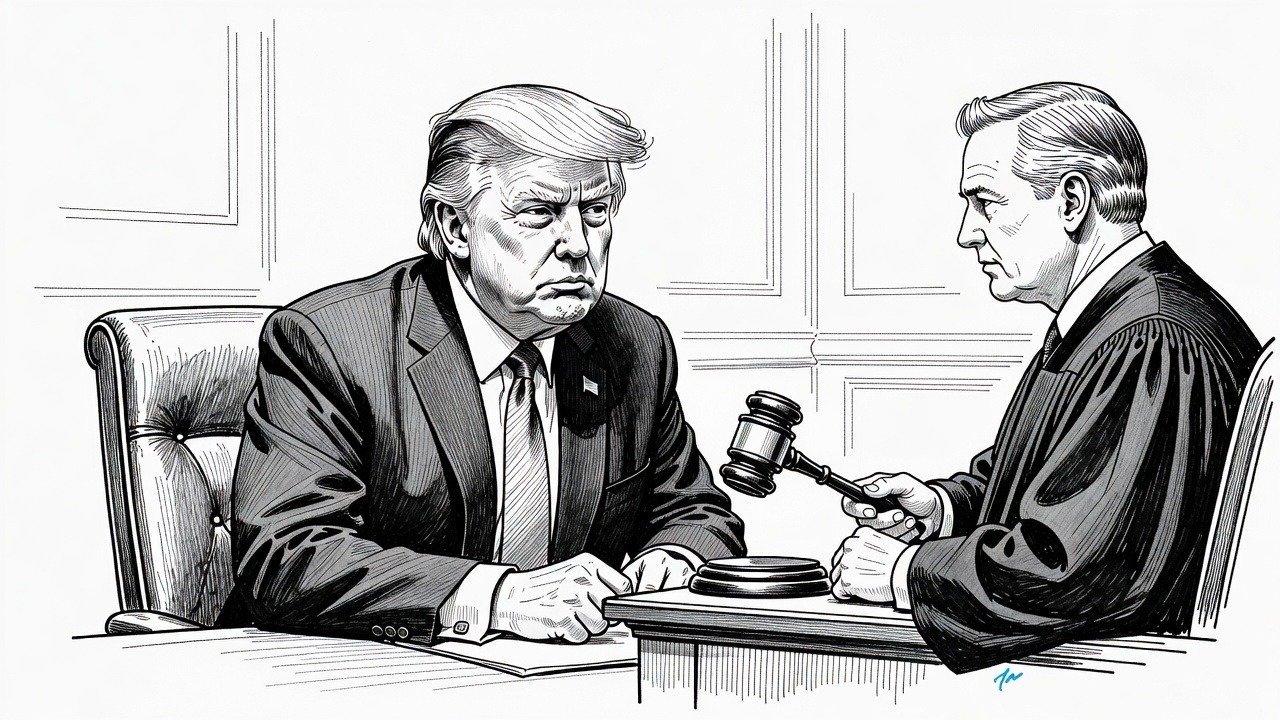
U.S. District Judge Darrin Gayles dismissed with prejudice the president's defamation suit over a July 2025 Wall Street Journal report — typewritten text, a drawing, and a signature attributed to Trump in a 2003 album for Epstein. The same claims cannot be refiled in that district. Trump's lawyers say they will appeal. A spokesperson for the publisher welcomed the ruling. Anyone who stopped at the headline will think a court resolved one of the filthiest accusations in American public life. It resolved a pleading standard.
Public figures must prove "actual malice": that the publisher knew the statement was false or recklessly disregarded the truth. Gayles held Trump had not plausibly shown it. The reporting team, he said, conducted a detailed investigation. Denials did not establish malice. We looked, he objected, case closed. Authorship never got a turn.
This is not a rogue judge. It is New York Times v. Sullivan, the 1964 decision that turned libel law into a near-immunity for anyone covering the famous. The First Amendment was written to stop government from silencing citizens. Sullivan refashioned it into a shield for media corporations that publish ruinous factual claims and then hide behind the plaintiff's inability to prove a reporter's state of mind. Justice Clarence Thomas has said the Court should revisit it. Justice Neil Gorsuch has noted that the world Sullivan imagined — scarce outlets, a public that could answer in the same forum — is gone. What remains is a standard so high that "we investigated" is usually the whole defense, and a denial is a paragraph, not a warning.
The serious objection deserves an answer, not a sneer. Presidents sue. Trump sues. If actual malice falls, officials will drag critics into court and bleed them until coverage dies. A conservative who forgets that the moment his champion is the plaintiff is not defending the First Amendment. He is keeping score.
But this was not a demand that the Journal stop criticizing policy. It was a claim about a specific, checkable assertion: that Trump authored a particular item in a dead sex offender's birthday book. That is not opinion or satire. It is a factual charge with a moral blast radius. Being stapled to Jeffrey Epstein ends reputations among people who will never read a correction, if one ever comes. The alternative to this dismissal was not the criminalization of criticism. It was a lawsuit about a document.
Look at what is not chilled. A news organization in Rupert Murdoch's empire — not a pamphlet, not a blogger — published the account, was sued by a sitting president, and won on a motion that avoided any decision on the letter. The chilling effect is not operating on Dow Jones. It operates on the older idea that a false or unproven factual claim should have a price.
And this is not an MSNBC problem the Right can file under enemy media. News Corp ran the story. Murdoch was a defendant. The liability shield does not care how you vote. It protects the institutional press as a class: build a file, print the explosive version, and let the denial prove only that you offered the subject a chance to be ignored. When the target is Trump, half the country cheers the process. When the target is someone they like, they will call the same process a smear. The standard is the problem either way.
The Epstein years should have produced one modest conclusion. Elite networks buried a predator in plain sight, and every faction has spent the aftermath converting the wreckage into a weapon while exempting its own. A legal regime that refuses to test concrete claims feeds that rot. It lets a newsroom treat a dismissal as vindication when the court vindicated nothing but the difficulty of the test.
The appeal will probably hit the same wall. Precedent holds until the Supreme Court says otherwise. Until then, read these rulings for what they are: not findings of fact, but proof that on the accusations that can destroy a person, the press answers to its lawyers and almost no one else.
How it may affect me
Do not cite this dismissal as proof the letter is real or fake. The court never decided authorship. The only holding is that Trump did not clear the actual-malice pleading bar, and the claims cannot be refiled in that federal district. An appeal is coming, so the case is not finished — but a reversal would still be about that legal standard, not a verdict on the document. Before repeating a headline that a defamation suit was permanently dismissed, ask what, if anything, was actually found.