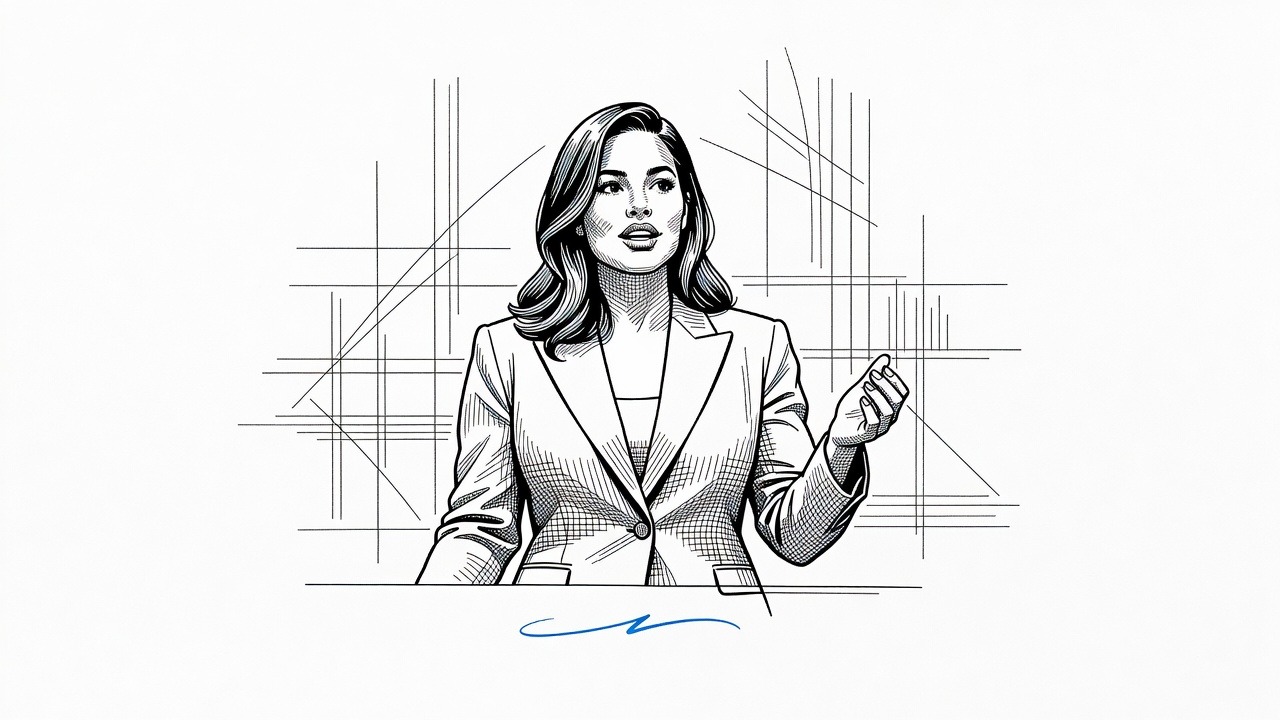
Ashley Graham says her body is her business. Before anyone reaches for a lecture on commodification, notice who is saying it and why. She is a woman the fashion industry spent years calling too big for the runway, and she is declining to let anyone else profit from that judgment. Her confidence is earned. The Left shouldn't sneer at it.
But her story should make us uneasy about the lesson everyone will draw from it.
The lesson on offer is familiar: rejection is redirection, setbacks are fuel, and when one door closes you build a brand. It's a nice philosophy for a person with extraordinary charisma, a recognizable face and the capital to launch a wine label. It's a terrible labor policy. For every Graham who turns exclusion into an empire, thousands of models were dropped, underpaid or ignored, and nobody wrote a profile of them.
The modeling business has long run on a convenient fiction. Models are glamorous "talent," so they can't be workers. In practice they are often independent contractors who could be held to agency terms they never negotiated, with fees and expenses taken from their pay, and little recourse when the money never arrived. Many start as teenagers. Only recently did New York pass the Fashion Workers Act, which gives models basic protections against exactly this arrangement. It took until the mid-2020s for the state to say that people whose bodies generate the industry's revenue are owed transparency about where the money goes.
That is the context for "my body is my business." For most models, the body was always the business, and someone else owned the books. Graham's insight is that the only way to escape that arrangement is to own the enterprise yourself. That is a shrewd personal strategy and a damning verdict on the structure around her. When the winning move is to stop being an employee of the system and become the system, the system is failing the people inside it.
The same goes for the plus-size market she helped open. Her partnership with a mass-market retailer like JCPenney matters. Millions of American women are not sample size, and for decades clothing for them was an afterthought: fewer choices, worse fabrics, higher prices, and a quiet message about whose bodies counted. Putting those women at the center of a mainstream catalog is a modest but real form of dignity. It is also a business decision, and the market only discovered the demand after those women had been ignored for years. Representation sells. That is welcome, and it is also a reminder that dignity has often arrived only when someone worked out the margin.
The left-wing case here isn't to wag a finger at Graham. It is to refuse the story as told. Her success shouldn't be treated as proof that the barriers were never real, or that anyone shut out simply needs a better attitude. Resilience is a virtue, but it is also what people are asked to supply when institutions won't do their jobs.
So celebrate the brand, the line, even the wine. Then ask the harder question: why does fairness in this industry depend on a model becoming a mogul? A fair business would not require its workers to become founders to get respect and a decent contract. Graham got out. The rest of the people whose bodies fill the pages deserve protection that doesn't depend on being exceptional.