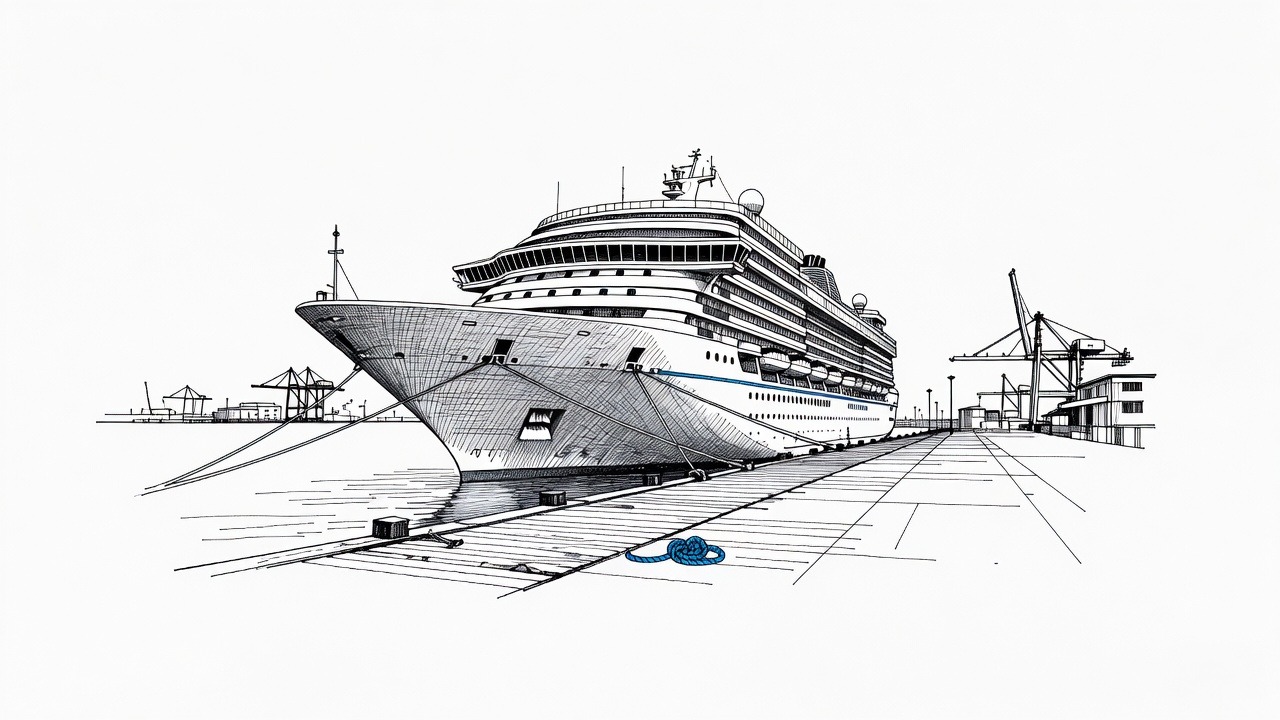
Somewhere in Sihanoukville tonight are more than 200 people, mostly Americans, who thought they had bought a home. The company told them to pack and leave within hours. The chief executive, meanwhile, is explaining that the real culprit is the price of fuel.
He has a point, as far as it goes. Petterson says Villa Vie's fuel went from about $700 a ton to $2,000 to $3,000 after the Iran war began, and the Odyssey burned 700 to 800 tons a month. That is a swing of well over a million dollars a month. Wars have costs, and they land in strange places, in this case a Cambodian dock. If you want to know who pays for geopolitical adventurism, look past the Pentagon budget to the retirees who can't get back to their cabins.
But notice what the fuel story is built to do. It converts a business failure into an act of God. Villa Vie sold a continuous world cruise as a lifestyle, a way to age at sea instead of in a condo. A company making that promise, with other people's life savings aboard, had no cushion against a predictable commodity shock, no partner lined up, and no plan beyond borrowing until the money ran out. Petterson says it "exhausted borrowed funds" and "delayed payroll." Read that sentence again. The crew was already financing this company before the passengers were thrown off it.
That's the pattern. When a business like this runs on thin margins, the people with the least bargaining power become its lenders without ever being told. Crew wait for wages. Residents prepay for months or years of service. Both groups are unsecured, and neither has a seat at the table when the executives decide how long to keep sailing. In Chapter 11, the banks and secured creditors are first in line. Customers who prepaid generally get a priority claim capped at a few thousand dollars, which is a joke next to what someone sinks into a floating retirement plan.
The obvious rebuttal is that these were adults who chose an exotic, risky product, and nobody owes a bailout to people on a world cruise. Fine. I'm not asking for one. I'm asking why a company can market something that looks like housing, collect money like a landlord, and bear none of the obligations that come with either. The federal rules that make cruise lines prove they can refund passengers when voyages collapse are tied largely to U.S. embarkation. Sail the right way around them, and the protection disappears. That is not a free market. It is a regulatory gap that someone found and monetized.
The Left should be honest about its own failure here too. We talk constantly about retirement insecurity, about people who can't afford assisted living or a house, and about the industries that sprout to sell them a dream version of security. We are much slower to police those industries. Every collapsed timeshare, senior-living chain, and "alternative" retirement scheme tells the same story: the less the public provides, the more people will hand their savings to anyone who promises dignity at a discount.
The lesson isn't that nobody should try a new way to live. It's that when a company asks customers to bet their home, their savings, and their safe passage on its solvency, it should be required to prove that solvency in advance: escrowed prepayments, bonding for repatriation, and wage protection for crew. The price of fuel was never the only thing that sank the Odyssey. The deeper problem was a business model that made its most exposed people the shock absorbers, then gave them a few hours to get off the ship.
How it may affect me
If you've prepaid for long-term travel, cruises, or any service-based housing, pay by credit card where possible, since chargeback rights may be your best recovery route. Check whether your travel insurance covers "supplier failure" or insolvency; many standard policies exclude it. Ask whether prepayments are held in escrow, and who handles repatriation if the operator folds.